

Finland offers some of the most scenic train travel in Europe, from the lakes and forests of southern Finland to the winter wonderland of Lapland. But if you’re planning an interrail trip through this Nordic country, you’ll want to know whether a pass actually saves you money—or whether buying regular tickets makes more sense.
This guide breaks down exactly how interrail works in Finland, what reservations and supplements cost, and gives you an honest verdict on when a pass is worth buying.
Quick verdict: Is Interrail in Finland worth it?
Let’s cut straight to the point: for most visitors to Finland, an interrail pass is not the cheapest option. Here’s why.
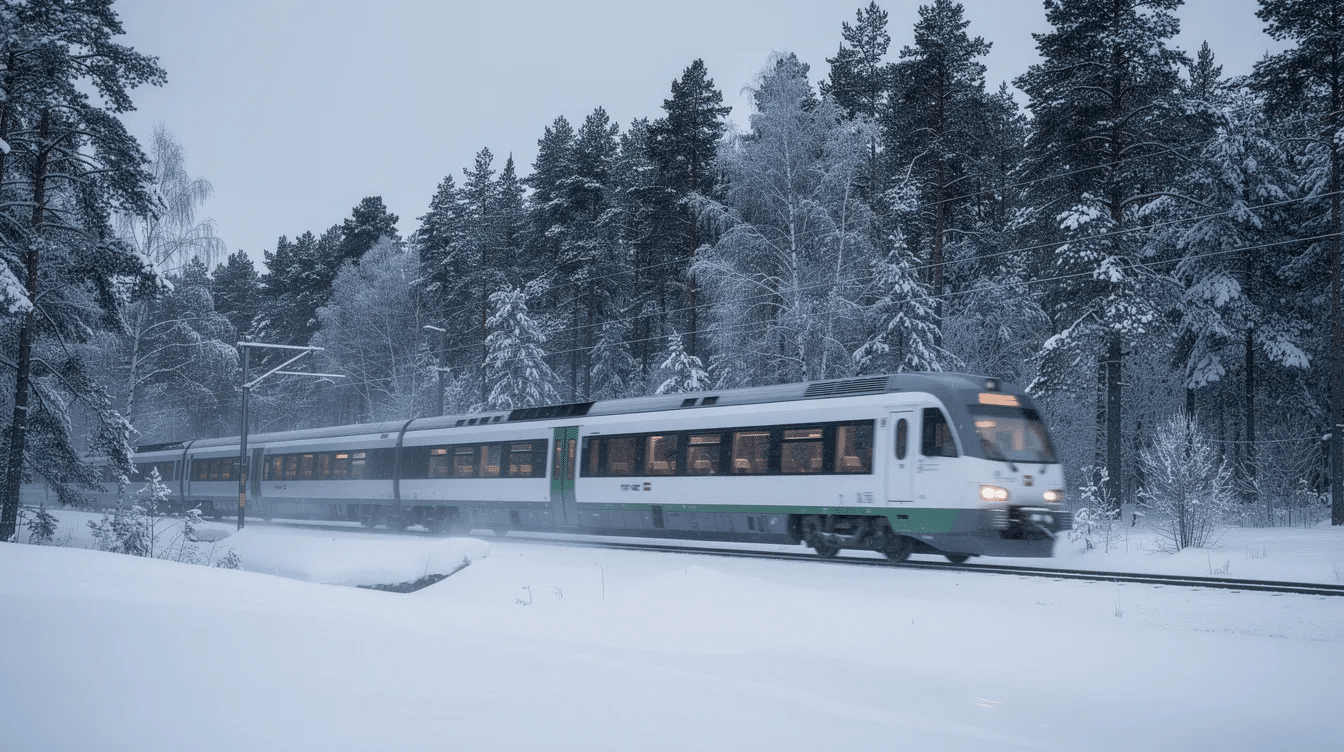
Finland has an excellent but relatively small rail network. Most trains radiate from Helsinki toward major destinations like Tampere, Turku, Oulu, and Rovaniemi in the north. The quality is high—modern trains, good Wi-Fi, English widely spoken—but the network doesn’t offer the dense coverage you’d find in Germany or France. Most travellers only ride 2–4 long-distance legs during a typical visit.
VR, Finland’s state railway, uses dynamic pricing similar to airlines. Book early, and you can snag Helsinki–Tampere tickets from around €7–€15, or Helsinki–Rovaniemi from roughly €29–€49 one way. A return trip to Lapland might cost €60–€120 if you book a few weeks ahead. Compare that to an Interrail Finland Pass: a 3-day pass costs €103 for adults, and you’ll still need to pay reservation supplements on top—around €20–€40 for that same Rovaniemi return. The numbers often don’t add up in Interrail’s favour.
The interrail global pass makes more sense when Finland is just one stop on a larger journey through european countries like Sweden, Norway, or Germany. For Finland alone, point-to-point VR tickets usually beat the One Country Pass unless you’re travelling intensively.
Here’s the quick breakdown:
Interrail Global Pass is worth considering if Finland is part of a multi-country Scandinavian or European trip, where the pass cost spreads across several expensive rail networks.
Interrail Finland Pass (One Country) rarely offers good value unless you’re making 5+ long journeys in under a month.
VR advance tickets are usually cheaper for 2–4 planned trips, especially when booked 2–4 weeks ahead.
Reservations add significant cost: unlike flat €10 fees in other countries, Finnish supplements are 25% of the full fare for seats and 50% for night train sleepers.
Ease of use is mixed: trains are comfortable and staff helpful, but booking Interrail reservations requires going through VR directly (app, phone, or station desk), which can feel more complicated than other countries.
Helsinki commuter trains no longer included: from 2024/2025, Interrail isn’t valid on HSL services including the airport train, reducing the pass’s overall utility.
How Interrail works in Finland (Global vs One Country Finland Pass)
Both the Interrail Global Pass and the Interrail Finland Pass are valid on VR long-distance and regional trains across mainland Finland. However, they work quite differently and suit different travel styles.
The key distinction is scope: the Global Pass opens up 33 countries, making it ideal for multi-country adventures, while the Finland Pass focuses purely on domestic travel within Finnish borders.
Interrail Global Pass: Valid across 33 European countries including Finland. Particularly useful for routes involving ferry connections—you can take discounted ferries from Stockholm to Turku or Helsinki, then continue by train. The Helsinki–Tallinn ferry to Estonia also offers passholder discounts. From there, you can connect to trains in the Baltic states, Poland, and onward to Germany and beyond.
Interrail Finland One Country Pass: Only valid within Finland. Available in 3, 4, 5, 6, or 8 travel day options within a 1-month period. Prices start at €103 for 3 days (adult, 2nd class). Only available to European residents who are not Finnish citizens—Finnish residents cannot use Interrail for domestic travel.
HSL trains excluded from 2024/2025: The Helsinki region commuter trains (lines I, P, A, K, E, U, Y) operated under HSL are no longer covered by Interrail. This includes the crucial airport train between Helsinki Central and Helsinki Airport. You’ll need separate HSL tickets for these journeys.
Covered train types: InterCity (IC), Pendolino (S), regional trains, and night trains operated by VR to Lapland destinations including Rovaniemi, Kemijärvi, and Kolari.
Not covered: Helsinki metro, trams, buses in any city, and long-distance bus services like OnniBus or Matkahuolto. These require separate tickets.
Ferry discounts: Passholders can get reduced fares on certain ferries including Eckerö Line, Tallink Silja, and Viking Line routes. The Helsinki–Travemünde (Germany) crossing sometimes offers discounts too. However, the ferry itself isn’t “free”—you pay a reduced fare, not zero.
Reservations and supplements on Finnish trains
Here’s where Finland differs significantly from most european countries: you don’t pay a flat “Interrail reservation fee” of €5–€10. Instead, VR charges a percentage of the normal ticket price, making supplements considerably more expensive than you might expect.
Seat reservations on day trains: On IC and Pendolino services, reservations cost approximately 25% of the full single ticket price for that specific train and date. If the standard fare is €80, your Interrail supplement would be around €20.
Sleeper reservations on night trains: Beds on overnight services to Rovaniemi, Kemijärä, or Kolari cost about 50% of the full ticket price. If a sleeper berth normally costs €120, you’re paying roughly €60 as an Interrail passholder—on top of using a travel day.
Regional and commuter trains: Most regional trains don’t require reservations. Just board and sit in any unreserved seat.
IC and Pendolino seating: In VR’s system, every ticket includes an assigned seat. For Interrail users, the “25% supplement” essentially buys that seat assignment. A few unreserved seats may exist, but don’t count on them for popular routes.
How to book Interrail reservations: You must go through VR directly—not through Interrail’s website. Options include the VR Matkalla app, calling VR customer service, or visiting ticket desks at major stations like Helsinki, Pasila, Tampere, Turku, Oulu, or Rovaniemi.
Concrete example: On a busy winter date, a full Helsinki–Rovaniemi sleeper might cost €100–€150. The Interrail bed reservation at 50% would be €50–€75, plus you’re using one of your precious travel days. Combined, that’s potentially more expensive than VR’s own discounted sleeper tickets bought in advance.
No special Interrail quota: Unlike some countries, VR doesn’t reserve a separate allocation for passholders. If cabins sell out, Interrail users can’t get berths either. Book sleepers several weeks ahead for Christmas, New Year, February ski weeks, and the northern lights season in March.
Extra costs: Restaurant car meals, bike carriage, and pet fees are separate charges regardless of your pass. Interrail only covers transport.
Using Interrail on different Finnish train types
Finland’s rail network is straightforward compared to many European countries. A few main lines radiate from Helsinki, and most trains are modern and comfortable. Understanding which train types work with Interrail—and which don’t—helps you plan effectively.
HSL commuter trains (Helsinki region): Lines like I, P, A, K, E, U, and Y connect central Helsinki with the airport, Espoo, Vantaa, and suburbs. From 2024/2025, Interrail is no longer valid on these HSL-operated services. You must buy separate HSL tickets for airport transfers and local journeys in the capital.
Regional trains and railbuses: Older stock serving branch lines such as Tampere–Jyväskylä, Kouvola–Kotka, and connections to smaller cities. Fully covered by Interrail with no reservations required. Useful for reaching destinations off the main corridors.
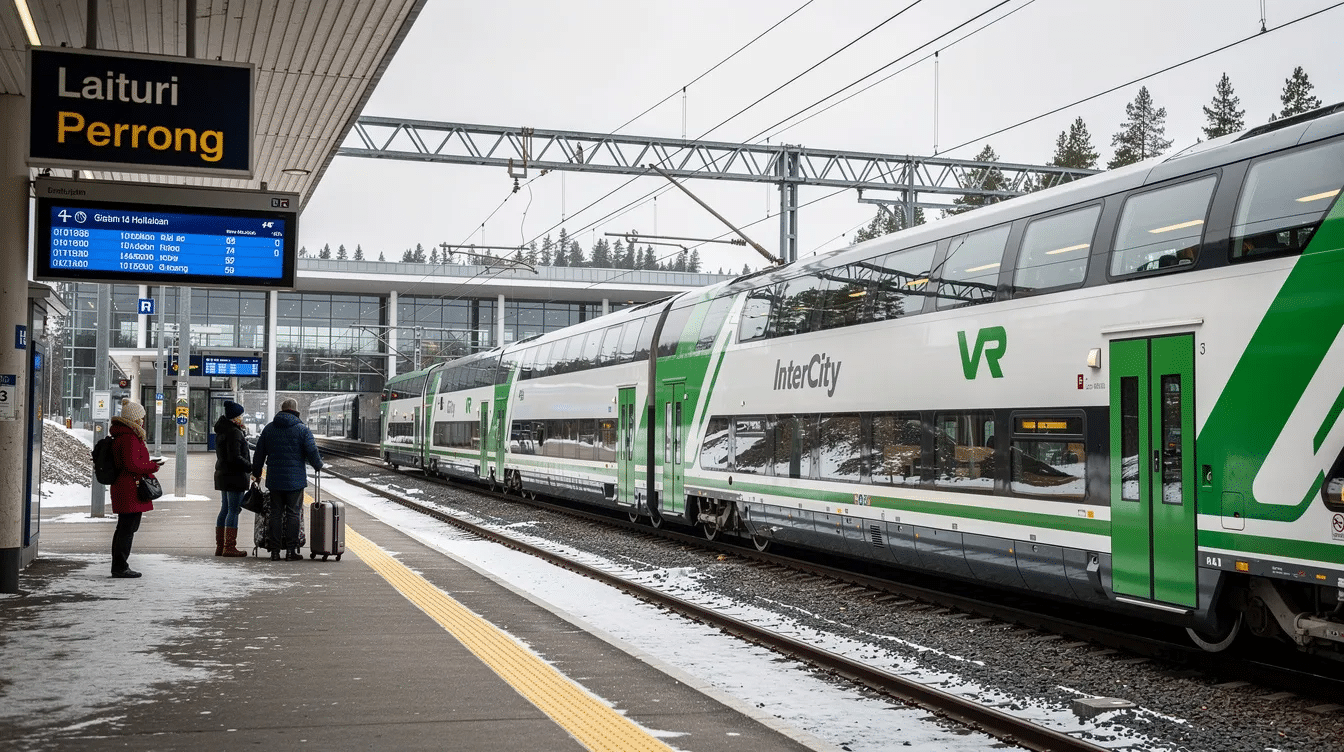
InterCity (IC) trains: The backbone of Finnish long-distance rail, connecting Helsinki with Turku, Tampere, Oulu, Kuopio, Joensuu, and beyond. Modern double-deck carriages with family coaches, good Wi-Fi, and a restaurant car. Interrail valid with 25% reservation supplement.
Pendolino (S) trains: High speed trains (tilting EMUs reaching up to 220 km/h) on key routes like Helsinki–Tampere, Helsinki–Turku via Salo, and Helsinki–Kuopio. Interrail valid with the same reservation rules as IC. Marginally faster than IC on some routes, but the timetable difference is often only 5–15 minutes.
Night trains to the north: Routes from Helsinki (and sometimes Turku) toward Rovaniemi, Kemijärä, and Kolari. Options include seated coaches, standard sleeper cabins, and deluxe cabins with your own cabin shower and WC. Restaurant car stays open late. Interrail requires the expensive 50% bed supplement, significantly reducing the pass’s value for overnight travel.
Accessibility: Most IC, Pendolino, and newer regional trains offer wheelchair accessibility, low-floor entry or lifts, and accessible toilets. Some older commuter units have step access only—check VR’s accessibility information before travel if this affects you.
Interrail vs buying point-to-point tickets in Finland
This is the crucial question: does an interrail pass actually save money compared to regular VR tickets? Let’s work through specific scenarios.
VR uses airline-style yield management. Early booking yields cheap fares; prices rise as trains fill up. Weekends, Fridays, school holidays, Christmas, and the February ski season command premium prices. Interrail sits conceptually closer to “flexible” products but still requires paid supplements.
Example 1: Casual southern Finland trip
Route: Helsinki–Tampere–Turku–Helsinki over one week
Point-to-point (booked 3–4 weeks ahead):
Helsinki–Tampere: €7–€15
Tampere–Turku: €10–€20
Turku–Helsinki: €7–€15
Total: roughly €24–€50 at best prices, more realistically €40–€80
With Interrail Finland Pass (3 days):
Pass: €103
Reservations (3 legs at ~25% of €30–€40 fares): €21–€30
Total: €124–€133
Verdict: Point-to-point is clearly cheaper for this light itinerary.
Example 2: Intensive Lapland adventure
Route: Helsinki–Rovaniemi (night train)–Kemijärä–Oulu–Helsinki over 7–10 days
Point-to-point (booked 1–2 weeks ahead in winter):
Night sleeper Helsinki–Rovaniemi: €90–€150
Rovaniemi–Kemijärä: €15–€25
Kemijärä–Oulu: €30–€50
Oulu–Helsinki: €40–€80
Total: roughly €175–€305
With Interrail Finland Pass (4 days):
Pass: €124
Reservations: night sleeper at 50% (~€60), plus day trains at 25% (~€25–€30)
Total: approximately €210–€215
Verdict: The pass roughly breaks even or saves slightly, especially if booking at short notice when VR’s saver fares have sold out. Flexibility has value here.
Example 3: Multi-country Scandinavian route
Route: Stockholm–Turku (ferry)–Tampere–Oulu–Rovaniemi–Helsinki–Tallinn (ferry)–onwards
For this trip, you’d use travel days across Sweden and Finland, plus ferry discounts. An Interrail Global Pass (7 days in 1 month at €381 for adults) spreads its cost across expensive Swedish trains, Finnish long-distance legs, and potentially Baltic or German connections.
Verdict: Global Pass makes strong sense here. The marginal cost of adding Finland to an already-planned multi-country trip is low, and flexibility across borders is valuable.
Key guidelines
Only visiting 2–3 cities with fixed dates: Buy point-to-point VR tickets. They’re almost always cheaper.
Making 5–8 longer journeys in under a month, especially at short notice: Consider an Interrail Finland Pass. You’ll pay supplements, but flexibility and potential savings on peak fares may justify it.
Finland as part of a wider European trip: The Interrail Global Pass usually makes the most sense, especially combined with Sweden, Norway, or Germany.
Night train travel: Sleeper supplements (50% of cabin price) significantly erode Interrail’s value. VR’s own discounted sleeper tickets, bought early, are often similar or cheaper.
Families and groups: VR frequently runs promotional fares with child discounts that may beat buying multiple Interrail passes plus supplements.
Practical tips for Interrail travel in Finland
If you’ve decided an interrail pass suits your trip, here’s how to make it work smoothly.
Planning routes: Classic circuits that maximise pass value include Helsinki–Tampere–Oulu–Rovaniemi–Helsinki (covering the main attraction of Lapland), or Helsinki–Turku–Tampere–Jyväskylä–Kuopio–Helsinki for lakes country. Journey times: Helsinki–Tampere ~1h30, Helsinki–Oulu ~5h30, Helsinki–Rovaniemi ~8h20 by day.
Booking reservations: Secure night train berths months ahead for Christmas, New Year, February ski holidays, and March–April aurora viewing season. Many passengers travel north hoping to see the northern lights, so winter is peak demand. Daytime reservations can often wait until closer to departure, but booking a week ahead is sensible for popular Friday/Sunday trains.
Apps and information: Use VR Matkalla for timetables, reservations, and real-time updates. The HSL app handles Helsinki region tickets (essential since Interrail isn’t valid there). VR’s live map at junatkartalla.vr.fi and Fintraffic’s junalahdot.fi show real-time train positions and platform information.
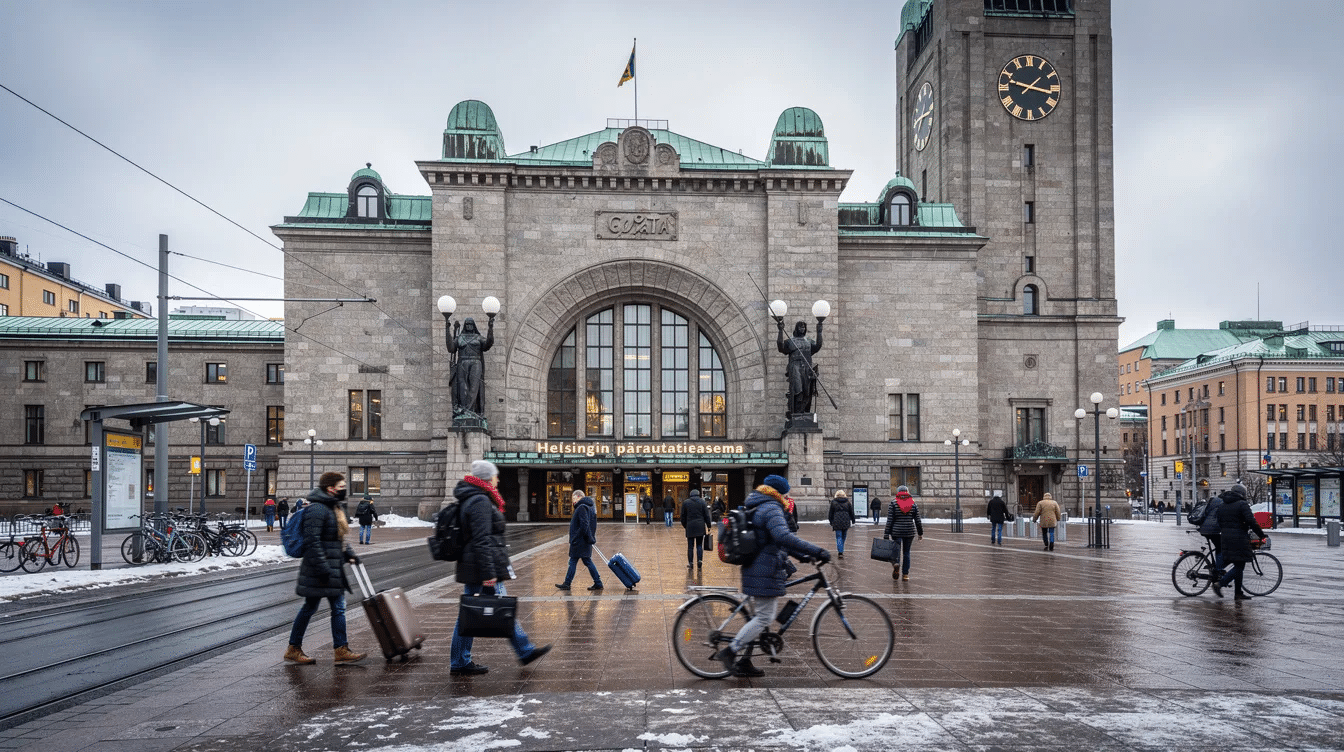
City access: Helsinki Central station sits in the city centre—you can reach most hotels, attractions, and ferry terminals by walking or a short tram ride. For Helsinki Airport, the I/P trains require a separate HSL ticket (around €4–€6) since Interrail no longer covers this route.
Seasons and daylight: Summer brings nearly midnight sun, making late arrivals pleasant and ideal for exploring national parks. Winter means short days—arriving in Lapland by night train beats driving in darkness and snow. You can visit santa claus in Rovaniemi and fully immerse yourself in northern culture.
Onboard costs: Restaurant car prices run approximately €12–€18 for main courses, €4–€8 for snacks, €2–€3.50 for coffee. Budget-conscious travellers should bring their own food—there’s no prohibition on eating your own supplies.
Honest verdict: When Interrail in Finland makes sense
Let’s be direct: for most visitors doing 2–4 train journeys and willing to book a few weeks ahead, Finnish point-to-point tickets from VR are usually cheaper and simpler than an interrail finland pass plus supplements.
The reservation pricing structure in Finland—25% of full fare for seats, 50% for sleepers—significantly erodes the pass’s value compared to countries with flat €5–€10 reservation fees. Add the loss of Interrail validity on Helsinki’s airport and commuter trains, and the overall proposition weakens further.
That said, Interrail becomes genuinely attractive in three specific cases:
Multi-country travel: If you’re including Finland within a broader Scandinavian or European rail trip through Sweden, Norway, Estonia, or Germany, the Global Pass spreads its cost across multiple expensive networks. Finland becomes just one component of strong overall value.
Intensive domestic exploration: If you’ll criss-cross Finland with 5–8 substantial journeys in under a month—especially booking at short notice when VR’s saver fares have sold out—the One Country Pass can break even or save modestly.
Flexibility over price: If changing plans daily without penalty matters more than saving every euro, Interrail delivers that freedom. In shoulder seasons when capacity is abundant, this flexibility lets you discover new destinations on a whim.
Before buying any pass, sketch your intended route. Price it using VR’s website for point-to-point tickets, checking both saver and flexible options. Then calculate the cost of an Interrail pass plus estimated reservation supplements. Choose whichever option best fits your budget and travel style.
The right choice isn’t about whether Interrail is “good” or “bad”—it’s about whether it suits your specific Finnish journey.
Frequently asked questions
Is an Interrail pass the cheapest way to travel in Finland?
For most visitors, an Interrail pass is not the cheapest option in Finland.
What is the structure of Finland's rail network?
Finland has an excellent but relatively small rail network. Most trains radiate from Helsinki toward major destinations like Tampere, Turku, Oulu, and Rovaniemi in the north. Trains are modern with good Wi-Fi and English is widely spoken.
How do you book Interrail seat reservations in Finland?
You must book reservations through VR directly — not through Interrail's website. Options include the VR Matkalla app, calling VR customer service, or visiting ticket desks at major stations such as Helsinki, Pasila, Tampere, Turku, Oulu, or Rovaniemi.
Does VR reserve a separate quota of seats for Interrail pass holders?
No. VR does not reserve a separate allocation for pass holders. If cabins sell out, Interrail users cannot get berths either.
When should you book Finnish sleeper trains well in advance?
Book sleepers several weeks ahead for Christmas, New Year, February ski weeks, and the northern lights season in March.