


Train service

Leo Express
Leo Express is a Czech private transport company offering train and bus services in Central Europe, partly owned by Spain’s Renfe.

České dráhy
České dráhy (ČD) is the Czech national rail operator, offering regional and international train services across Central Europe.

OBB
ÖBB is Austria’s national rail operator, known for its Railjet trains and Europe’s largest night train network, Nightjet.
Train tickets

Omio
Omio connects you with over 1,000 transport providers - trains, buses, flights, and more - to simplify your travel planning.

Trainline
Trainline sells rail and coach tickets worldwide on behalf of major UK and European transport companies.

Raileurope
Rail Europe is a leading travel tech company specializing in European train bookings for over 15,000 travel professionals worldwide.
Rail pass validity
When traveling by train from Zagreb to Prague, the Interrail Global Pass is valid for residents of the EU and covers multiple countries, including Croatia and the Czech Republic. The Interrail One Country Pass would not be valid for this entire journey, as it only covers train travel within a single country. The Eurail Pass is valid for travelers who are not residents of the EU and would cover the journey from Zagreb to Prague, as it applies to international train travel across participating countries.
Getting around
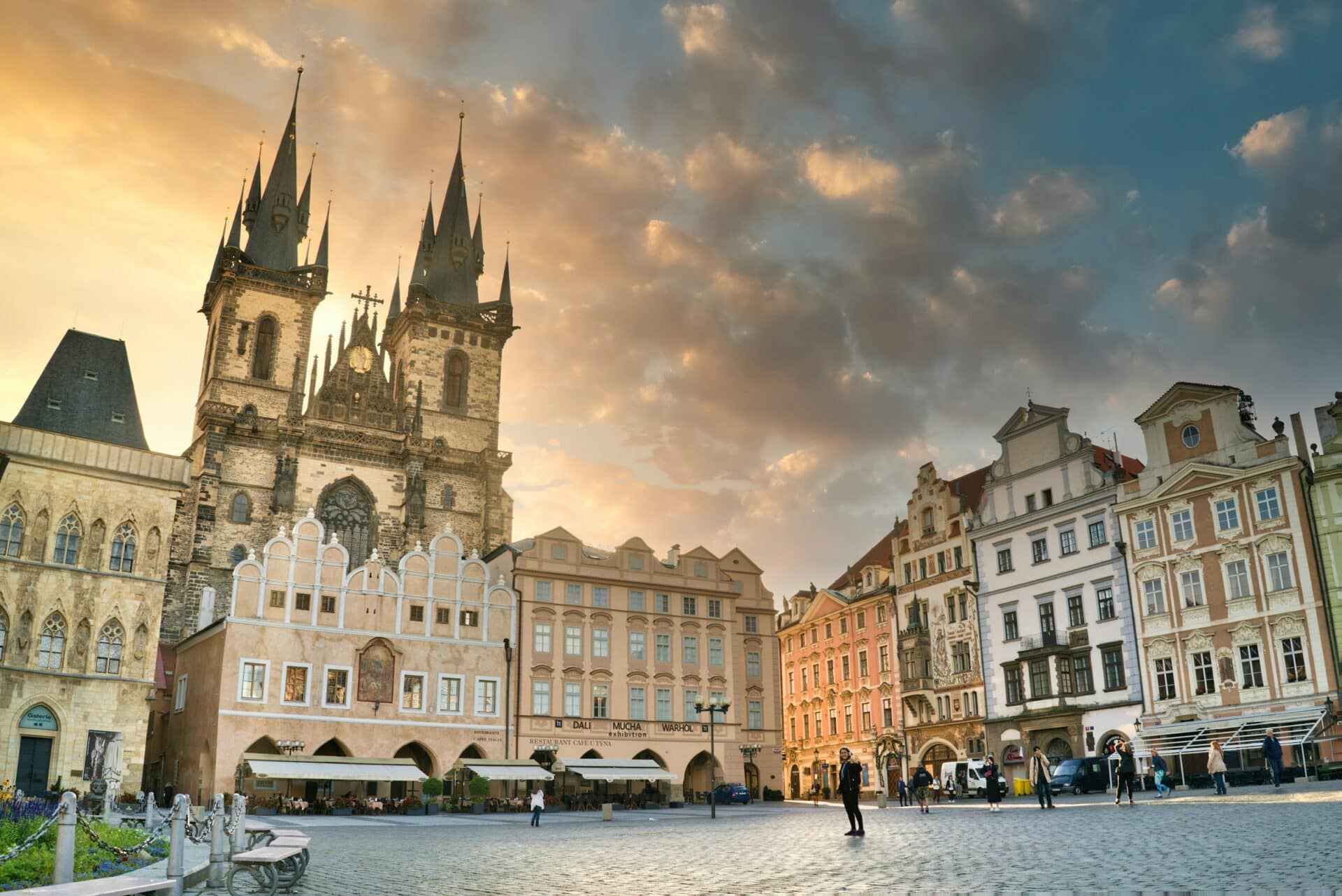
Upon arriving in Prague by train, you have several efficient options for getting around the city using local transportation. Prague has an extensive and reliable public transport system, primarily consisting of trams, the metro, and buses. The metro is divided into three lines: A, B, and C, with all lines intersecting at the central stations, allowing for easy transfers. The metro runs from around 4:45 AM until midnight, making it ideal for quick transit across longer distances within the city. Trams are another convenient option, especially for above-ground travel and sightseeing, with a comprehensive network that operates 24 hours a day, although nighttime services are less frequent. Buses are generally used for areas not covered by metro or tram, especially suburban locations, operating within similar hours to the metro. All these modes require the use of tickets, which can be purchased at ticket machines, transport information centers, or via mobile apps, and need to be validated before use.
Taxis are available but can be more expensive. It's advisable to use reputable services recommended by locals or to book through hotel services to avoid overcharging. Ridesharing services like Uber and Bolt operate in Prague, providing an alternative to traditional taxis that can be booked conveniently via mobile apps. Prague’s public transportation is usually the most cost-effective and quickest way to get around, with trams and the metro often being preferred for their ease of use especially in the central areas.
Onward connections
Prague, the capital city of the Czech Republic, serves as a key hub for both domestic and international rail travel. Domestically, one of the most common train connections is between Prague and Brno, the second-largest city in the country. This route is well-served with multiple trains running daily, offering a journey time of about 2.5 to 3 hours. Another important domestic link is to Ostrava, a major city in the northeast, with frequent services and journey times around three hours.
Internationally, Prague is well connected to Berlin, Germany, with several direct trains daily, taking around 4.5 hours. Travelers can also reach Vienna, Austria, in about four hours via direct services. The rail connection between Prague and Budapest, Hungary, is popular as well, with direct trains taking approximately seven hours. For those looking to travel to Slovakia, direct trains run frequently between Prague and Bratislava, usually taking around 4 hours.
High-speed rail options enhance these connections with modern trains operated by companies like České dráhy, RegioJet, and Leo Express, ensuring comfort and efficiency. The central train station, Praha hlavní nádraží, serves as the primary departure point for these journeys and is conveniently located near the city center, providing easy access for travelers.
Best time to visit
The best time to visit Prague is generally during the spring months of April and May or the fall months of September and October. During these periods, the weather is mild and pleasant, which is perfect for exploring the city's historic architecture and picturesque streets without the sweltering summer heat or winter chills. Additionally, these months usually see fewer tourists compared to the peak summer season, which can mean lower accommodation prices and more availability for seeing popular sites. Travelers arriving by train will enjoy less crowded trains, allowing for a more leisurely and comfortable journey.
Springtime in Prague brings the blooming of gardens and parks, offering scenic views and a vibrant atmosphere. On the other hand, fall showcases the beautiful changing colors of foliage, making the city's landscapes even more enchanting. Both seasons often feature cultural events and festivals; in spring, music lovers can enjoy the Prague Spring International Music Festival, while autumn boasts events like the Signal Light Festival, highlighting the city's cultural richness and providing unique experiences.
Visiting Prague during late November and December is also worthwhile for those interested in experiencing the magical Christmas markets, though it's essential to prepare for colder temperatures and potentially higher accommodation costs due to increased demand. Conversely, summer months, while vibrant with events and a lively outdoor cafe scene, tend to be more crowded and expensive. Winter is the least crowded, providing a tranquil experience but involving harsh weather conditions, which can occasionally disrupt travel plans, particularly for train arrivals.
Frequently asked questions
What affects the cost of a train ticket from Zagreb to Prague?
According to EveryRail, train ticket prices are dynamic. Demand significantly impacts prices. Higher demand leads to increased prices. Travel time also affects costs. Weekdays might be cheaper than weekends. Ticket type influences the price. Flexible tickets are pricier than fixed ones. Seasonal variations can play a role. Holidays often drive prices up. Advanced booking typically offers savings. Last-minute purchases are usually costly. Discounts impact pricing when available. Competition from other transport modes may affect costs. Currency fluctuations can influence prices as well.
What trains run from Zagreb to Prague?
Deutsche Bahn operates trains between Zagreb and Prague.
OBB operates trains between Zagreb and Prague.
České dráhy operates trains between Zagreb and Prague.
Flixbus operates buses between Zagreb and Prague.
Leo Express operates buses between Zagreb and Prague.
How long does the train from Zagreb to Prague take?
According to EveryRail, the train from Zagreb to Prague takes 10 to 12 hours.
When is the best time to travel from Zagreb to Prague?
Avoid peak holiday times. Crowds are larger then. Prices often increase during holidays. Weekdays usually see fewer travelers. Avoid major events in either city. Mid-morning trains can be less crowded. Demand fluctuates with festivals or holidays. Early booking helps secure better prices. Traveling in shoulder periods can be beneficial.
What’s the best route or train to take from Zagreb to Prague?
Deutsche Bahn runs direct train services from Zagreb to Prague. Flixbus operates direct bus services on this route.
What rail passes can I use to travel from Zagreb to Prague?
According to EveryRail, a Global Pass is valid for travel from Zagreb to Prague. This is because the journey crosses international borders between Croatia and the Czech Republic. Residents of the EU or eligible European countries can use an Interrail Global Pass. Non-residents can use a Eurail Global Pass.