


Planning a trip to Switzerland and wondering how to navigate the country’s legendary train, bus, and boat network without buying dozens of individual tickets? The Swiss Travel Pass is the answer most tourists are looking for. As the most popular rail pass for tourists in Switzerland, it offers a convenient and efficient way to explore the country.
This comprehensive guide breaks down everything you need to know about this travel pass in Switzerland—from how it works and what it covers to who qualifies and when it’s actually worth the investment. Whether you’re planning a whirlwind 3-day trip or a leisurely 15-day exploration, you’ll find the practical information you need to make a smart decision.
Quick overview: what is the Swiss Travel Pass?
The Swiss Travel Pass is Switzerland’s flagship transportation ticket for international visitors. It provides unlimited travel by train, bus, and boat across the entire Swiss Travel System network, plus free museum access and significant discounts on mountain excursions.
Available for 3, 4, 6, 8, or 15 consecutive days, this pass functions as your all-in-one ticket to discover Switzerland. Current prices are published through 31.12.2026, though fares can change, so always verify before purchasing.
One critical eligibility requirement: the Swiss Travel Pass is exclusively for non-residents of Switzerland and Liechtenstein. If you live in either country, you’ll need to use domestic products like the GA Travelcard instead.
Here are the key advantages at a glance:
- Unlimited use of trains, buses, trams, and boats across 90 towns and cities
- Free admission to over 500 museums throughout Switzerland
- 25–50% discounts on most mountain railways and cable car systems
- No need to buy individual tickets for each journey
- Available in both 1st and 2nd class
How the Swiss Travel Pass works
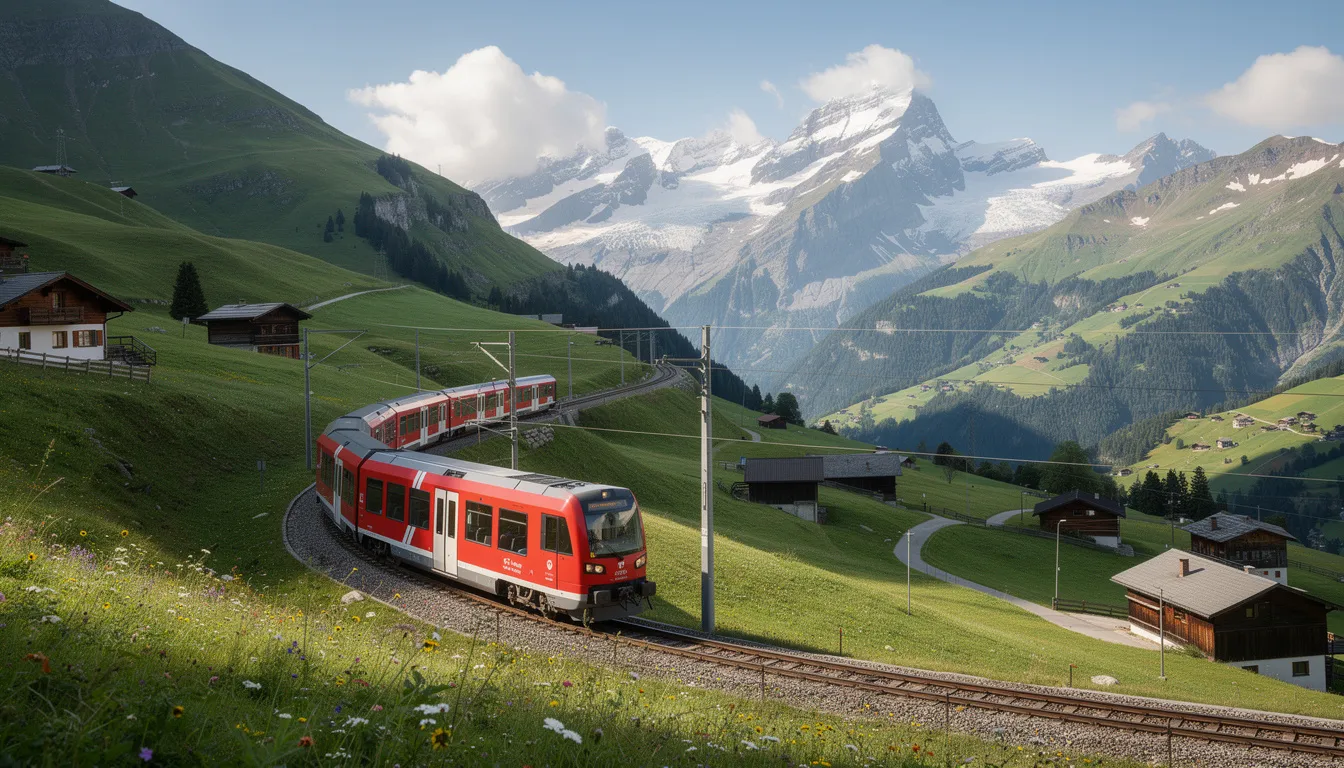
Think of the Swiss Travel Pass as your master key to Swiss public transport. Once your pass is valid, you simply board trains, buses, trams, and boats without purchasing additional tickets. Flash your pass when requested, and you’re good to go.
Most passes today are delivered as e-tickets that you can store on your smartphone or print out. Keep that QR code accessible at all times—conductors and inspectors will scan it during checks. In roughly 1 out of 10 inspections, staff will also ask to see your passport or national ID to verify the name matches your pass.
Here’s what you need to understand about the mechanics:
- The pass is calendar-based, starting at 00:00 on your chosen start date
- Validity runs until 05:00 on the morning after your last day
- Seat reservations are not included and usually not required within Switzerland
- Premium panoramic trains (Glacier Express, Bernina Express) require separate, mandatory reservations
- Each traveler needs their own individual pass—this isn’t a group ticket
What is covered by the Swiss Travel Pass
The Swiss Travel Pass covers an impressive portion of Switzerland’s integrated transportation network. This includes almost the entire SBB/CFF/FFS rail network, most regional trains, PostBus routes, city buses and trams in major urban areas, and scheduled lake boats.
Iconic routes like Zurich–Lucerne, Interlaken–Zermatt, and Geneva–Montreux are fully included. The Swiss Travel System provides a downloadable validity map showing exactly which routes are covered and at what discount levels.
Coverage highlights:
- All standard train routes operated by Swiss Federal Railways and most regional operators
- Boat unlimited travel on major lakes including Lake Lucerne, Lake Geneva, and Lake Zurich
- Urban public transport in 90 cities including Zurich, Geneva, Basel, Bern, and Lucerne
- Many mountain railways are fully included, such as Rigi (from Vitznau or Arth-Goldau), Stoos, and Stanserhorn CabriO
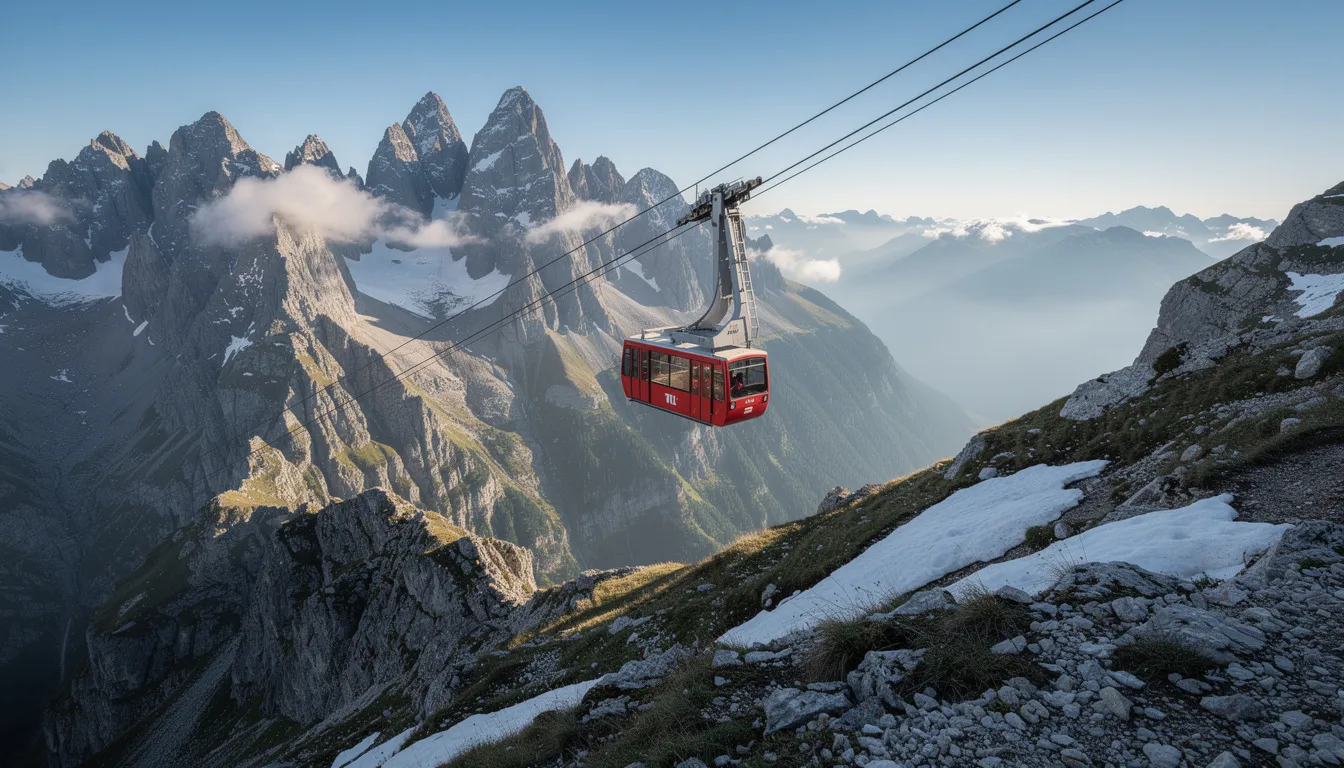
- Mountain excursions included at discounted rates (25–50%) for high-alpine destinations like Jungfraujoch, Titlis, Pilatus, and Gornergrat
Example journey fully covered: Start in Zurich, take the train to Lucerne, board a steamboat across Lake Lucerne to Vitznau, then ride the cogwheel train up Mount Rigi—all without paying a single franc beyond your pass.
What is not covered or only partially covered
While the Swiss Travel Pass is comprehensive, it doesn’t cover everything. Understanding these limitations upfront will save you from surprises.
Key exclusions and partial coverage:
- Seat reservation fees on panoramic trains (Glacier Express, Bernina Express, Gotthard Panorama Express, Palm Express) are charged separately
- High-alpine mountain transports typically offer only 50 discount rather than free travel
- Night-train surcharges, sleeper compartments, and couchette reservations are never included
- International trains to Germany, France, Italy, or Austria may require supplements
- Some private bus and boat operators outside the main Swiss Travel System network don’t accept the pass
- First-class upgrades on specific prestige cars (like GoldenPass Express Prestige class) are not discounted
Area of validity: where the Swiss Travel Pass can be used
The Swiss Travel Pass opens up virtually all of Switzerland for exploration, offering unlimited travel across the country’s renowned public transport network. With this travel pass, you can hop on and off trains, buses, and boats that connect more than 90 cities and countless picturesque towns. The pass covers the entire route network of Swiss public transport, making it easy to discover Switzerland’s diverse landscapes—from the shores of Lake Geneva to the peaks of the Alps.
One of the standout features is access to premium panoramic trains, including the legendary Glacier Express, Bernina Express, and Gotthard Panorama Express. While your Swiss Travel Pass covers travel on these iconic routes, keep in mind that seat reservation fees are required and must be booked separately. This ensures you have a guaranteed seat to enjoy the breathtaking views these trains are famous for.
Beyond standard trains and buses, the Swiss Travel Pass is valid for many mountain excursions, giving you discounted or even free rides on select mountain railways and cable cars. Whether you’re heading up to Rigi, Stanserhorn, or planning a discounted trip to Jungfraujoch, your pass makes it easy to experience Switzerland’s most spectacular heights.
In addition to transportation, the pass grants free admission to over 500 museums and attractions throughout Switzerland, allowing you to immerse yourself in the country’s rich culture and history. With the Swiss Travel Pass, you can enjoy seamless, unlimited travel and exclusive discounts, making it the ultimate key to discovering Switzerland’s cities, mountains, and scenic routes.
Types of Swiss Travel Passes
Switzerland offers two main product families to match different travel styles: the classic Swiss Travel Pass for consecutive days and the Swiss Travel Pass Flex for scattered travel days within a month.
Both variants are available in 1st and 2nd class, and both offer Adult and Youth versions with identical coverage but different price points. There is no official 1- or 2-day Swiss Travel Pass. For such short stays, alternatives like the Saver Day Pass typically offer better value.
Here’s how the options break down:
- Swiss Travel Pass (Consecutive): Best for intensive daily travel, multi-city tours, and scenic rail trips
- Swiss Travel Pass Flex: Ideal for travelers mixing city stays with occasional heavy travel days
- Swiss Travel Pass Youth: 30% savings for young people under 25
- Swiss Family Card: Allows children aged 6–15 to travel free of charge with parents
Swiss Travel Pass (consecutive days)
The consecutive Swiss Travel Pass is the simplest and most popular option. Choose from 3, 4, 6, 8, or 15 days of unlimited travel, and your pass remains valid from your start date through your final day.
This version works best for visitors doing continuous touring—think a classic Swiss round trip hitting multiple regions. You board trains freely each day without worrying about “activating” anything.
2026 Second Class Prices: | Duration | Price (CHF) | |———-|————-| | 3 days | 254 | | 4 days | 309 | | 6 days | 399 | | 8 days | 439 | | 15 days | 499 |
2026 First Class Prices: | Duration | Price (CHF) | |———-|————-| | 3 days | 405 | | 4 days | 492 | | 6 days | 634 | | 8 days | 697 | | 15 days | 787 |
Sample 8-day itinerary: Zurich → Lucerne → Interlaken → Zermatt → Montreux → Geneva → Bern → Zurich. Each leg is fully covered, with opportunities for day trips and mountain excursions along the way.
Swiss Travel Pass Flex
The Flex version gives you 3, 4, 6, 8, or 15 freely chosen travel days within a 1-month window. This structure is ideal for travelers spending extended periods in Switzerland who won’t be on trains every single day.
On non-travel days, you’ll need normal point to point tickets for any journeys. The museum benefits and some discounts may depend on whether your Flex day is “activated,” so check the specific terms.
Key considerations for the Flex pass:
- Each travel day must be activated before boarding (via the app or online)
- Once activated, the day counts as a full calendar day regardless of how much you travel
- Prices run slightly higher than the consecutive version due to added flexibility
- Works well when combining train travel with car rentals or multi-day city stays
The 15-day Flex pass is priced at CHF 519 in second class—only CHF 20 more than the consecutive version but with dramatically more scheduling freedom.
Swiss Travel Pass Youth
Young people under 25 can save about 30% with the Swiss Travel Pass Youth. The coverage is identical to the adult version—same routes, same museums, same mountain discounts. Only the price differs.
Eligibility details:
- Valid for travelers up to and including their 24th birthday
- Both consecutive and Flex versions are available as Youth passes
- Same duration options: 3, 4, 6, 8, or 15 days
- Bring official photo ID (passport or national ID) to prove your age if requested
This is one of the best deals for budget-conscious young travelers exploring Switzerland extensively.
Swiss Family Card and travel with children
Traveling with kids? The Swiss Family Card makes Swiss travel remarkably affordable for families.
Children under 6 travel free on all Swiss public transport without needing any card or ticket. For children aged 6 through 15, the Swiss Family Card allows them to travel free when accompanied by at least one parent holding a valid Swiss Travel Pass or Swiss Half Fare Card.
Here’s how it works:
- The Swiss Family Card is free but must be requested at the time of purchase
- It’s issued with the parent’s details (name and passport number)
- Children must travel together with the named adult—if traveling alone or with others, a standard child ticket is required
- No limit on the number of children per family
Practical examples:
- One parent with a Swiss Travel Pass + two children (ages 8 and 12) = all three travel on one adult pass plus the free Family Card
- Both parents with passes + three children = all five travel covered
Eligibility, classes, and upgrades
The Swiss Travel Pass is designed exclusively for tourists. Anyone living outside Switzerland and Liechtenstein can purchase it. Residents must use domestic products instead.
Class and upgrade options:
- 2nd class: The most popular choice, offering comfortable seating at lower prices
- 1st class: More space, quieter coaches, larger windows, and sometimes better panoramic car access
- Journey upgrades: Travelers with a 2nd class pass can purchase a 1st class upgrade for specific journeys, typically costing about half the full price difference between classes
- Individual passes required: Each traveler needs their own pass, even when purchasing for a group
Difference between Swiss Travel Pass, SwissPass, and GA Travelcard
Confusion between these products is common. Here’s the distinction:
| Product | Who it’s for | Duration | Key features |
|---|---|---|---|
| Swiss Travel Pass | Tourists (non-residents) | 3–15 days | Unlimited travel + museums + mountain discounts |
| SwissPass | Swiss residents | Ongoing | Digital card for subscriptions and monthly passes |
| GA Travelcard | Swiss residents | Monthly/annual | Similar scope to Swiss Travel Pass but subscription-based, no free museum entry |
When booking, make sure you’re purchasing the Swiss Travel Pass through tourist sales channels—not Swiss domestic subscription products.
Planning your trip with the Swiss Travel Pass
Planning your Swiss adventure with the Swiss Travel Pass is straightforward and rewarding. Start by deciding how many days you’ll be traveling—passes are available for 3, 4, 6, 8, or 15 consecutive days, so you can choose the option that best matches your itinerary. If you’re traveling with children, don’t forget to request the Swiss Family Card when you purchase your pass. This allows children aged 6 to 15 to travel free of charge when accompanied by at least one parent holding a valid Swiss Travel Pass, making family trips even more affordable.
Think about the types of experiences you want to include in your trip. The Swiss Travel Pass is perfect for day trips to famous cities, scenic boat rides, and unforgettable mountain excursions. You’ll also enjoy discounts on many attractions and activities, so be sure to check which mountain railways, cable cars, and museums are included or offer reduced admission.
When purchasing your pass, have your passport number ready and select your desired start date. Make sure your pass is valid for the entire duration of your planned travel. With your Swiss Travel Pass in hand, you can set out to explore Switzerland’s vibrant cities, stunning landscapes, and cultural treasures—all with the convenience of a single ticket.
Seat reservations, checks, and practical use on board
On the vast majority of Swiss trains, buses, and boats (roughly 90–99% of journeys), no seat reservation is required. Simply board with your valid Swiss Travel Pass and find any free seat in your travel class.
The exceptions are the premium panoramic trains where reservations are compulsory:
- Glacier Express (Zermatt–St. Moritz)
- Bernina Express (Chur–Tirano)
- Gotthard Panorama Express (Lucerne–Lugano via boat and train)
- Palm Express bus (St. Moritz–Lugano)
- Some international trains to neighboring countries
These seat reservation fees are charged separately and are not reduced by your pass. Book them in advance through official Swiss Travel System channels or SBB.
Onboard tips:
- For scenic routes without compulsory reservations, arrive early to secure window seats
- Keep your pass and ID easily accessible for inspections
- Staff may check the Swiss Family Card when children are traveling
Using the Swiss Travel Pass on mountain routes
Mountain railways are a highlight of any Swiss trip, and the pass provides good value here—though the coverage varies by altitude.
Fully included mountain excursions:
- Mount Rigi (from Vitznau or Arth-Goldau)
- Stoos funicular
- Stanserhorn CabriO
Discounted travel (typically 25–50%):
- Jungfraujoch – Top of Europe (from Interlaken Ost or Grindelwald)
- Titlis (from Engelberg)
- Pilatus (from Lucerne)
- Gornergrat (from Zermatt)
At some mountain lifts and cable car stations, turnstiles can’t scan your pass directly. In these cases, show your pass at the ticket office to receive a free or discounted ticket that opens the gates.
Always check the official validity map or individual mountain railway websites before traveling—discount levels and conditions can change seasonally.
Extra benefits: museums and attractions
The Swiss Travel Pass doubles as a Swiss Museum Pass, providing cities free admission to over 500 museums and exhibitions across the country. This benefit alone can add significant value to your pass, especially on rainy days.
Notable museums included free:
- Swiss National Museum, Zurich
- Château de Chillon, Montreux
- Olympic Museum, Lausanne
- Swiss Transport Museum, Lucerne
- Ballenberg Open-Air Museum
- Foundation Beyeler, Basel
Some attractions provide a 50% reduction rather than full free entry. Simply show your valid Swiss Travel Pass at the ticket counter. Combining free museum visits with discounted travel on mountain trips can substantially increase the overall value of your pass.
Popular scenic routes with the Swiss Travel Pass
Switzerland’s train journeys are destinations in themselves. The Swiss Travel Pass covers the entire route of most scenic trains—you’ll just pay separately for compulsory seat reservations on premium services.
Top scenic experiences:
- Glacier Express route: Zermatt to St. Moritz, crossing 291 bridges and through 91 tunnels (reservation required)
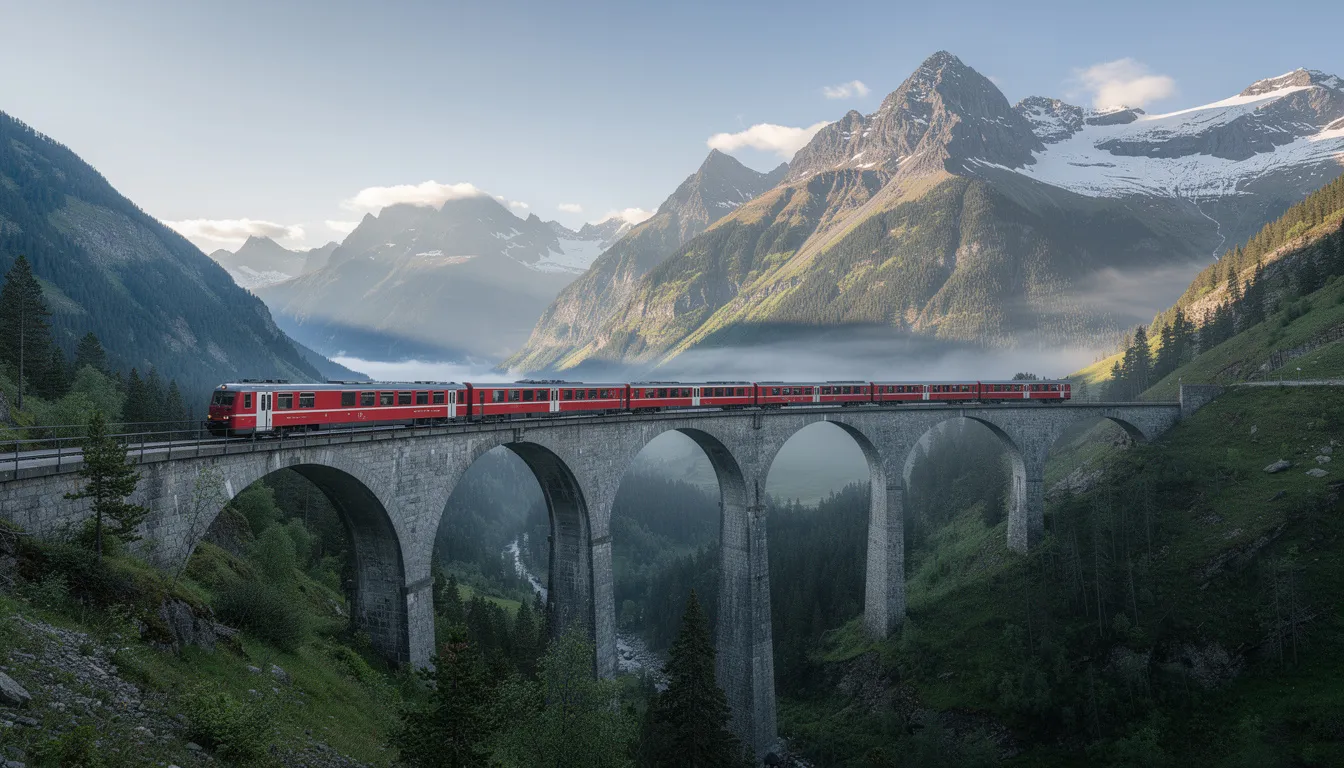
- Bernina Express line: Chur to Tirano, a UNESCO World Heritage route (reservation required)
- GoldenPass routes: Lucerne to Interlaken to Montreux, stunning lake and mountain views
- Grand Train Tour of Switzerland: A curated 1,280 km route connecting major highlights with hop-on, hop-off flexibility
Sample day trips with full pass coverage:
- Lake Lucerne boat cruise + cogwheel train up Mount Rigi
- Train to Schaffhausen + walk to Rhine Falls (Europe’s largest waterfall)
- Journey through the Jungfrau Region bases of Grindelwald and Lauterbrunnen
- Lavaux vineyard train from Lausanne along Lake Geneva
Tips and recommendations for Swiss Travel Pass users
To get the most out of your Swiss Travel Pass, a little preparation goes a long way. Purchase your travel pass online before your trip to ensure you receive your valid Swiss Travel Pass in time and to avoid any last-minute hassles. Always carry your pass—either printed or on your smartphone—along with your passport or ID, as you may be asked to show both during ticket inspections.
Take full advantage of the unlimited travel feature by exploring Switzerland’s extensive public transport network. Use your pass for spontaneous day trips, scenic boat rides, and discounted mountain excursions. If you’re traveling with friends or family, remember that each person needs their own pass, which allows for greater flexibility in planning your trip.
Be aware that while most trains, buses, and boats don’t require reservations, premium panoramic trains like the Glacier Express and Bernina Express do have mandatory seat reservation fees. Plan ahead and book these seats early, especially during high season, to secure the best views.
With the Swiss Travel Pass, you’ll enjoy discounts on attractions, free admission to hundreds of museums, and the freedom to discover Switzerland’s cities and natural wonders at your own pace. Embrace the convenience, flexibility, and value of your pass, and make your Swiss travel experience truly unforgettable.
When the Swiss Travel Pass is worth it – and alternatives
The Swiss Travel Pass delivers good value when your itinerary involves frequent, substantial travel across multiple days. It’s not always the cheapest option for every trip style.
The pass typically pays off when:
- You’re traveling 5–15 days with long train journeys nearly every day
- Your route includes expensive mountain excursions that offer pass discounts
- You’re interested in visiting several museums
- You’re traveling as a family with children aged 6–15 (thanks to the Swiss Family Card)
- You want the convenience of not planning individual tickets
Consider alternatives when:
- Your trip is very short (1–2 days)—the Saver Day Pass or point-to-point tickets may save money
- You’re staying put in one location without much rail travel
- Your budget is extremely tight and you can plan around advance-purchase discounted tickets
For stays longer than 15 days, you can combine multiple passes or mix the Swiss Travel Pass with other products like the Half Fare Card. The Swiss Half Fare Card provides a 50 discount on all public transport and mountain excursions for one month—useful for longer, less intensive travel.
Decision-making approach:
- Sketch your itinerary with planned destinations
- Count your actual travel days and major journeys
- Estimate the full price of individual tickets using the SBB journey planner
- Compare that total against the relevant pass price
- Factor in museum visits and mountain discounts
Who can buy the Swiss Travel Pass and where
Eligibility is straightforward: anyone living outside Switzerland and Liechtenstein can purchase the pass.
Where to buy:
- Online in advance through Swiss Travel System or authorized retailers (recommended, especially during high season)
- At major Swiss railway stations upon arrival
- Through international travel agencies authorized to sell Swiss Travel System products
Important purchase details:
- The start date must be chosen at purchase time
- Changes and refunds depend on where you bought the pass—check the terms
- Keep both an electronic and printed copy as backup in case of phone problems
Service, updates, and staying informed
Swiss public transport is famously reliable, but disruptions do happen. Here’s how to stay current:
- Check live rail traffic information from SBB for engineering works, delays, and international service issues
- Official websites and apps provide real-time timetables, platform changes, and reservation booking in English, German, French, and Italian
- Ticket counters at major stations can help with pass selection, seat reservations, and clarifying validity questions
- Subscribe to Swiss Tourism or rail newsletters for updates on promotions and pricing changes
Planning your Swiss adventure starts with understanding which pass fits your travel style. Sketch out your itinerary, count your travel days, and run the numbers. With the right pass in hand, you’ll spend less time buying tickets and more time enjoying the spectacular scenery that makes Switzerland one of the world’s great train travel destinations.