


Ouigo Explained: High-Speed Trains, Low Prices, and How to Book
Picture this: You’re dreaming of exploring the vibrant streets of Paris, the sun-drenched beaches of the French Riviera, or the architectural wonders of Barcelona. You want to get there fast, comfortably, and without emptying your wallet. For years, high-speed rail felt like a luxury, a premium service. Then, Ouigo rolled onto the tracks, changing the game entirely.
This isn’t just another train service; it’s a movement. Ouigo promises high-speed travel at prices that often rival—or even beat—budget airlines, all while offering the inherent advantages of train travel. If you’re a savvy traveler looking to stretch your budget further without compromising on speed or experience, understanding Ouigo is your next smart move. Let’s dive in.
What Exactly is Ouigo? The Story of High-Speed Travel on a Budget
Imagine a nimble, high-performance sports car, but instead of carrying two people, it’s designed to carry hundreds, all while keeping the fuel costs incredibly low. That’s a good analogy for Ouigo. It’s the budget-friendly, high-speed train service brainchild of SNCF, France’s national railway company, and Renfe, Spain’s national railway company. Their mission? To democratize high-speed rail, making it accessible to a much broader audience.
It launched in France in 2013 and later in Spain, offering a no-frills, low-cost model for journeys on their existing high-speed networks. Think of it as the budget airline equivalent for trains, but with the added benefits of comfortable seats, more legroom, and city-center arrivals.
A Quick Overview: Speed, Savings, and Simplicity
At its core, Ouigo is defined by three pillars:
- Speed: You’re traveling on the same high-speed lines and often the same TGV or AVE trains as the more expensive services. This means getting from Paris to Marseille in about 4 hours or Madrid to Barcelona in roughly 2.5 hours. No slow chugging through the countryside here.
- Savings: This is Ouigo’s main draw. Tickets can start as low as €10-€20 for a substantial journey if booked in advance. These prices are disruptive, designed to make you reconsider flying or even driving.
- Simplicity: To achieve those low prices, Ouigo streamlines everything. It’s about getting you from point A to point B efficiently, without all the bells and whistles of premium travel. This simplicity is key to its operational efficiency and, ultimately, your savings.
Why Ouigo? Unpacking the Low-Cost Model
The question isn’t just what Ouigo is, but how it manages to offer such incredible value. It’s a masterclass in strategic cost-cutting and efficient operations.
How They Keep Prices Down: The Ouigo Philosophy
Ouigo’s low-cost model isn’t magic; it’s a deliberate and well-executed strategy. Think of it as a carefully constructed puzzle where every piece contributes to the final, affordable price:
- High Seating Density: Ouigo trains are configured to maximize passenger capacity. They might have fewer first-class carriages or a more uniform seating arrangement, allowing more people on each journey. More passengers per train means the operational cost per passenger goes down.
- Online-Only Sales: You won’t find Ouigo tickets at station counters or through traditional travel agents. Everything is booked online, either via their website or mobile app. This eliminates the overhead costs associated with physical ticket offices and personnel.
- Strategic Station Choices: In some major cities, Ouigo trains might depart from or arrive at secondary stations rather than the absolute busiest, most central ones. For example, in Paris, Ouigo often uses Marne-la-Vallée (near Disneyland Paris) or Massy TGV, rather than Gare de Lyon or Gare du Nord. While this might add a short metro ride to your final destination, these stations often have lower access fees for the train operator, contributing to savings.
- Reduced Onboard Services: Don’t expect a dining car with white tablecloths or complimentary champagne. Ouigo offers minimal onboard services—perhaps a simple snack bar or vending machines. The focus is on the journey itself, not the luxurious trimmings.
- Dynamic Pricing: Like airlines, Ouigo employs dynamic pricing. The earlier you book, especially for off-peak times, the cheaper your ticket will be. As the train fills up or the departure date approaches, prices steadily increase. This encourages early bookings, which helps Ouigo manage demand and capacity.
- Strict Baggage Policy: To avoid delays and additional staff, Ouigo has a very clear (and sometimes strict) baggage policy. Passengers get a basic allowance, and anything extra or oversized incurs an additional fee. This incentivizes light packing and prevents trains from being bogged down by excessive luggage.
The “Ouigo Essentials”: What You Get (and Don’t Get)
This cost-cutting isn’t about compromising safety or the core high-speed experience. It’s about stripping away non-essential services.
What you do get:
- A comfortable seat on a modern, high-speed train.
- A fast, efficient journey between major cities.
- Access to power outlets (often an add-on or standard in some seats).
- Optional Wi-Fi (often for a small fee).
What you don’t get (or pay extra for):
- A dining car or extensive onboard catering.
- First-class cabins or spacious business lounges.
- Flexible tickets with easy changes or refunds.
- Unlimited, oversized baggage without extra cost.
- Dedicated customer service lines for immediate assistance.
Understanding these “essentials” is crucial for managing expectations and enjoying your Ouigo journey. It’s not about being deprived; it’s about paying only for what you truly need.
Where Can Ouigo Take You? Routes and Destinations
Ouigo operates on dedicated high-speed lines, meaning its reach is primarily limited to cities connected by this infrastructure. However, its networks are quite extensive within both France and Spain, linking major urban centers with remarkable efficiency.
France: The Heart of the Network
France is where Ouigo first made its mark, and its network continues to be robust. You can crisscross the country, connecting its bustling metropolises and picturesque regions.
- Paris and its Surroundings: While not always departing from the very center, Ouigo serves various stations around Paris, linking the capital to the rest of the network.
- The South: Reach vibrant cities like Marseille, Nice, Montpellier, and Nîmes, opening up access to the Mediterranean coast and Provence.
- The West: Destinations like Bordeaux, Nantes, and Rennes are well-served, providing gateways to the Atlantic coast and the Loire Valley.
- The East: Strasbourg and Lyon are also part of the Ouigo network, connecting the capital to the East and Southeast.
This extensive network means you can plan a multi-city French adventure relying almost exclusively on Ouigo, saving significantly on inter-city transport.
Spain: Expanding Horizons
Following its success in France, Ouigo expanded to Spain, operating as a direct competitor to Renfe’s own high-speed services. Spain’s high-speed rail network (AVE) is one of the most advanced in Europe, and Ouigo is leveraging this infrastructure to offer budget-friendly options.
- Madrid-Barcelona Corridor: This is Ouigo Spain’s flagship route, connecting the two largest cities in the country in a little over 2.5 hours. It’s an incredibly popular and competitive corridor.
- Valencia and Alicante: Ouigo also connects Madrid to the popular coastal cities of Valencia and Alicante, offering an affordable way to reach the sunny Levante region.
- Andalucía: New routes to Seville and Malaga were launched in 2024, expanding Ouigo’s reach into the culturally rich south of Spain.
Ouigo’s presence in Spain has been a game-changer, driving down prices and increasing competition, much to the benefit of travelers.
Booking Your Ouigo Journey: A Step-by-Step Guide
Booking a Ouigo ticket is straightforward, but knowing a few tips can enhance your experience and ensure you get the best deal. Remember, flexibility and early booking are your best friends here.
1. Choosing Your Tickets: Flexibility vs. Savings
Ouigo tickets are primarily non-refundable and non-exchangeable, particularly at the lowest price points. This is a key aspect of their low-cost model.
- The Early Bird Gets the Worm (and the Cheapest Ticket): As mentioned, Ouigo uses dynamic pricing. Tickets for popular routes and peak travel times sell out quickly and increase in price. As soon as your travel dates are firm, book your tickets.
- Off-Peak Perks: Traveling mid-week or during less popular hours will almost always yield cheaper fares. If your schedule allows, be flexible with your departure times.
- Ouigo Plus: In Spain, Ouigo offers “Ouigo Plus,” a bundle that includes an extra large piece of luggage, seat selection, and access to their OUIFUN entertainment platform. For a small additional cost (usually €9), this can be a worthwhile upgrade for added comfort and convenience.
2. Navigating the Booking Platform: Tips and Tricks
The Ouigo website and mobile app are designed for simplicity.
- Direct Booking: Always book directly through the official Ouigo France or Ouigo Spain website, or their respective apps. This ensures you’re getting the official prices and terms.
- Language Selection: Ensure you select your preferred language at the outset to avoid any confusion.
- Inputting Details: Have your passport or ID details ready, as you’ll need to enter passenger names exactly as they appear on your identification.
- Email Confirmation: Double-check your email address before finalizing the booking, as your tickets will be sent there. It’s always a good idea to download the e-ticket to your phone or print a copy.
3. Seat Selection: Comfort for a Small Fee
Unlike some budget airlines where seat selection is almost mandatory for a decent spot, Ouigo’s default seating is generally fine. However, you do have options:
- Standard Seats: Included in your basic ticket. These are generally comfortable and offer decent legroom, especially compared to budget airlines.
- “Plus” or “XL” Seats: For a small additional fee (usually a few euros), you can often select an “XL” seat, which offers more legroom or a window view. This is a personal preference; if you’re particularly tall or prefer more space, it’s a good value.
- Group Seating: If you’re traveling with companions, it’s often worth paying the small fee to select seats together, especially if you’re on a busy train.
4. Baggage Rules: Packing Smart for Ouigo
This is one of the most crucial aspects of Ouigo travel. Adhering to the baggage rules is vital to avoid unexpected fees at the station.
- Included Baggage: Typically, your basic ticket includes one piece of hand luggage (like a backpack) and one cabin bag (similar in size to an airplane carry-on).
- Additional/Larger Bags: If you have more luggage or oversized items (e.g., a large suitcase, sports equipment, musical instruments), you must declare and pay for them during the booking process. The fee is usually much higher if you pay at the station.
- Dimensions and Weight: Check the exact dimensions and weight limits on the Ouigo website for your specific route (France vs. Spain can have slight variations). They can be quite strict, and station staff will check.
- Children’s Items: Strollers are usually free, but it’s always best to confirm on the specific Ouigo site.
Onboard Experience: What to Expect from Your Ouigo Ride
Once you’ve navigated the booking and baggage, the actual train journey is generally a pleasant and efficient affair.
The Ouigo Train: Inside and Out
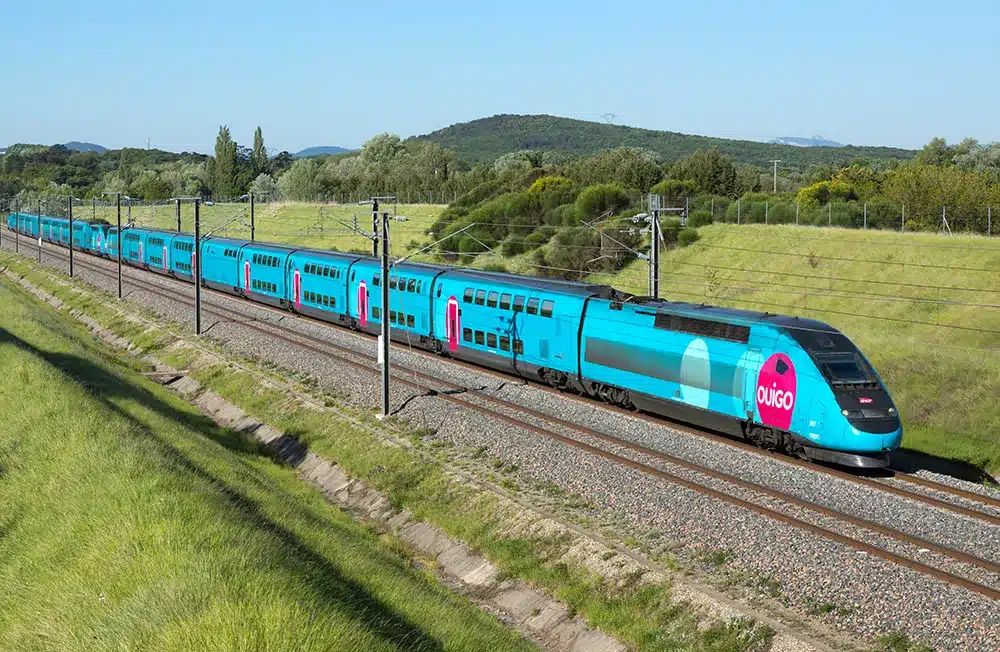
Ouigo trains are typically converted TGV (France) or AVE (Spain) carriages, distinguished by their vibrant blue and pink livery. Inside, they are clean and functional.
- Seating Configuration: Expect a higher density of seats compared to traditional TGV/AVE services. Seating is typically 2×2 or 2×3 in open-plan carriages.
- Comfort: The seats are designed for comfort over several hours, generally upholstered and more spacious than airline economy seats.
- Cleanliness: Trains are regularly cleaned, offering a pleasant environment.
Services and Amenities: Keep it Simple, Keep it Cheap
Remember the “essentials” philosophy.
- Food and Drink: There is usually a Ouigo Bar on board for basic snacks, sandwiches, and drinks. Alternatively, you can bring your own food and non-alcoholic beverages to consume at your seat. This is a common strategy for saving money on Ouigo.
- Wi-Fi: Wi-Fi is often available for a small fee, which you can purchase onboard. It’s usually good enough for browsing and checking emails, but don’t expect to stream movies.
- Power Outlets: Many seats have power outlets, but this can vary. Some trains might require an upgrade to an “XL” seat for guaranteed access. Check during booking.
- Entertainment: In Spain, Ouigo Plus includes access to OUIFUN, a digital entertainment platform. In France, entertainment options are generally limited to what you bring yourself.
Arriving at the Station: A Different Kind of Departure
Ouigo has a slightly different boarding process than standard trains.
- Early Arrival: You are usually required to arrive at the station 30 minutes before departure for baggage and ticket checks. This is not like regular train travel where you can often hop on a minute before. Don’t be late; the gates close!
- Ticket Checks: Staff will scan your e-ticket (printed or on your phone) and may check your ID. This is also where they check your baggage size and count.
- Designated Platforms: Ouigo trains often use specific, well-marked platforms. Follow the signs carefully.
The Pros and Cons of Choosing Ouigo
Like any service, Ouigo isn’t for everyone, every time. Weighing the advantages against the limitations will help you decide if it’s the right choice for your trip.
The Upsides: Why Many Travelers Swear by It
- Unbeatable Value: This is Ouigo’s strongest selling point. For budget-conscious travelers, it’s often the cheapest way to travel long distances in France and Spain.
- Speed and Efficiency: You get to your destination quickly, avoiding airport security queues and city-to-airport transfers that eat into your travel time.
- City-Center to City-Center: Even if it’s a secondary station, you’re still arriving much closer to the heart of a city than an airport.
- Environmental Benefits: Train travel is generally more environmentally friendly than flying.
- Comfortable Seating: Even in standard class, train seats offer more space and comfort than budget airline seats.
The Downsides: When Ouigo Might Not Be Your Best Bet
- Strict Baggage Rules: If you’re a heavy packer or traveling with a lot of gear, the extra fees can quickly erode your savings.
- Limited Flexibility: Non-refundable, non-exchangeable tickets mean you need firm plans. Any changes can be costly or impossible.
- Peripheral Stations: While still convenient, arriving at a secondary station might require an extra metro or bus ride to your final destination, adding a small amount of time and cost.
- Minimal Services: If you expect full catering, first-class lounges, or extensive onboard entertainment, Ouigo will fall short.
- Customer Service: As a budget operator, customer service is typically leaner and more focused on online support rather than immediate, personal assistance.
Is Ouigo Right for Your Next European Adventure?
Ouigo represents a fantastic evolution in European travel, offering a bridge between the speed of flying and the convenience and environmental benefits of rail, all at an accessible price point.
Our Final Thoughts: When to Choose Ouigo
You should seriously consider Ouigo if:
- You’re traveling on a budget: This is the primary reason to choose Ouigo.
- You have firm travel plans: If your dates and times are set in stone, you can take advantage of the cheapest fares.
- You’re a light packer: Adhering to the baggage limits will maximize your savings.
- You prioritize speed and directness: Getting from city center to city center quickly is a huge plus.
- You appreciate simplicity: You’re happy with a no-frills, efficient travel experience.
Ouigo isn’t just a train; it’s a smart travel hack for exploring France and Spain. By understanding its model, embracing its simplicity, and planning ahead, you can unlock incredible value and make your next European adventure both memorable and affordable. Happy travels!