

Picture this: you’re gazing out the window of a sleek, high-speed train, the German countryside blurring into a picturesque canvas of rolling hills and charming villages. You’re sipping a coffee, perhaps catching up on emails, or simply enjoying the journey, completely stress-free. This isn’t a fantasy; it’s the everyday reality of traveling with Deutsche Bahn (DB), Germany’s national railway company. If the thought of navigating a foreign train system feels daunting, I’m here to tell you it’s far simpler and more rewarding than you might imagine.
Why Navigating Deutsche Bahn is Easier Than You Think
Many travelers, especially those new to Germany, approach DB with a mix of excitement and trepidation. They envision complex schedules, language barriers, and a maze of ticket options. But I want to reframe that perception. Think of Deutsche Bahn not as a challenge, but as a meticulously organized, highly efficient system designed for your convenience. It’s like a well-oiled machine, and once you understand a few key levers, you’ll be zipping across Germany like a seasoned local.
The beauty of DB lies in its comprehensive reach and user-friendly tools. From bustling metropolitan hubs to quaint, rural stations, DB connects virtually every corner of the country. And with modern digital platforms and clear station signage, even non-German speakers can navigate with surprising ease. My goal here is to equip you with the knowledge and confidence to transform potential anxieties into anticipation for a smooth, enjoyable journey.
Understanding the Deutsche Bahn Network: Your Gateway to Germany
To truly appreciate Deutsche Bahn, it helps to understand its anatomy. Think of Germany as a vast web, with high-speed arteries connecting major organs and smaller veins branching out to every limb. DB operates this entire circulatory system, ensuring a constant flow of people and goods.
Types of Trains: From ICE to Regionalbahn
DB employs a hierarchy of trains, each designed for a specific purpose and speed. Knowing the difference will help you choose the right train for your journey and understand your travel time expectations.
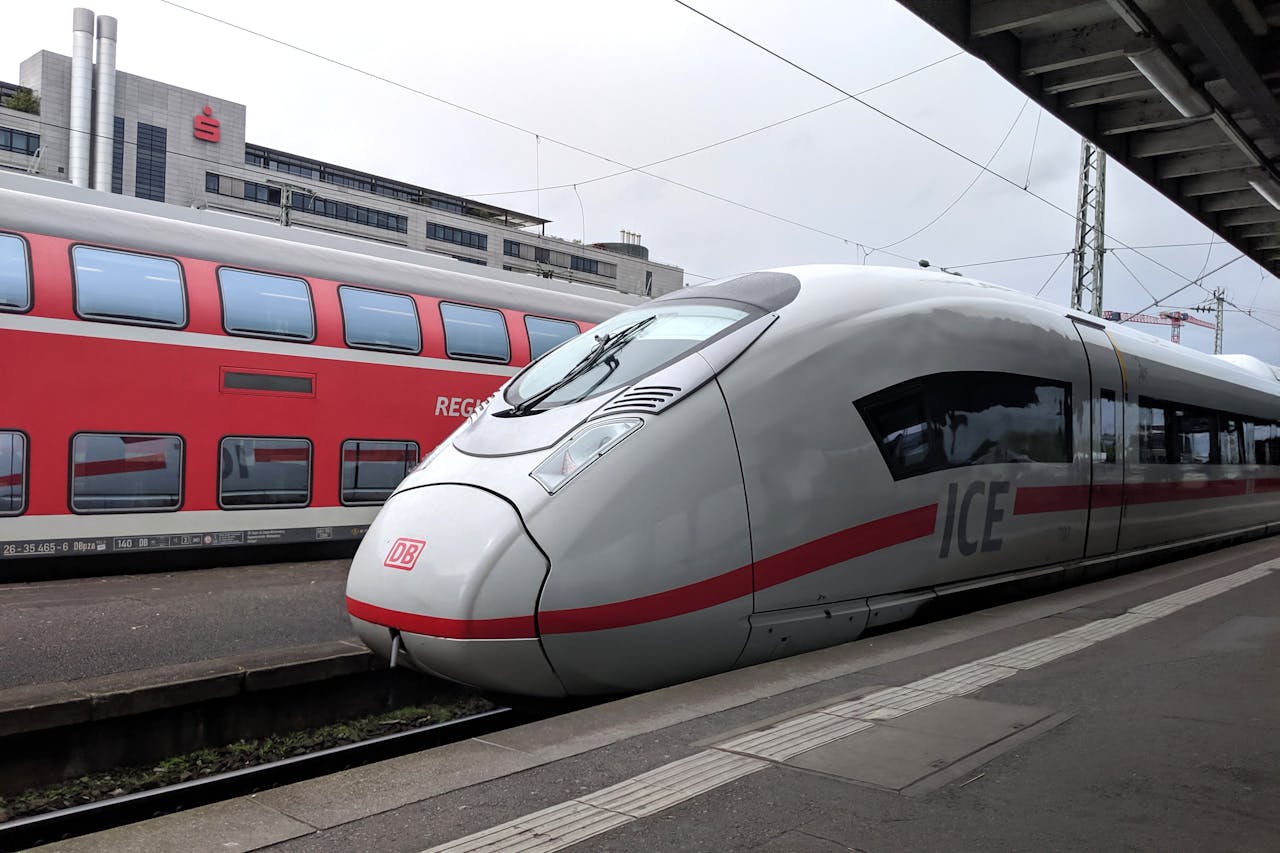
At the pinnacle is the ICE (Intercity-Express). These are the sleek, white, high-speed marvels, often reaching speeds of over 300 km/h. They connect major cities like Berlin, Munich, Frankfurt, and Hamburg, making cross-country travel incredibly fast and comfortable. If you’re traveling a significant distance and want to arrive quickly, the ICE is your go-to. They are typically the most expensive option, but also offer the most amenities and often require reservations for guaranteed seating.
Next, you have IC (Intercity) and EC (Eurocity) trains. These are a step down from ICE in terms of speed, making more stops, but still providing comfortable, long-distance travel. EC trains often cross international borders, hence the “Euro.” They are a good alternative for longer journeys where speed isn’t the absolute top priority, and they can sometimes be more affordable than ICE.
For regional travel, you’ll encounter RE (Regional-Express) and RB (Regionalbahn). RE trains offer quicker regional connections, skipping some smaller stations, while RB trains make all stops within a region. These are your workhorses for local commutes, exploring smaller towns, or connecting to larger hubs from rural areas. While slower, they are significantly more affordable, especially when utilizing regional passes.
Finally, there are S-Bahn (Stadtschnellbahn) trains. These are urban rapid transit systems, essentially commuter rail, found in and around major cities. They operate much like a subway system, connecting suburbs to city centers and running frequently. Your regular DB ticket might be valid on S-Bahn lines within the relevant fare zones, depending on the city.
Key Hubs and Connections
Germany’s train network is built around a series of incredibly efficient major hubs. Cities like Frankfurt (Main) Hbf, Munich Hbf, Berlin Hbf, Hamburg Hbf, Cologne Hbf, and Stuttgart Hbf are massive, multi-level stations that act as central nervous systems for the network. They connect high-speed routes with regional lines and local transport.
Navigating these hubs might seem daunting at first due to their sheer size, but they are incredibly well-signposted. Digital display boards are everywhere, clearly indicating departures, arrivals, platform numbers, and any delays. Think of them as high-tech, indoor airports, but for trains. Transfers between platforms are often designed to be efficient, even for short connection times. Understanding these hubs are your key to unlock seamless travel across the country.
Booking Your Journey: From App to Ticket Counter
Booking your train journey with Deutsche Bahn is designed to be straightforward, offering several convenient options to suit your preference.
The DB Navigator App: Your Best Friend for German Train Travel
If there’s one tool you absolutely must download before your trip, it’s the DB Navigator app. This app is not just a booking portal; it’s your real-time travel companion. You can search for connections, view platform numbers, see live delay information, and store your tickets digitally.
Using the app is incredibly intuitive. Simply enter your departure and arrival stations, desired date, and time, and it will present you with a range of connection options, displaying prices, travel times, and any required transfers. Once booked, your ticket resides within the app, accessible even offline. This digital ticket serves as your proof of purchase to the conductor. It’s truly a game-changer for stress-free travel.
Booking Online: The Official Website (bahn.de)
For those who prefer a larger screen or want to meticulously plan a complex itinerary, the official website, bahn.de, is equally robust. It offers all the same functionalities as the app, including detailed journey planning, seat reservations, and special offers. You can purchase tickets and either print them out at home, receive them as a PDF via email (which you can then import into the DB Navigator app), or simply show the digital ticket on your phone.
The website also has a dedicated English version, making it accessible to international travelers. I recommend creating an account, especially if you plan multiple journeys, as it streamlines the booking process and keeps a record of your past trips.
Buying Tickets at the Station: Machines vs. Counter
While digital booking is king, you can still purchase tickets at the station.
Ticket Machines are plentiful at every station, from major hubs to smaller stops. These machines are multilingual, offering English and several other languages. They accept cash, credit cards, and often German debit cards (EC-Karte). The interface is user-friendly, guiding you step-by-step through the booking process. For simple, direct journeys, they are quick and efficient. Be aware that some regional tickets might be slightly more complex to navigate on the machines compared to standard point-to-point tickets.
Ticket Counters (Reisezentrum) are available at larger stations. Here, you’ll find DB staff who can assist with more complex itineraries, answer questions, or help with special requests. While helpful, be prepared for potential queues, especially during peak travel times. There might also be a small service fee for tickets purchased at the counter compared to online or machine prices, especially for certain fare types. I generally recommend using the app or website unless you have a specific, complicated query.
Decoding Your Ticket: What Everything Means
Once you have your ticket, whether digital or paper, it holds a wealth of information. Understanding it will prevent any last-minute confusion.
Understanding Different Fare Types: Flexpreis, Sparpreis, and Super Sparpreis
Deutsche Bahn employs a dynamic pricing system, offering different fare types designed to cater to various needs and budgets.
The Flexpreis (Flexible Fare) is exactly what it sounds like. It’s the most expensive but offers maximum flexibility. With a Flexpreis ticket, you can take any train on your chosen route on the day of validity, and even the day after, within certain restrictions. It’s fully refundable (minus a small fee if cancelled shortly before departure) and allows for spontaneous changes. Ideal if your plans might change or you need the freedom to hop on an earlier or later train.
The Sparpreis (Saver Fare) is where you start finding significant discounts. These tickets are for specific trains, dates, and times. If you miss your booked train, the ticket generally becomes invalid, and you’d need to purchase a new one. Cancellations or changes usually incur a fee and are less flexible. Think of it as a commitment: you get a cheaper price for committing to a specific journey.
The Super Sparpreis (Super Saver Fare) is the holy grail for budget travelers. These are the cheapest tickets available, often offering discounts of up to 70% or more compared to the Flexpreis. Like the Sparpreis, they are valid for a specific train connection. However, they are generally non-refundable and non-changeable once purchased. If you’re confident in your travel plans and book well in advance, the Super Sparpreis is your best friend.
A key takeaway here: the earlier you book, the more likely you are to snag a Sparpreis or Super Sparpreis.
Reservations: Are They Always Necessary?
For ICE and IC/EC trains, you have the option to make a seat reservation for an additional small fee (currently around €4.90 for second class). For Sparpreis and Super Sparpreis tickets, a seat reservation is typically not included but can be added. For Flexpreis tickets, a seat reservation is optional.
Are they always necessary? Not strictly, especially outside of peak travel times. You can often find an unreserved seat. However, during busy periods (commuter rush hours, Fridays, Sundays, public holidays, or popular routes), trains can get very crowded. To guarantee a seat and avoid the stress of searching, a reservation is highly recommended, especially for longer journeys. If you travel in First Class, a seat reservation is often included in the ticket price.
For regional trains (RE, RB, S-Bahn), seat reservations are generally not possible or necessary.
First Class vs. Second Class: Is the Upgrade Worth It?
Deutsche Bahn offers two classes of service: First Class and Second Class.
Second Class is perfectly comfortable and modern. You’ll find good seating, ample legroom, and generally a pleasant travel experience. Most travelers opt for Second Class, and for good reason – it’s a perfectly good standard.
First Class offers several perks for a higher price. You’ll typically find wider seats, more legroom, quieter carriages, often fewer passengers, and at-seat service (attendants bring food and drinks to your seat, though the items themselves are usually not free). Some First Class tickets also include access to DB Lounges at major stations, offering complimentary drinks, snacks, and Wi-Fi.
Is the upgrade worth it? It depends on your priorities and budget. If you value extra space, a quieter environment for work or relaxation, and don’t mind paying a premium, First Class can be a lovely experience. For most casual travelers, Second Class provides excellent value and comfort. Consider it for very long journeys or if you need to work undisturbed.
Smart Strategies for Saving Money on Deutsche Bahn
Traveling by train in Germany doesn’t have to break the bank. With a little planning and knowledge, you can significantly reduce your travel costs.
Booking in Advance: The Early Bird Gets the Sparpreis
This is the golden rule for saving money on DB. As discussed with Sparpreis and Super Sparpreis tickets, these highly discounted fares are limited in number and released up to six months in advance. The further out you book, the higher your chances of snagging one of these deals. If you wait until the day of travel, you’ll almost certainly be paying the full Flexpreis. Think of it like airline tickets: dynamic pricing rewards early planners.
BahnCard: Is It Right for You?
The BahnCard is a loyalty card that offers percentage discounts on most DB fares, including Sparpreis. There are three main types:
- BahnCard 25: 25% discount on Flexpreis and Sparpreis fares.
- BahnCard 50: 50% discount on Flexpreis and 25% discount on Sparpreis fares.
- BahnCard 100: Unlimited travel on the entire DB network for a fixed annual price (this is typically for very frequent business travelers).
BahnCards are valid for one year and automatically renew unless cancelled. They can be a fantastic investment if you plan multiple train journeys within Germany. To figure out if it’s worth it, estimate your total travel costs. If the savings from the discount exceed the cost of the BahnCard, it’s a no-brainer. You can often purchase a “Probe BahnCard” (trial BahnCard) for a shorter period to test its value.
Regional Tickets: Exploring with Länder-Tickets and Quer-durchs-Land-Tickets
For exploring specific regions or making multiple stops within a day, DB offers excellent value regional day tickets.
Länder-Tickets (State Tickets) are valid for unlimited travel within a specific German state (e.g., Bavaria Ticket, Brandenburg-Berlin Ticket) for one day. They are valid on regional trains (RE, RB, S-Bahn) and often on local buses, trams, and subways within that state. They are typically valid from 9 AM on weekdays (or midnight on weekends/public holidays) until 3 AM the following day. The price increases slightly with each additional person, making them incredibly economical for groups of 2-5 travelers.
The Quer-durchs-Land-Ticket (Across the Country Ticket) is similar but valid for regional trains across all of Germany. It’s a great option for longer journeys using regional trains if you have plenty of time and want to save money. Like the Länder-Tickets, it’s valid from 9 AM on weekdays (midnight on weekends/holidays) until 3 AM the next day and offers discounts for groups.
These tickets are perfect for day trips, exploring multiple towns in a region, or slow travel. Remember, they are NOT valid on ICE or IC/EC trains.
Group Travel Deals
Beyond the regional tickets, DB also offers specific group discounts for standard point-to-point tickets. For groups of six or more people traveling together, you can often secure a significant discount compared to individual tickets. These are called “Sparpreis Gruppe” (Saver Fare Group) and are best booked well in advance on bahn.de or at a ticket counter.
Onboard Essentials: Making Your Journey Comfortable
Once you’re on the train, understanding a few basics will ensure a smooth and pleasant journey.
Finding Your Seat: Understanding Car and Seat Numbers
Your ticket or reservation will specify your car number (Wagen) and seat number (Platz). Car numbers are clearly displayed on the outside of each train car and also on platform information boards, helping you position yourself correctly before the train even arrives.
Inside the train, seats are numbered. In First Class, seat numbers are usually large and obvious. In Second Class, they might be smaller and located on the armrest or above the window. If you have a reservation, a small digital display or paper slip above your seat will often show the reserved route segment (e.g., “Hamburg – Berlin”) or indicate “ggf. reserviert” (possibly reserved) if it’s currently free but reserved for a later segment. If you see “Frei” (free) or no indication, the seat is unreserved.
Luggage Etiquette and Storage
Deutsche Bahn trains are very accommodating for luggage. You’ll find overhead racks above your seat, suitable for smaller bags, backpacks, and coats. For larger suitcases, there are dedicated luggage racks at the end of each car, or sometimes in the middle. The space under your seat can also be used for smaller items.
While there are no strict weight limits like on airplanes, common courtesy dictates that you should be able to lift your own luggage into the racks. Keep the aisles clear for other passengers and the conductor. Generally, passengers are expected to manage their own luggage without assistance.
Dining and Services Onboard
On most ICE and many IC/EC trains, you’ll find a Bordrestaurant (dining car) or a Bistro (snack bar). The Bordrestaurant offers hot meals, snacks, and drinks, while the Bistro typically has a more limited selection of sandwiches, coffee, and drinks. The quality of food is surprisingly good for train travel, and it’s a great experience to enjoy a meal while watching the scenery pass by. You can also bring your own food and drinks onboard.
On some longer routes, especially in First Class, there might be at-seat service where attendants take orders and deliver items directly to you. Regional trains generally do not have dining facilities, so plan accordingly if traveling on those for extended periods.
Wi-Fi and Power Outlets
Most ICE trains offer free Wi-Fi in both First and Second Class. While generally reliable, don’t expect fiber-optic speeds – it’s usually good enough for browsing, emails, and light streaming. On some regional trains, Wi-Fi is also becoming more common.
Power outlets are widely available in both First and Second Class on ICE and IC/EC trains, usually located between or under the seats. They are standard European two-pin sockets (Type F). On older regional trains, outlets might be less common. It’s always a good idea to fully charge your devices before traveling, but having access to power for laptops or phones is a huge convenience.
Navigating the Stations: Tips for Smooth Transfers
German train stations are designed for efficiency, but knowing what to look for can make your transfers even smoother.
Platform Information and Digital Displays
Upon arrival at a station, immediately look for the large digital departure/arrival boards (often called “Abfahrt” for departures and “Ankunft” for arrivals). These will show your train number, destination, scheduled departure time, and most importantly, the platform number (Gleis). They also display any delays or platform changes in real-time. Don’t rely solely on your paper ticket for platform numbers, as these can change. Always check the digital displays.
On the platform itself, smaller digital signs will confirm the next train’s details and often show the train’s composition (which car numbers are where on the platform), helping you position yourself correctly for your reserved seat.
Transfer Times: Don’t Cut It Too Close
When booking, DB’s system typically offers connections with reasonable transfer times (often 5-15 minutes in larger stations). While these are usually achievable due to the efficiency of German stations and the close proximity of platforms, if you have limited mobility, heavy luggage, or are traveling with small children, consider opting for connections with slightly longer transfer times if available.
A slight delay on an incoming train can quickly eat into a short transfer. If you miss a connection due due to a DB-caused delay, your ticket remains valid for the next available train to your destination. However, to avoid stress, aim for a comfortable buffer.
Station Amenities: Food, Shops, and Restrooms
Major German train stations are like mini-malls. You’ll find a wide array of amenities:
- Food and Drink: From quick snack stands and bakeries (Bäckerei) to full-service restaurants, supermarkets (e.g., Rewe To Go, Edeka Express), and coffee shops.
- Shops: Newsstands, bookstores, pharmacies, and even clothing stores.
- Restrooms (WC): Usually clean and well-maintained, but often require a small fee (€0.50 – €1.00) for entry. Look for the “00” or “WC” signs.
- Lockers (Schließfächer): Available at most larger stations for short-term luggage storage, paid per hour or day.
Take advantage of these amenities during transfers or before your journey.
Handling the Unexpected: Delays, Cancellations, and Lost Items
While DB is known for its punctuality, delays and cancellations can happen. Knowing what to do will save you a lot of hassle.
What to Do When Your Train is Delayed
If your train is delayed, the first thing to do is check the DB Navigator app or the digital display boards at the station. They will provide real-time updates and often suggest alternative connections.
If you have a connecting train and fear missing it due to a delay, approach the train conductor or staff at a DB Information counter (often marked with a blue “i”). They can advise you on the best alternative route and validate your ticket for the next available train. Your ticket remains valid if the delay is DB’s fault.
Understanding Your Passenger Rights
Under EU regulations, train passengers have specific rights. For delays:
- 60+ minutes delay: You are entitled to 25% refund of your ticket price.
- 120+ minutes delay: You are entitled to 50% refund of your ticket price.
You can claim this refund by filling out a “Fahrgastrechte-Formular” (Passenger Rights Form), available at DB Information counters or online. Keep your ticket as proof of purchase. If an overnight stay is required due to a significant delay or cancellation, DB may also cover accommodation costs, but you must arrange this through DB staff first.
Lost and Found Services
Accidentally leave something on the train or at the station? Deutsche Bahn has a robust Lost and Found (Fundbüro) system. You can report a lost item online via bahn.de/fundservice or in person at a Fundbüro located at larger stations. Provide as much detail as possible: train number, date, time, car and seat number, and a detailed description of the item. While not guaranteed, the system is quite effective, and many items are recovered.
Beyond the Train: Connecting Your Journey
Deutsche Bahn often offers integrated solutions to make your entire journey seamless, from your front door to your final destination.
DB’s City-Ticket: Seamless Public Transport Integration
When you purchase a long-distance ticket (Flexpreis, Sparpreis, Super Sparpreis) for journeys over 100km, your ticket might include a City-Ticket option. This means your train ticket is also valid for public transport (buses, trams, subways, S-Bahn) in your departure and arrival cities, within a specified zone, for a limited time (e.g., 2 hours before departure and 2 hours after arrival).
Look for “Düsseldorf Hbf + City” on your ticket to see if it’s included. This can save you the hassle and cost of buying separate local transport tickets, truly making your journey door-to-door.
Connecting to Buses and Trams
Beyond the City-Ticket, German public transport networks are highly integrated. Stations are almost always co-located with bus and tram stops, and often subway (U-Bahn) or S-Bahn stations. Information on connecting services is readily available on platform displays, the DB Navigator app, and local transport apps (e.g., MVG in Munich, BVG in Berlin). You can usually purchase local public transport tickets from machines at these stops or sometimes directly on the bus/tram.
Common Mistakes to Avoid When Traveling with Deutsche Bahn
Even with the best preparation, small missteps can occur. Here are a few common pitfalls to sidestep.
Not Validating Regional Tickets (when required)
Some regional tickets, especially those purchased from local public transport providers or certain paper tickets from DB machines, might require validation (Entwerten) before use. This usually means stamping them in a small machine at the platform entrance or on the bus/tram itself. Failing to do so can result in a fine. Always check the ticket itself or signs at the station for validation requirements. The Sparpreis, Flexpreis, and digital tickets from the DB Navigator app do not need separate validation.
Forgetting Your ID for Online Tickets
If you purchase a digital ticket (either from bahn.de or the DB Navigator app), it will often be linked to a specific identification document – usually your passport, a credit card used for purchase, or a BahnCard. When the conductor checks your ticket, they will ask to see this ID. Make sure you carry the exact ID document you linked your ticket to. If you can’t present it, your ticket might be considered invalid, and you could be issued a new ticket (and a fine).
Underestimating Transfer Times
As mentioned earlier, while DB connections are tight, always factor in your personal mobility, luggage, and comfort level. A 5-minute transfer might be feasible for a nimble traveler with a backpack, but not for a family with multiple suitcases and young children. If in doubt, opt for a connection with a bit more buffer. It’s better to have extra time for a coffee than to be sprinting across a massive station.
Your Deutsche Bahn Journey Awaits
Traveling with Deutsche Bahn is more than just getting from point A to point B; it’s an integral part of the German experience. It’s an opportunity to relax, observe the changing landscapes, and experience the country’s renowned efficiency firsthand. With these tips and a little planning, you’re not just buying a ticket – you’re unlocking a seamless and enjoyable adventure across Germany. So, download that app, book that ticket, and get ready to discover the ease and pleasure of German train travel. Your journey awaits!