


Trains in North Macedonia offer a unique window into the country’s history, infrastructure, and travel experience. This comprehensive guide covers everything travelers and rail enthusiasts need to know: current train routes, major railway companies, practical travel tips, and the historical significance of the network. Whether you’re planning a journey across the Balkans, seeking authentic local experiences, or simply curious about the challenges and opportunities facing North Macedonia’s railways, this article explains the routes, operators, ticketing, and what to expect on board. Trains in North Macedonia matter not only for their role in connecting cities and regions, but also for their historical legacy, ongoing modernization efforts, and the distinctive travel experience they provide amid operational challenges.
History of Trains in North Macedonia
North Macedonia’s railway system tells a story of ambition, history, and present-day challenges. The first railway arrived in this Balkan country back in 1873, when the Ottoman-era line connecting Skopje to the port of Thessaloniki in Greece marked the region’s entry into the modern era of rail transport. In today’s North Macedonia, this milestone is celebrated as a key moment in the nation’s rail infrastructure history. The first standard gauge line in the area, from Skopje to Thessaloniki, was built in 1873 during Ottoman rule. In April 2023, the Museum of Macedonian Railways was opened in Skopje to commemorate 150 years since the arrival of the first train in today’s North Macedonia.
Overview of Train Travel in North Macedonia
Trains in North Macedonia are a practical, affordable, and historically significant way to explore the country, but travelers should be aware of the system’s limitations. The network spans roughly 925 km of track, yet only a handful of passenger trains actually run on any given day. The railway system in North Macedonia has faced significant operational challenges, including slow service and unreliable timetables. The maximum speed for trains in North Macedonia is 100 km per hour, but this only applies to a third of the network.
International Rail Traffic
Most international rail traffic has been suspended since 2020, particularly the routes to Belgrade in Serbia and Thessaloniki in Greece. As of late 2025, all regular international passenger rail services are suspended in North Macedonia. For travelers hoping to ride the rails across borders, this represents a significant disappointment.
Domestic Routes
Trains can still be used for a few key domestic routes, mainly starting from Skopje. The main north-south line runs from Tabanovce on the Serbian border through Kumanovo, Skopje, Veles, and down to Gevgelija near the Greek border. Branch lines head west toward Tetovo and Kičevo, and another line passes through Kumanovo and Skopje toward Bitola in the south.
Branch Lines
Some sections remain out of service or have no regular passenger trains. The Kočani line in the east has been dormant for years, with stations reportedly overgrown and unused. Freight trains use more of the network than passenger services, particularly on the electrified Corridor X section where cargo transport continues.
Station Integration
At Skopje’s Transport Center, the main rail and bus terminals are combined in one complex. This integration with road and bus transport means that when public transportation ends at the railway station, travelers can easily switch to intercity buses heading to destinations the trains no longer serve.
Transition: Now that you have an overview of the current train travel landscape, let’s look at which lines are actually running and how to plan your journey.
Summary Table: Operational Train Lines and Destinations
Below is a summary of all currently operational train lines in North Macedonia, their status, and major destinations. Note that the train network connects Skopje to major hubs like Veles, Kocani, Gevgelija, and Bitola, but lacks direct access to Ohrid. Travelers to Ohrid must transfer to a bus after taking a train to Bitola or Kičevo, as there is no direct rail service to Ohrid.
|
Route |
Status |
Major Destinations |
Notes |
|---|---|---|---|
|
Skopje – Veles – Gevgelija |
Active |
Skopje, Veles, Gevgelija |
Main north-south line; 1–2 trains daily |
|
Skopje – Veles – Bitola |
Active |
Skopje, Veles, Bitola |
Southwest line via Prilep; 1–2 trains daily |
|
Skopje – Kumanovo |
Active |
Skopje, Kumanovo |
Restored in 2025; 4 trains daily |
|
Skopje – Tetovo – Kičevo |
Partial |
Skopje, Tetovo, Kičevo |
Limited passenger service |
|
Veles – Štip – Kočani |
Suspended |
Veles, Štip, Kočani |
No passenger trains since 2020 |
|
Kumanovo – Beljakovce – Kriva Palanka |
Under construction |
Kumanovo, Kriva Palanka |
Strategic link to Bulgaria, expected operational by 2027–2030 |
|
International (Serbia, Greece, Kosovo) |
Suspended |
Belgrade, Thessaloniki, Pristina |
As of late 2025, all regular international passenger rail services are suspended |
|
Skopje – Ohrid |
Not available |
Ohrid |
No direct train; transfer to bus from Bitola or Kičevo |
Additional Notes:
-
The maximum speed at which trains can run in North Macedonia is 100 km per hour, applicable to only a third of the network.
-
Older rolling stock provides a comfortable travel experience, described as a “rolling lounge.”
-
Bikes are allowed on certain trains in North Macedonia.
-
Your Eurail Pass gives you the freedom to visit Skopje and Ohrid Lake (via bus connection).
-
Standard prices for the North Macedonia Pass start from $64.
Transition: With the current operational lines and travel options in mind, let’s explore the structure and management of the rail network itself.
North Macedonia Rail Network
The total rail network in North Macedonia extends approximately 925 km, comprising 699 km of open track and 225 km of station and industrial track. All lines use standard gauge (1,435 mm), with 312–315 km fully electrified. ŽRSM operates 1,435 mm standard gauge rail tracks in North Macedonia and maintains 925 km of lines, with 315 km electrified. Infrastructure management falls under Železnici na Republika Severna Makedonija – Infrastruktura (ŽRSM-I), the state-owned infrastructure company.
Main Corridor and Electrification
The backbone of the network is the principal line running north to south along Pan-European Corridor X. This electrified route runs from Tabanovce at the Serbian border, passes through Kumanovo, continues to Skopje, then heads south through Veles, Negotino, and Demir Kapija before reaching Gevgelija at the Greek border. This south line represents the most developed and heavily used section of Macedonian railways.
Branch Lines and Service Status
Key branch lines extend in other directions:
|
Route |
Direction |
Status |
|---|---|---|
|
Skopje–Tetovo–Gostivar–Kičevo |
West toward Albanian border |
Partial passenger service |
|
Veles–Štip–Kočani |
East |
Suspended since 2020 |
|
Kumanovo–Beljakovce–Kriva Palanka |
Northeast toward Bulgaria |
Under construction |
|
Skopje–Veles–Prilep–Bitola |
Southwest |
Active passenger service |
Some sections remain out of service or have no regular passenger trains. The Kočani line in the east has been dormant for years, with stations reportedly overgrown and unused. Freight trains use more of the network than passenger services, particularly on the electrified Corridor X section where cargo transport continues.
Station Integration
At Skopje’s Transport Center, the main rail and bus terminals are combined in one complex. This integration with road and bus transport means that when public transportation ends at the railway station, travelers can easily switch to intercity buses heading to destinations the trains no longer serve.
Transition: Understanding the network’s structure sets the stage for a closer look at the main railway company and how train operations are managed in North Macedonia.
Main Railway Company: Železnici na Republika Severna Makedonija
All domestic lines are operated by ŽRSM, with links from Skopje to various towns including Tetovo, Kumanovo, and Bitola. The former unified Macedonian Railways (Makedonski Železnici, MŽ) was restructured in 2007 following European practices that separate infrastructure management from train operations. This reorganization created two distinct state-owned entities that continue to operate the railway system in today’s North Macedonia.
ŽRSM – Infrastruktura manages the physical infrastructure: tracks, stations, signaling systems, and the station building at each stop along the network. This railway company holds memberships in the International Union of Railways (UIC), the Community of European Infrastructure Managers and Railway Transport Companies (CER), and the European Organization of Infrastructure Managers (RNE).
ŽRSM Transport operates passenger trains and freight services, running the actual train services that carry travelers and goods across the country.
Network coverage from Skopje extends in four directions:
-
North toward Tabanovce and the Serbian border
-
South toward Gevgelija and the Greek border
-
West toward Tetovo, Gostivar, and Kičevo
-
East toward Veles, Štip, and Kočani (though with no active passenger service on some segments)
The old Skopje railway station, severely damaged in the devastating 1963 earthquake, now serves as the Museum of the City of Skopje. The current main station is part of the modern Transport Center opened in the late 1970s—though “modern” is a relative term given its current state of repair.
The general condition of the railway reflects decades of underinvestment and organizational challenges. Aging rolling stock, partly modernized tracks, and ongoing financial difficulties characterize the system. The railway company depends heavily on state subsidies and international loans to maintain even basic operations.
Transition: With the main operator and infrastructure in mind, let’s examine the types of trains you’ll encounter and the experience on board.
Rolling Stock and Train Types
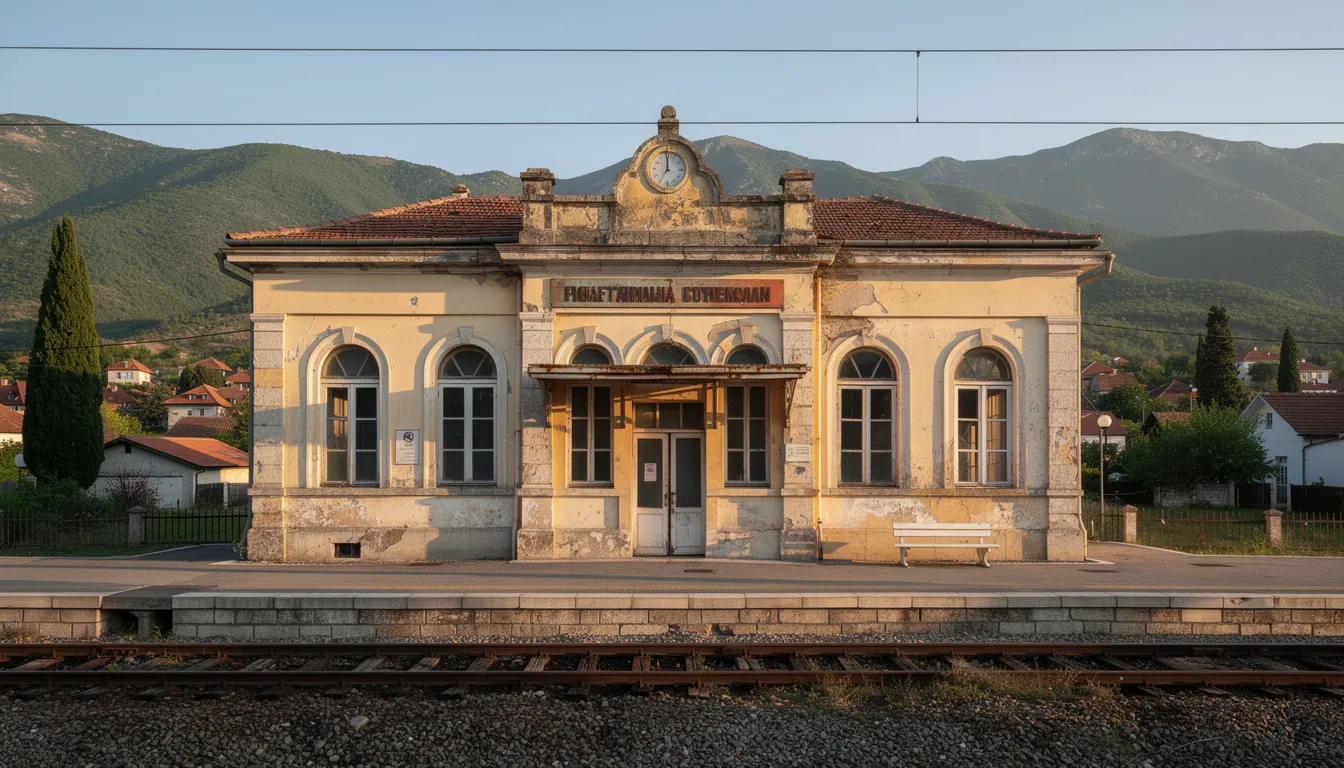
ŽRSM Transport operates several categories of rolling stock, though the active fleet is considerably smaller than what exists on paper.
The main train types include:
-
Electric locomotives – Used primarily on the electrified Corridor X line between Tabanovce and Gevgelija
-
Diesel locomotives – Operating on non-electrified sections
-
Electric multiple units (EMUs) – Modern units for passenger services on electrified routes
-
Diesel multiple units (DMUs) – Serving non-electrified passenger lines
Around 2015–2017, new EMUs and locomotives were purchased through an EBRD-financed program. These Chinese-built units represented a significant modernization effort. However, not all of these vehicles are currently operational, with some sidelined due to maintenance issues or spare parts shortages.
Passenger services today rely mostly on a small fleet of EMUs and DMUs. Some conventional passenger trains still run, hauled by locomotives on certain routes. The contrast between the modern Chinese EMUs and the aging Yugoslav-era coaches can be jarring for passengers. Older rolling stock provides a comfortable travel experience, described as a “rolling lounge.”
Freight operations depend more heavily on electric locomotives, particularly for the cross-border cargo that still moves along Corridor X. The electrified main north-south line handles the bulk of this traffic.
Historical rolling stock includes preserved steam locomotives from the early railway era. A class 033 steam locomotive sits at the Skopje depot, with others displayed in Gjorče Petrov park, Kičevo station, and Gevgelija station. Despite this heritage, North Macedonia lacks a dedicated railway museum—it remains among Europe’s last countries without one, alongside Albania.
Transition: Beyond the state operator, private companies and future projects are shaping the rail landscape—let’s see how.
Other Railways and Operators
You’ll find Macedonian Railways running the show as North Macedonia’s main railway company, but here’s the thing – the country’s rail scene has gotten way more interesting lately. The government’s opened things up for private operators, and that’s brought some real energy to the tracks. Competition’s heating up, especially when you’re shipping freight.
Keep an eye out for Balkan Rail – they’re the private player making moves across the national network. These folks run their own locomotives and rolling stock, connecting mining and manufacturing sites to the big transport corridors. When you see private operators like Balkan Rail in action, you’re watching the system get more efficient, particularly along Corridor X. That’s your key route threading through Kumanovo and Skopje, linking you north to Serbia and south toward Greece and the Aegean.
The European Bank and EU have been pouring serious money into upgrading this network. According to their reports, the focus hits infrastructure, safety, and reliability – both for passengers and freight. You’ll spot the most dramatic changes along the main north–south line, where construction crews are building new sections to boost international traffic and cement North Macedonia’s role as a regional transport hub.
Skopje’s railway station is where you’ll catch most passenger trains. Intercity services connect you to Kumanovo, Bitola, Gevgelija, and other major cities. When international trains are running, they’ll link you to neighboring countries and the broader European network. Grab your timetables at the main station, and pick up tickets either at the office or straight from conductors – your choice.
You’ll ride on everything from modern electric units to diesel multiple units, plus conventional passenger trains and specialized freight. The network cuts through some stunning territory – from the Albanian border out west to those rolling hills near the Greek border down south. It’s your ticket to seeing the country’s landscapes from a completely different angle.
Let’s talk connections: buses and trains work together to cover the region pretty comprehensively. When public transport ends at a railway station, here’s a quick move – rent a car to keep exploring. Avis often offers competitive rates, especially if you’re holding an international rail pass. That flexibility gets you into remote spots that trains and buses can’t reach.
A smart way to think about North Macedonia’s rail future? Ongoing investment, more operators joining the mix, and that strategic crossroads location in Europe – it’s all pointing toward serious development. Whether you’re traveling for business, leisure, or chasing that authentic Balkan rail experience, the country’s trains and stations give you a window into both its history and its future as a vital regional transport link.
Transition: Now, let’s look at the practicalities of using the current network—routes, stations, and what to expect on your journey.
Domestic Train Routes and Major Stations
As of 2025, only a handful of domestic passenger routes operate daily, mostly radiating from Skopje. The network that once connected the country has contracted significantly, with intercity trains linking Kumanovo and other major cities to the capital at reduced frequencies.
Skopje train station serves as the main hub for all rail travel in the country. Located within the Transport Center complex, the train station offers:
-
Central location in the capital
-
Connection to city buses
-
Basic facilities including ticket office and underpass access to platforms
-
Partially deteriorated infrastructure (escalators and waiting rooms often out of order)
Train stations are typically located in city centers, providing direct access to local landmarks.
Key Active Passenger Lines
|
Route |
Direction |
Approximate Travel Time |
Daily Frequency |
|---|---|---|---|
|
Gevgelija – Skopje |
Southbound via Veles |
3–4 hours |
1–2 trains |
|
Bitola – Skopje |
Southwest via Veles, Prilep |
3.5–4.5 hours |
1–2 trains |
|
Skopje – Veles |
Short distance |
~1 hour |
2–3 trains |
|
Skopje – Kumanovo |
Northbound |
~1 hour |
4 trains |
Intercity trains previously serving Štip and Kočani in the east have been suspended since 2020. More than five years later, these services have not resumed, leaving stations like Kočani overgrown and unused. The first section of the eastern line from Veles remains technically operational for freight but sees no passenger traffic.
Bike transport is possible on some services where capacity allows, requiring a separate bike ticket. However, this isn’t guaranteed on every train—check locally before planning a cycling trip that depends on rail connections.
Railway stations in North Macedonia often lack basic amenities, such as functioning toilets and accessible waiting areas.
Skopje and Other Important Stations
Skopje is the busiest and practically indispensable station for any rail journey in North Macedonia. The capital’s metropolitan area houses around 600,000 inhabitants, and virtually every passenger train in the country either starts or ends here.
Other significant stations and their roles:
-
Veles functions as the main junction where lines to Gevgelija, Bitola, and Štip/Kočani diverge. Any journey between the south line and the southwest branch requires passing through this town along the Vardar River.
-
Bitola, the country’s second-largest city, has a passenger service connection from Skopje via Veles and Prilep. The route passes through the agricultural heartland of the Pelagonia region.
-
Gevgelija is the last major station before the Greek border on Corridor X. When international trains operated, this was where border formalities took place for services heading to Thessaloniki in Greece.
-
Kumanovo, a northern town on the route toward Serbia, is currently affected by reduced international passenger services. The line passes through Kumanovo Skopje, making it the first major stop for any future resumed international trains from Belgrade.
Many regional stations have minimal staff and facilities. Some function mainly as technical stops or for freight operations. The construction of new facilities has been limited, and some renovated stations already show signs of neglect.
Accessibility remains a challenge at many smaller stations, with limited step-free access and inconsistent signage in English. Even at Skopje’s main station, broken escalators and closed waiting rooms present difficulties for passengers with mobility needs.
Transition: With domestic routes covered, let’s examine the international connections and the future of cross-border rail travel.
International Connections and Current Status
Corridor X represents the main international axis linking North Macedonia to the wider European rail network. The route connects Niš in Serbia via Tabanovce, passes through Kumanovo, Skopje, and Veles, then continues to Gevgelija before crossing into Greece toward the Aegean Sea port of Thessaloniki.
Historically, direct international trains ran between Belgrade and Thessaloniki via Skopje, forming one of the key rail arteries in the region. These services were suspended in 2020 and had not been reinstated as of early 2025. The infrastructure remains in place, but no passenger trains start running across the border.
The former Skopje–Pristina passenger service to Kosovo has also been suspended. While the track to Volkovo northwest exists, regular passenger operations ceased years ago. Any announcements about resuming this service have yet to materialize into actual trains.
Current International Rail Status
|
Destination |
Route |
Status |
|---|---|---|
|
Serbia (Belgrade) |
Via Tabanovce |
Suspended |
|
Greece (Thessaloniki) |
Via Gevgelija |
Suspended |
|
Kosovo (Pristina) |
Via Volkovo |
Suspended |
|
Bulgaria |
No direct line |
Never existed |
Freight operations continue to use Corridor X for cargo traffic. The Cargo 10 initiative, launched around 2010, aimed to streamline freight along the corridor, and goods trains still traverse the electrified main line regularly.
There is no direct passenger service to Bulgaria from North Macedonia. Rail travelers must route via Serbia or Greece—when international connections are operating—to reach Bulgarian destinations. The absence of this link reflects a historical gap that various governments have pledged to close.
Border checks on international trains, when they operated, typically took place on board or at border stations like Tabanovce and Gevgelija. Passport control and customs inspections were conducted by officials from both countries.
Transition: Looking ahead, modernization projects and new construction are shaping the future of North Macedonia’s railways.
Future Projects and Corridor Modernization
Ongoing modernization of Corridor X within North Macedonia includes track renewal, speed upgrades, and signaling improvements. These projects have been financed by the EU, EBRD, and other lenders since the 2010s, with the goal of improving reliability and reducing travel times on the main north-south line.
The most ambitious plans involve Corridor VIII, intended to create an east-west axis linking the Adriatic Sea to the Black Sea. Within North Macedonia, this means:
-
Eastern extension: Kumanovo–Beljakovce–Kriva Palanka–Deve Bair toward Bulgaria
-
Western extension: Kičevo toward the Albanian border
In July 2022, contracts were signed for modernizing the Kumanovo-Beljakovce and Beljakovce-Kriva Palanka lines. A January 2024 tender covered 23.4 km of new track featuring 22 tunnels and 52 bridges—construction works on challenging mountainous terrain. A 56 km extension from Kumanovo-Beljakovce to the Bulgarian border is under construction, expected to be operational by 2027–2030.
Despite these investments, sections remain unfinished and many deadlines have been missed. The new line to Bulgaria has been discussed for over a century—Bulgaria reached Gyushevo by 1913, but World Wars and subsequent geopolitical tensions halted progress. Critics worry that today’s plans may repeat historical planning errors.
Official government statements periodically mention reopening international passenger trains to Serbia, Greece, or Kosovo. These remain plans without firm dates, subject to funding, diplomatic agreements, and completion of ongoing reconstruction work.
Transition: With the future in mind, let’s address the realities of service quality and the challenges facing rail travel in North Macedonia.
Service Quality, Usage, and Challenges
Passenger numbers have declined dramatically over the past decade. From around 1.5 million annual passengers in 2011, ridership fell to roughly 400,000 by 2022. This steep drop illustrates the system’s diminishing relevance to everyday travelers.
Main Issues Affecting Service Quality
-
Very low frequency: Often just 1–3 trains per day on any given route
-
Long travel times: Speeds rarely exceed 60–80 km/h due to track conditions
-
Chronic delays: Infrastructure restrictions and speed limits cause regular lateness
-
Poor station conditions: Closed waiting rooms, broken escalators, minimal amenities
-
Uncomfortable rolling stock: Aging coaches with limited or no air conditioning
Organizational Problems
-
High debt levels at both the transport and infrastructure companies
-
Political appointments affecting management continuity
-
Frequent changes of leadership
-
Shrinking workforce (from around 4,000 employees to about 1,600)
-
Many staff lacking adequate training for modern railway operations
Infrastructure utilization sits at around 10% of potential capacity. Lines that could carry dozens of trains daily see only a handful of services. This underutilization represents both a waste of resources and an opportunity cost for the country’s transport options.
Despite these shortcomings, rail remains an affordable option for students, pensioners, and low-income travelers. Ticket prices are significantly lower than buses or car rental, with avis retail prices for vehicle hire making even short train journeys economically attractive by comparison.
Transition: For those still interested in traveling by train, here’s what to expect and how to make the most of your journey.
Passenger Experience and Practical Tips
What can travelers realistically expect on board? The experience varies depending on which train you catch.
On Newer EMUs
-
Air conditioning (when working)
-
Relatively comfortable seating
-
Clean interiors
-
Power outlets in some configurations
On Older Rolling Stock
-
Basic seating with worn upholstery
-
No air conditioning
-
Variable cleanliness
-
Windows that may or may not open
-
Described as a “rolling lounge” for comfort
Catering services are limited or non-existent on most services. Bring your own food, water, and entertainment for the journey.
Buying Tickets
-
Tickets can be purchased at staffed ticket offices in Skopje and a few major stations.
-
Payment is typically cash in Macedonian denars (MKD); bank cards are often not accepted, so bring cash.
-
You can also buy tickets on board from the conductor, but this may attract a small surcharge.
-
Tickets for trains must be purchased in cash at the station, as bank cards are often not accepted.
-
Reservations for all trains in North Macedonia are currently not needed.
Checking the Timetable
-
Consult official ŽRSM Transport sources where possible, but verify against station noticeboards on the day of travel.
-
Schedules can change, and some trains are canceled at short notice without formal announcement.
-
Asking station staff or other passengers remains the most reliable method.
For many routes in North Macedonia, long-distance buses are faster and more frequent than trains. The bus network connects virtually every town, with multiple daily departures on popular routes. Trains may still appeal to rail enthusiasts or budget-conscious travelers seeking the cheapest possible fare.
Safety Notes
-
The system is generally safe.
-
Take normal precautions at quiet or poorly lit stations, particularly after dark.
-
Keep valuables secure on sparsely occupied trains.
-
Be aware of your surroundings when traveling at off-peak times.
Transition: If you’re considering a rail pass or planning a multi-country trip, here’s what you need to know about ticketing and passes.
Travel Passes and Rail in a Wider Balkan Itinerary
International rail passes such as Eurail and Interrail historically covered trains in North Macedonia via the main international lines. However, their present value is limited when international services are suspended. If you’re holding a pass and hoping to use it here, check current validity carefully.
Marketing materials sometimes reference a “North Macedonia Pass” option. Coverage typically includes domestic trains, but availability depends on the specific pass product and current offerings. With only a few domestic routes operating, the value proposition is questionable for most travelers.
Indicative price ranges for rail passes:
|
Pass Type |
Approximate Price |
Coverage |
|---|---|---|
|
North Macedonia Pass |
$64+ |
Domestic trains |
|
Short-trip options |
$60–70 |
Limited days within validity period |
|
Longer travel passes |
$200+ |
Extended validity, multiple countries |
Your Eurail Pass gives you the freedom to visit Skopje and Ohrid Lake (via bus connection). Standard prices for the North Macedonia Pass start from $64. These figures are examples and should be verified against current tariffs before purchase.
When international trains operate, North Macedonia could fit into a broader Balkan rail itinerary. Potential routes might link:
-
Serbia → North Macedonia → Greece
-
Kosovo → North Macedonia → Greece (with bus connections)
-
Further connections to Croatia, Bosnia and Herzegovina, and Montenegro
Currently, such itineraries require combining trains with buses due to suspended international passenger services. The region remains connected, just not always by rail.
Is a rail pass worthwhile?
-
For a trip focused on North Macedonia alone, probably not. The limited domestic network and low frequencies mean you won’t get enough value from a pass.
-
For a multi-country Balkan tour incorporating buses and trains across Serbia, Greece, and beyond, a pass may still offer savings—but only if international rail services have resumed.
Quick Facts About North Macedonia and Rail
This small Balkan country in southeastern Europe sits at a crossroads between east and west. The republic gained independence in 1991 and joined various regional transport initiatives aimed at integrating its infrastructure with the broader European network.
The population stands at approximately 2 million, with around 600,000 living in the capital Skopje. The official currency is the Macedonian denar (MKD), and the official language is Macedonian, though Albanian is widely spoken, particularly in the western region toward the Albanian border.
For travelers from abroad, the country calling code is +389, and the time zone follows Central European Time (CET/CEST)—useful when planning connections to other railways in the region.
Rail-specific facts worth noting: the network totals approximately 925 km, with 312–315 km electrified on the main corridor. Tabanovce to Gevgelija along Corridor X represents the principal line and the only fully electrified route. Despite its modest size, this site of railroad infrastructure played a historical role in connecting Central Europe to the Aegean Sea since 1873.
Key Takeaways
-
Trains in North Macedonia connect Skopje to major hubs like Veles, Kocani, Gevgelija, and Bitola, but there is no direct train to Ohrid.
-
Only a handful of domestic routes operate from Skopje, with international trains suspended since 2020.
-
Expect 1–3 trains per day on active lines, with journey times slower than buses.
-
Tickets are cheap, making trains attractive for budget travelers despite reduced comfort.
-
Timetables change without notice—verify schedules at stations before travel.
-
EU and EBRD funding continues for Corridor X and VIII modernization, but completion dates remain uncertain.
-
The railway represents 150 years of history, even if current operations don’t reflect past ambitions.
-
Older rolling stock provides a comfortable “rolling lounge” experience.
-
Bikes are allowed on certain trains.
-
Tickets must be purchased in cash at the station; bank cards are often not accepted.
-
Reservations for all trains in North Macedonia are currently not needed.
-
Your Eurail Pass gives you the freedom to visit Skopje and Ohrid Lake (via bus connection).
-
Standard prices for the North Macedonia Pass start from $64.
Trains in North Macedonia won’t win any awards for speed, frequency, or comfort. But for those willing to embrace the pace, they offer an authentic travel experience through a beautiful and underrated corner of the Balkans. Before planning your own hands-on rail adventure, check current schedules with ŽRSM Transport, keep expectations realistic, and consider the bus as a reliable backup when public transportation ends at the railway’s limitations.
Whether you’re a dedicated rail enthusiast documenting Europe’s less-traveled lines or a budget traveler stretching every mile found in your itinerary, the Macedonian railways still have stories to tell—just bring patience, snacks, and a good book for the journey.