


The Netherlands boasts one of the most efficient and punctual railway systems in Europe, with trains in netherlands serving as the backbone of the country’s public transport network. Since the first train journey from Amsterdam to Haarlem in 1839, the dutch railway system has evolved into a modern, electrified network that connects every corner of this compact nation. Whether you’re a tourist exploring dutch cities or a resident commuting to work, understanding the netherlands rail system will enhance your travel experience and save you both time and money.
This comprehensive guide covers everything you need to know about traveling by rail in the Netherlands, from ticketing systems and train types to major destinations and international connections. With over 1 million daily passengers during peak periods and punctuality rates exceeding 90%, the dutch trains offer a reliable and sustainable way to explore this beautiful country.
Overview of the Dutch Railway Network
The Netherlands has one of the most efficient railway systems in Europe, covering 3,223 kilometers of track that crisscrosses the entire country. This extensive network represents one of the densest rail systems in the world, serving a population of 18 million people within just 41,543 square kilometers of land area.
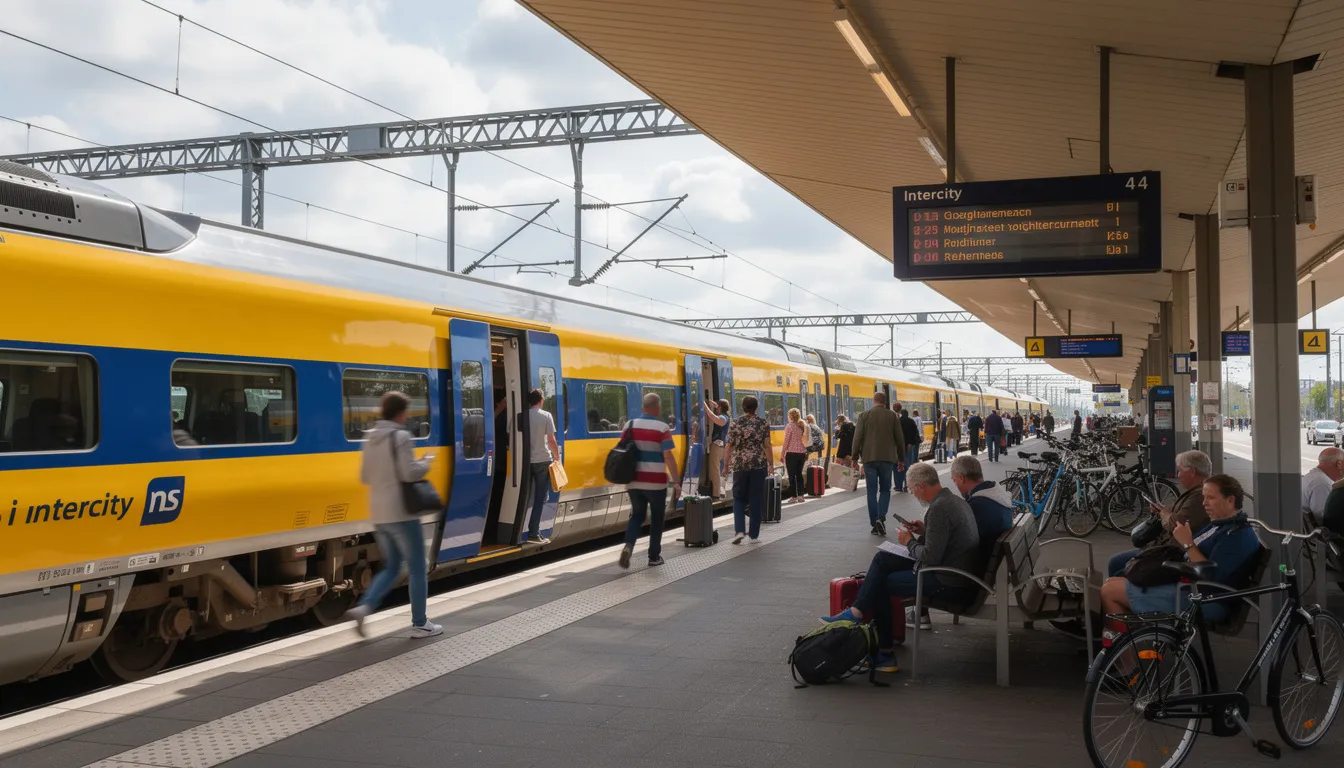
NS (Nederlandse Spoorwegen) is the primary operator, serving most domestic routes across the country and handling the vast majority of passenger services. The company operates from its headquarters at Utrecht Centraal and maintains the distinctive yellow-blue livery that has become synonymous with dutch trains.
The network connects all major dutch cities including Amsterdam, Rotterdam, The Hague, Utrecht, and Maastricht, ensuring that no significant population center remains isolated from the rail system. Most lines are electrified and support speeds up to 300 km/h on high-speed routes like HSL-Zuid, which connects Amsterdam to Brussels and Paris.
ProRail manages the infrastructure while multiple operators run train services, creating a system that balances public oversight with operational efficiency. This separation of infrastructure management from train operations has contributed to the network’s reputation for reliability and innovation.
Train Operators in the Netherlands
Nederlandse Spoorwegen (NS)
NS serves as the main domestic operator, running Intercity, Sprinter, and International services throughout the country. The company’s distinctive yellow-blue livery for intercity trains and blue-white-yellow for local services has become an iconic part of the Dutch landscape.
Headquartered at Utrecht Centraal station, NS operates comprehensive day services connecting major cities and night services that link key destinations with Schiphol Airport. The operator handles over 1 million daily journeys during peak periods, making it one of Europe’s busiest railway operators.
NS’s fleet includes both single and double-decker trains, with modern rolling stock featuring wi fi, quiet carriages, and dedicated bicycle storage areas. The company has invested heavily in customer experience, offering amenities like comfortable seating, onboard information systems, and climate control throughout their fleet.
International Train Operators
The international rail network connecting the Netherlands to european countries involves several specialized operators. Eurostar connects Amsterdam to London, Paris, Brussels and other European cities through its high-speed service via the Channel Tunnel, offering a direct connection between Amsterdam and great britain.
NS International runs ICE trains to Germany and services to Switzerland, providing seamless connections to the broader European rail network. These services require careful coordination due to different electrical systems and operating procedures across international borders.
SNCB operates Intercity Brussels trains from Amsterdam to Brussels when available, though service frequency varies based on operational requirements. Deutsche Bahn provides cross-border services to Germany, particularly important given the significant trade and travel volume between these neighboring countries.
Types of Dutch Trains
NS Intercity Trains
Intercity trains form the backbone of medium and long-distance services, offering limited stops between major cities to maximize speed and efficiency. These trains feature comprehensive amenities including wi fi, quiet carriages, and dedicated bicycle storage areas for passengers combining cycling with train travel.
Both single and double-decker configurations are available, with the double-decker trains particularly popular on busy routes during peak hours. First and Second Class seating options provide different comfort levels, with First Class offering larger seats, more legroom, and enhanced onboard facilities.
The intercity network prioritizes punctuality and reliability, with trains typically operating at regular intervals throughout the day. Most intercity trains feature modern amenities like power outlets, comfortable seating, and clear passenger information systems.
NS Sprinter Trains
Sprinter trains serve as the local commuter services, connecting suburbs to city centers with more frequent stops than intercity services. These trains are essential during peak hours when commuter traffic is heaviest, providing vital links between residential areas and major employment centers.
Not all Sprinter trains have toilets or wi fi, though newer models will include toilets as part of NS’s fleet modernization program. The focus for these services is on frequent, reliable connections rather than luxury amenities.
These trains are essential for regional travel within metropolitan areas, particularly in the Randstad region where Amsterdam, The Hague, Rotterdam, and Utrecht form a heavily integrated urban network. Sprinter services often provide the only practical public transport option for smaller communities.
High-Speed Services
Intercity Direct operates between Amsterdam, The Hague, Rotterdam, and Breda, utilizing the HSL-Zuid high-speed line with speeds up to 300 km/h. This premium service offers enhanced comfort and significantly faster journey times compared to conventional rail services.
The HSL-Zuid represents a major infrastructure investment, allowing seamless high speed travel without the voltage changes typically required at international borders. Future plans include extending service to the international Brussels route, further integrating Dutch and Belgian rail networks.
These premium services feature enhanced comfort with superior seating, improved onboard facilities, and faster journey times that compete effectively with automotive travel. The success of intercity direct has demonstrated strong passenger demand for high-quality rail services in the Netherlands.
Ticketing and Payment Systems
OV-chipkaart System
The OV-chipkaart serves as the primary smartcard system for loading and using train tickets throughout the netherlands by train network. Two main types are available for tourists visiting the Netherlands: personal cards linked to individual accounts and anonymous cards for occasional use.
The system can store multiple tickets electronically for convenient travel, eliminating the need for paper tickets while providing detailed journey tracking. Cards are required for accessing station platforms through electronic entry gates that monitor passenger flow and ensure fare compliance.
This integrated payment system works across all public transport modes in the Netherlands, including trains, buses, trams, and metro services in major cities. The system’s widespread adoption has streamlined public transport access while providing operators with detailed ridership data.
Ticket Types Available
Several ticket types accommodate different travel patterns and passenger needs. Enkele reis (One-way) tickets remain valid for 28 hours from midnight to 4 AM the following day, providing flexibility for travelers with uncertain return times.
Dagretour (Day return) tickets offer round-trip travel valid for 28 hours, typically providing better value than purchasing separate one-way tickets. Dagkaartjes (Day tickets) provide unlimited Second Class travel across the entire network, ideal for tourists planning multiple journeys.
Railrunnerkaartje children’s tickets cost just €2.50, while children under 3 travel free, making family travel affordable. These pricing structures reflect the Dutch commitment to accessible public transport for all demographics.
Modern Payment Options
Since 2023, contactless payments have been accepted on all domestic trains, representing a major modernization of the ticketing system. Apple Pay, Google Pay, and contactless debit card payments are supported, eliminating the need for special apps, registration, or physical tickets.
The system automatically applies Second Class fares matching anonymous ov chipkaart prices, ensuring fare consistency across payment methods. This contactless system has simplified access for international visitors who may not want to invest in OV-chipkaart systems for short visits.
For passengers using contactless payments, the system automatically calculates the best fare based on the journey taken, similar to how the OV-chipkaart functions. This technology represents the cutting edge of public transport payment systems globally.
Discount Passes and Special Offers
The Dal Voordeel pass provides 40% discount during off-peak hours, making travel significantly more affordable for flexible travelers. Off-peak times include weekdays before 6:35 AM, 8:55 AM-4:05 PM, after 6:25 PM, plus all weekend hours.
Passengers over 60 receive seven free off-peak travel days annually through special senior programs, reflecting Dutch society’s commitment to supporting elderly mobility. Dal Vrij annual passes offer unlimited off-peak travel, though with certain restrictions on the busiest routes.
These discount programs encourage off-peak travel, helping to distribute passenger loads more evenly throughout the day and reduce crowding during peak periods. The programs also make rail travel more accessible to price-sensitive passengers.
Major Train Stations in the Netherlands
Amsterdam Centraal
Amsterdam Centraal ranks as the second busiest station in the Netherlands, welcoming millions of passengers annually since opening in 1889. The historic station building combines architectural heritage with modern functionality, serving as a gateway to the capital city.
With 11 platforms serving regional, national, and international routes, the station provides direct connections to London, Berlin, Paris, and other european countries through various international trains. The station’s strategic location at the northern edge of the city center places visitors within walking distance of major tourist attractions.
Comprehensive facilities include shops, restaurants, and luggage storage, making it a convenient hub for travelers. The station also serves as a major interchange point for local public transport, including buses, trams, and metro services that connect to all parts of Amsterdam.

Utrecht Centraal
Utrecht Centraal holds the distinction of being both the largest and busiest station in the Netherlands, appropriately serving as the headquarters location for NS. Following major reconstruction completed in 2016, the station now features 16 platforms capable of handling the heaviest passenger volumes in the country.
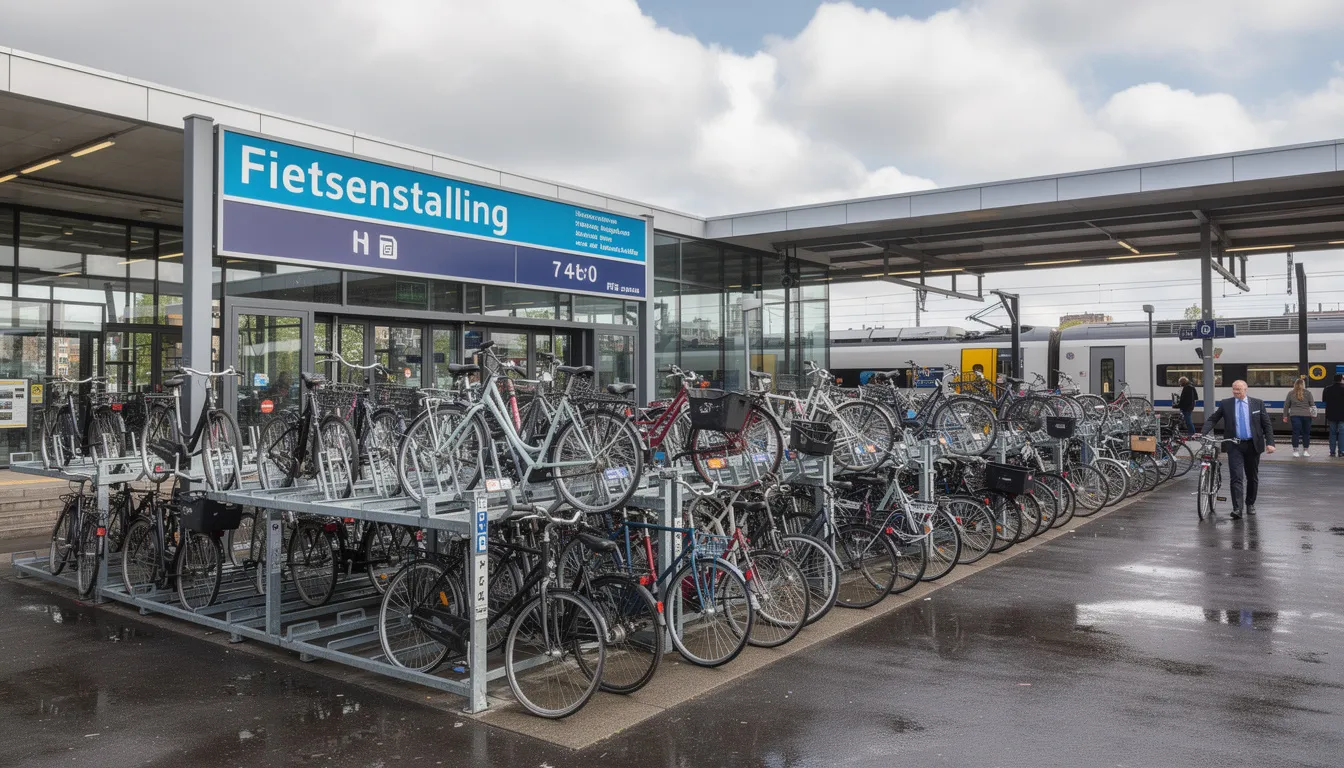
The station boasts the world’s largest bicycle parking facility, reflecting the Netherlands’ unique integration of cycling and rail travel. This massive facility accommodates thousands of bicycles, supporting the popular practice of cycling to train stations for longer journeys.
As a major transport hub, Utrecht Centraal offers excellent bus and tram connections throughout the city and surrounding region. The station’s central location makes it a crucial interchange point for travelers crossing the country in any direction.
Rotterdam Centraal
Rotterdam Centraal represents modern Dutch architecture and engineering, having been completely rebuilt in 2014 to handle over 100,000 daily passengers. The striking contemporary design reflects Rotterdam’s reputation for innovative architecture and urban planning.
With 13 platforms, the station connects passengers to Amsterdam, The Hague, Brussels, Paris, and London through both domestic and international services. The station’s location in the city center provides excellent access to local transport connections and major business districts.
The modern design includes extensive retail and dining facilities, making it a destination in itself rather than merely a transport interchange. Advanced passenger information systems and accessibility features demonstrate Dutch commitment to inclusive public transport design.
Den Haag Centraal
Den Haag Centraal serves as the largest railway station in The Hague with 12 platforms, handling significant passenger volumes as the country’s political center. While offering extensive domestic services, the station currently lacks direct international routes, requiring connections through other major stations.
The station connects passengers to Amsterdam, Utrecht, Rotterdam, and Groningen, providing comprehensive coverage of the domestic network. Local transport integration includes trams and the underground metro system serving The Hague’s diverse neighborhoods.
As the station serving the seat of government and many international organizations, Den Haag Centraal maintains high security standards while preserving accessibility for regular passengers. The station’s proximity to government buildings and the royal family residences makes it strategically important beyond its transport function.
Popular Destinations by Train
Amsterdam
Amsterdam serves as the Netherlands’ capital and ranks among Europe’s top tourism destinations, easily accessible through the comprehensive rail network. The city’s compact size makes it ideal for train travel, with Amsterdam centraal providing direct access to the historic city center.
Must-see attractions include the Van Gogh Museum, Anne Frank House, and the famous Red Light District, all reachable within minutes of the central station. Seasonal highlights include the spectacular Keukenhof tulip gardens during spring and the Amsterdam Light Festival during winter months.
Train connections provide easy access to ARTIS Zoo and numerous other cultural sites throughout the metropolitan area. The integration of train travel with local public transport makes exploring Amsterdam’s diverse neighborhoods convenient and affordable.
Rotterdam
As the Netherlands’ second largest city, Rotterdam is renowned for its maritime port and striking modern architecture. The city’s unique skyline, created through post-WWII reconstruction, offers a completely different atmosphere from Amsterdam’s historic canals.
Rotterdam hosts Erasmus University, consistently ranked among the world’s top 100 institutions, attracting students and academics from around the globe. The city’s strong football culture includes Eredivisie teams Feyenoord and Excelsior, whose matches draw passionate crowds throughout the season.
The efficient train connections make Rotterdam an excellent base for exploring the broader Netherlands, while the city’s modern infrastructure provides excellent examples of contemporary Dutch urban planning and architecture.
The Hague (Den Haag)
The Hague functions as the political center of the Netherlands and serves as the residence for the royal family, giving it unique significance beyond typical tourist destinations. The city houses numerous government institutions and international organizations, creating a sophisticated international atmosphere.
The famous Peace Palace houses the UN’s International Court of Justice, making The Hague a center of international diplomacy and law. Family attractions include Madurodam miniature park, which showcases Dutch landmarks in perfect miniature detail.
Nearby Scheveningen Beach offers coastal recreation within minutes of the city center, accessible through excellent local transport connections from the main train station. This combination of political importance, cultural attractions, and seaside recreation makes The Hague a diverse destination.
Utrecht
Utrecht’s central location and peaceful canals create an atmosphere distinct from the larger dutch cities, while its religious heritage provides rich historical attractions. The city serves as a perfect example of how historic preservation can coexist with modern urban development.
The National Railway Museum ranks among the Netherlands’ top museums, appropriately located in this central railway hub. Visitors can explore the rich history of dutch railways, from the 1839 inaugural journey to modern high-speed services.
The iconic Dom Tower provides panoramic views across the city and surrounding countryside, while Utrecht University Botanical Gardens offer natural attractions within the urban environment. The combination of history, culture, and central location makes Utrecht an ideal stop for travelers exploring multiple dutch cities.
Maastricht
Located in the southeast near Belgian and German borders, Maastricht boasts an impressive 1,677 heritage sites, reflecting its long and complex history. The city’s unique location has created a distinctive culture that blends Dutch, Belgian, and German influences.
As the birthplace of the Euro currency, Maastricht holds special significance in European history, while the Basilica of Saint Servatius represents one of the Netherlands’ most important religious sites. The city’s compact historic center rewards exploration on foot.
Maastricht is internationally famous for Andre Rieu concerts held in the historic Vrijthof Square, attracting classical music lovers from across europe. The railway station, opened in 1853, ranks among the oldest in the country, symbolizing Maastricht’s long connection to the broader European rail network.
International Train Connections
Routes to Major European Cities
The netherlands rail network provides excellent connectivity to major european destinations, with Amsterdam serving as the primary hub for international journeys. Direct eurostar trains connect Amsterdam to London through the Channel Tunnel, offering a seamless alternative to air travel for trips to great britain.
High-speed services reach Paris, Brussels, and Berlin through dedicated routes that minimize travel time and maximize comfort. These services have revolutionized travel between the Netherlands and neighboring countries, making day trips to other european countries practical and affordable.
ICE trains operated by Deutsche Bahn connect the Netherlands to German cities including Frankfurt and Munich, extending the network’s reach deep into Central Europe. These connections support both tourism and business travel, reflecting the strong economic ties between these regions.
Cross-Border Infrastructure
The HSL-Zuid line represents a major infrastructure achievement, allowing seamless high speed travel between the Netherlands and Belgium without the voltage changes that historically complicated international rail travel. This dedicated line supports speeds up to 300 km/h while maintaining the reliability standards expected of dutch trains.
Multiple electrified connections to Belgium and Germany ensure redundancy and flexibility in international routing. Some routes still require multi-system trains or diesel locomotives for border crossings, though these technical challenges are gradually being addressed through infrastructure improvements.
Importantly, no gauge breaks exist at any international border crossings, ensuring that trains can operate continuously across national boundaries. This standardization, achieved through decades of international cooperation, has been crucial to the success of European rail integration.
Practical Travel Tips
Bicycle Integration
Most large train stations offer bicycle rental services, supporting the uniquely Dutch combination of cycling and rail travel. This integration allows travelers to extend their effective range significantly, reaching destinations that might be inconvenient for walking from train stations.
Combining train and bike travel represents a popular and environmentally sustainable way to explore the Netherlands, particularly for tourists wanting to experience the famous Dutch cycling culture. Dedicated bicycle storage areas on trains accommodate this integration, though advance planning may be required during peak periods.
Special bicycle tickets are required for bringing bikes on trains, with specific rules about timing and train types. Understanding these requirements helps travelers avoid unexpected costs or delays when planning multi-modal journeys.
Ticket Purchasing Guidelines
Online booking is available through NS and various international ticket platforms, often providing the most convenient and cost-effective purchasing option. The ns international app offers mobile ticketing for both domestic and international journeys, eliminating the need for paper tickets.
Station machines charge €1 extra for single-use OV smartcards, making regular cards more economical for multiple journeys. ticket office purchases incur an additional €0.50 surcharge compared to machine purchases, encouraging self-service to reduce operational costs.
Passengers must have valid tickets before boarding to avoid substantial fines, as conductors regularly check tickets throughout the network. The electronic gate systems at most stations enforce this requirement, making fare evasion both difficult and risky.
Station Facilities and Services
Most dutch stations feature closed entry gates requiring valid tickets or passes, ensuring fare compliance and providing security for passengers and infrastructure. These systems also provide valuable data about passenger flows and travel patterns.
wi fi is available on most trains, though onboard catering services remain limited compared to some international railways. passengers should plan accordingly for longer journeys, particularly when traveling to remote destinations or during peak hours when onboard facilities may be crowded.
First and Second Class compartments are available on most services, with First Class offering enhanced comfort, more space, and quieter environments. paper tickets were discontinued in 2014, replaced by digital systems and smartcards that provide greater convenience and environmental benefits.
The modern dutch railway system represents one of Europe’s greatest public transport success stories, combining efficiency, accessibility, and environmental sustainability. From its humble beginnings with the 1839 Amsterdam-Haarlem journey to today’s sophisticated network serving millions of passengers, trains in netherlands continue to evolve and improve.
Whether you’re planning a quick business trip between major cities, a leisurely exploration of dutch destinations, or an international journey to neighboring european countries, the netherlands rail system provides reliable, comfortable, and sustainable transportation. The combination of modern infrastructure, integrated payment systems, and comprehensive connections makes rail travel the preferred choice for both residents and visitors.
Start planning your dutch railway adventure today by exploring the various pass options, downloading the ns international app, and discovering the remarkable destinations accessible through this world-class network.