


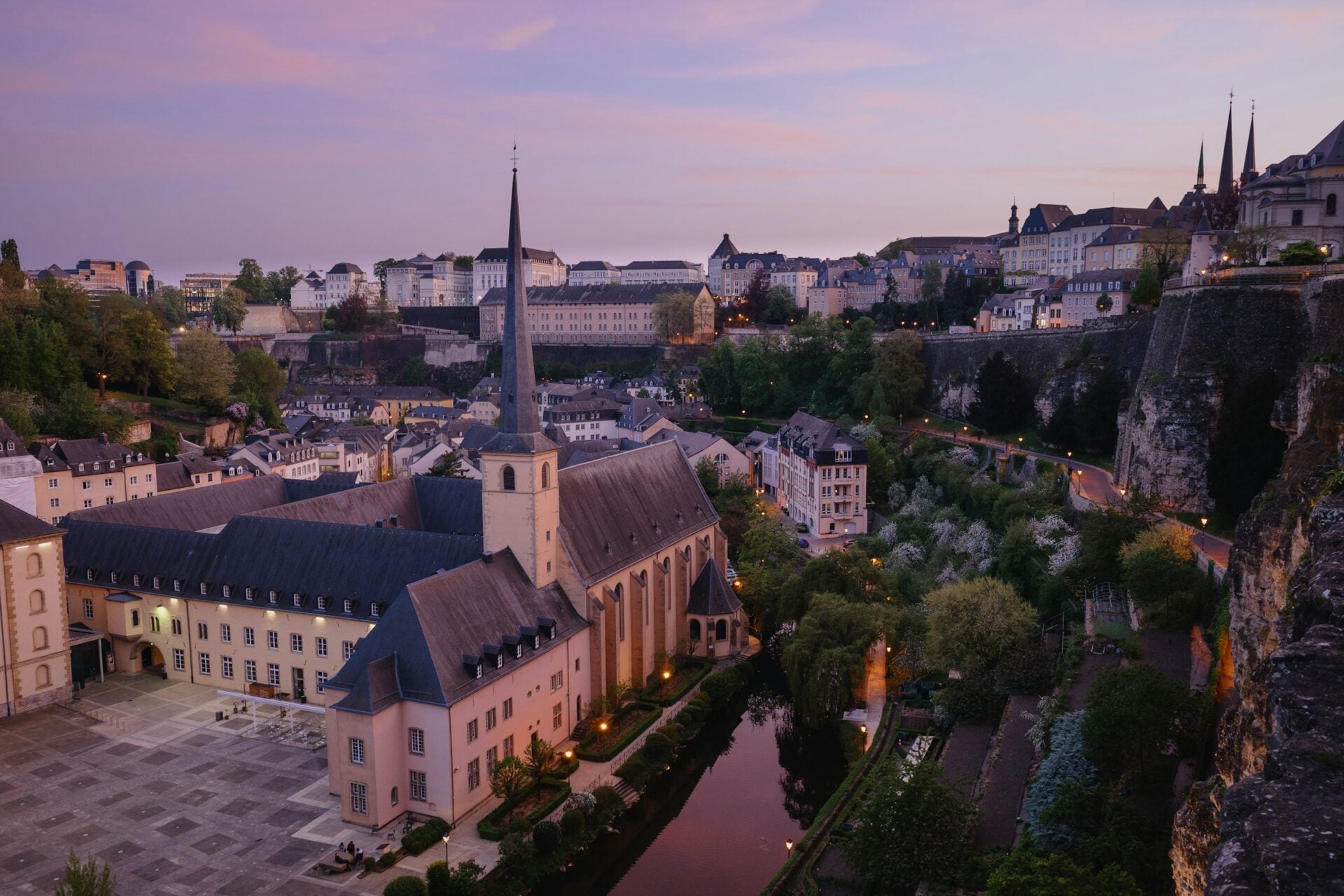
Luxembourg may be one of Europe’s smallest countries, but trains in Luxembourg offer a remarkably efficient, modern, and accessible way to travel for tourists, commuters, and residents alike. Whether you’re planning a day trip, commuting to work, or exploring the country’s picturesque towns, the national railway operator CFL (Société Nationale des Chemins de Fer Luxembourgeois) ensures that the rail network is easy to use, environmentally friendly, and well-connected both domestically and internationally.
This guide is designed for:
-
Tourists looking to explore Luxembourg’s castles, towns, and countryside by train
-
Commuters traveling daily within Luxembourg or across borders to France, Belgium, or Germany
-
Residents who want to make the most of free public transport and efficient rail services
Scope:
This article covers everything you need to know about domestic and international train travel in Luxembourg, including ticketing, train types, major stations, accessibility, and practical tips for a smooth journey.
Why is train travel in Luxembourg important?
Train travel in Luxembourg is not only free in 2nd class for all passengers, but it also provides seamless international connections and supports environmental sustainability by operating a fully electrified network powered by renewable energy. The system is a model of modern, accessible, and eco-friendly public transport.
At a Glance: Trains in Luxembourg – Your Key Questions Answered
-
Are trains in Luxembourg free?
Yes, train travel in Luxembourg is free in 2nd class since March 2020. This applies to all domestic journeys on trains, buses, and trams. -
Who operates the trains?
CFL (Société Nationale des Chemins de Fer Luxembourgeois) is the national railway company, operating a modern, punctual, and reliable network. -
How do I use them?
Simply board any 2nd class domestic train—no ticket or reservation required. For international journeys or 1st class, purchase a ticket via CFL’s website, app, or at the station. -
Where is the main hub?
The main hub is Luxembourg station (Gare Centrale), with direct international connections to Paris, Brussels, Trier, and more. -
How do I get information?
CFL provides real-time information and timetables via their website and mobile app.
Quick Facts
Free 2nd class transport since 29 February 2020
Central hub: Luxembourg station (Gare Centrale)
Network length: ~275 km
Almost fully electrified at 25 kV 50 Hz AC
CFL: Luxembourg’s National Railway Operator
CFL (Société Nationale des Chemins de Fer Luxembourgeois) is the national railway company of Luxembourg. Founded on 14 May 1946 after the merger of the historic Guillaume-Luxembourg and Prince-Henri railway companies, CFL is headquartered in Luxembourg City and remains the backbone of the country’s public transport system.
CFL operates most passenger trains using electric locomotives and electric multiple units (EMUs), including a fleet of modern double-decker trains. The main train types are Regional Express (RE) and RegionalBahn (RB), providing fast and frequent connections across the country. CFL runs a punctual schedule called ‘Horaire Cadencé’, ensuring at least one hourly train to most stations between 8 AM and 8 PM.
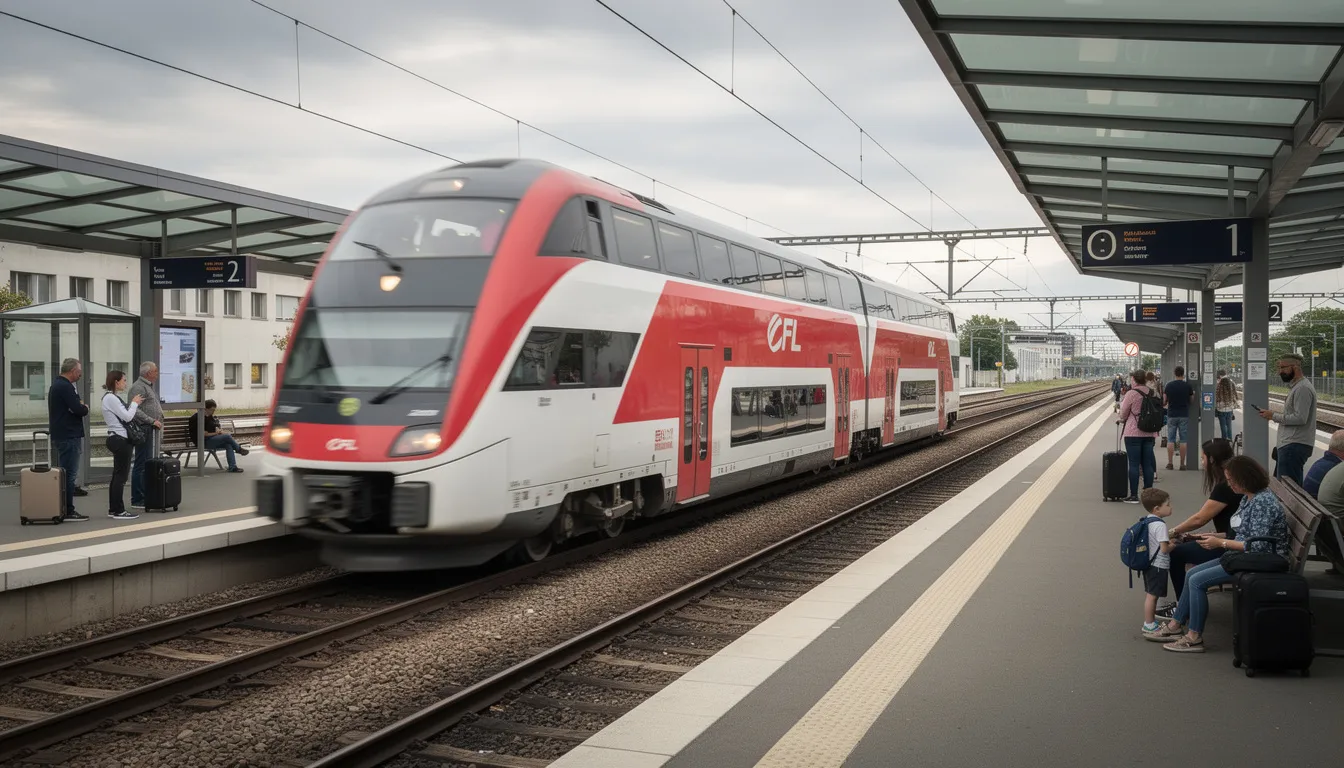
In recent years, CFL has carried approximately 31 million passengers annually, reflecting the growing popularity of rail travel in the country. The network operates on standard-gauge track with the majority of lines electrified at 25 kV 50 Hz AC, allowing for seamless cross-border operations with France’s rail system.
CFL’s main responsibilities include:
-
Operating all domestic passenger train services (RegionalBahn and Regional Express)
-
Running cross-border routes to France, Belgium, and Germany
-
Managing freight operations through its subsidiary CFL Cargo
-
Maintaining railway infrastructure, tracks, and signalling systems
-
Operating and managing all stations across the network
-
Coordinating CFL buses and integrating with tram and funicular services
The fleet consists primarily of modern electric multiple units (EMUs) and double-deck trains, with only a handful of diesel units remaining for non-electrified maintenance routes. CFL also operates many bus routes through CFL buses and coordinates closely with RGTR (Régime Général des Transports Routiers) to provide comprehensive coverage where rail doesn’t reach.
Types of Trains and Services in Luxembourg
Understanding the different train types operating in Luxembourg helps you choose the right service for your journey. While the country doesn’t operate domestic high speed train services, the network offers efficient regional connections with regular services throughout the day.
RegionalBahn (RB) Trains
Luxembourg RegionalBahn trains are the workhorses of the domestic network. These all-stops local services connect smaller towns and villages to major centres, making them ideal for short-distance travel and local commuting. RB trains typically call at every station along their route, so journey times are longer than express services but coverage is comprehensive.
No reservation is required for RegionalBahn trains—you simply board and take any available seat. These train services run frequently on main corridors, often every 15-30 minutes during peak hours.
Regional Express (RE) Trains
Regional Express trains offer faster connections with fewer intermediate stops. They’re perfect for travelling between major towns when you want to save time. Popular RE routes include:
-
Luxembourg – Esch-sur-Alzette
-
Luxembourg – Ettelbruck – Diekirch
-
Luxembourg – Wasserbillig (continuing to Trier in Germany)
Like RB services, RE trains require no reservations. The main difference is speed: by skipping smaller stations, RE trains achieve higher average speeds and shorter journey times.
International Connections
International trains connect Luxembourg to major cities across the Benelux region and beyond. These include:
-
TGV high-speed services to Paris
-
TER and intercity trains to Metz, Thionville, and Nancy in France
-
Regional and IC services to Brussels via Arlon
-
Cross-border trains to Trier, Koblenz, and Cologne in Germany
|
Train Type |
Stops |
Reservations |
Best For |
|---|---|---|---|
|
RegionalBahn (RB) |
All stations |
Not required |
Local trips, village access |
|
Regional Express (RE) |
Major stations only |
Not required |
Faster regional travel |
|
International (TGV, IC) |
Selected stations |
Often required |
Cross-border journeys |
Integrated Transport Modes
Trains connect seamlessly with other modes that form part of Luxembourg’s multimodal public transport network:
-
Luxembourg City tram: Connects the station to Kirchberg and other districts
-
Pfaffenthal–Kirchberg funicular: Links the new Pfaffenthal station to the EU institutions plateau
-
CFL and RGTR buses: Extend the network to areas without rail coverage
Tickets, Free Fares and Rail Passes
Luxembourg’s revolutionary approach to public transport means that most domestic journeys require no ticket at all. Here’s exactly what you need to know about fares, passes, and when you do need to pay.
Free Domestic Travel
Since 29 February 2020, all second class public transport within Luxembourg is completely free. This applies to:
-
All CFL train services in 2nd class
-
City buses operated by AVL in Luxembourg City
-
Regional buses operated by RGTR and other providers
-
The Luxembourg City tram
-
The Pfaffenthal–Kirchberg funicular
No ticket, pass, or registration is required. Simply board any domestic service and travel freely. This policy applies equally to residents, tourists, and cross-border visitors for journeys that start and end within Luxembourg’s borders.
What Still Requires Payment
Not everything is free. You’ll need tickets for:
-
1st class upgrades: Quieter coaches with more space
-
International journeys: Any travel beyond Luxembourg’s borders
-
Reserved services: TGV trains to Paris and other French destinations
-
Cross-border commuter passes: For regular travel from neighbouring countries
Purchasing 1st Class and International Tickets
For services that require payment, you have several options:
-
Ticket office: Available at Luxembourg station and other major stops like Esch-sur-Alzette and Belval-Université
-
Ticket machines: Self service machine terminals at most stations
-
CFL mobile app: Buy tickets and store them digitally
-
mTicket app: For RegioZone cross-border tickets
-
Online portals: CFL’s website and partner booking platforms
First class offers a quieter environment, more legroom, and is often less crowded during busy periods—worth considering for longer journeys or when you need to work.
Rail Passes: Interrail and Eurail
Popular European rail passes work on Luxembourg’s network with some considerations:
-
Eurail Benelux Pass: Covers train travel in Belgium, Netherlands, and Luxembourg
-
Interrail Pass / Global Pass: Includes Luxembourg in its coverage
For Global Pass holders and those with a country pass, remember that Luxembourg’s free transport policy means you don’t technically need to use a travel day for domestic 2nd class journeys. However, your valid pass is still required for:
-
International train segments crossing borders
-
1st class travel (requires a 1st class pass or upgrade)
-
Reservation required services like international trains TGV
Digital Tools for Ticketing
-
mTicket app: Purchase and store RegioZone tickets for cross-border travel
-
mKaart smartcard: Load monthly or annual passes for chargeable journeys
-
mShop.lu: Online portal for managing passes and top-ups
International Rail Connections from Luxembourg
Despite its small size, Luxembourg serves as a strategic rail hub connecting four European countries. International trains connect Luxembourg to Paris, Brussels, Cologne, and dozens of other popular cities through direct services or easy connections.

Luxembourg to Paris (TGV)
The flagship international route connects Luxembourg to Paris Gare de l’Est via daily TGV services. Journey time is approximately 2 hours 10 minutes to 2 hours 20 minutes, with several direct trains per day. This high speed train service requires compulsory seat reservations. Some TGV services from Luxembourg also stop at major French cities such as Le Mans, providing connections to other destinations. Fares from Luxembourg to Paris start at €25 in 2nd class or €45 in 1st class.
Tickets can be booked through:
-
SNCF Connect (the French national railway booking platform)
-
CFL ticket offices at Luxembourg station
-
Partner booking platforms like Trainline
Luxembourg to France (Regional)
Beyond Paris, frequent TER and RE trains serve:
-
Thionville: approximately 25-30 minutes
-
Metz: approximately 50-60 minutes
-
Nancy: approximately 90 minutes (often with a change at Metz)
These routes are heavily used by cross-border commuters and run very frequently throughout the day.
Luxembourg to Belgium
Intercity trains connect Luxembourg to Brussels via Arlon. The journey takes around 3 hours with a change typically required at Arlon or Namur. Services run throughout the day, connecting Luxembourg’s network with the Belgian SNCB system. From Brussels, you can continue to Bruges, Ghent, Antwerp, or onward to Amsterdam.
Luxembourg to Germany
The scenic Moselle valley route connects Luxembourg to:
-
Trier: approximately 50 minutes
-
Koblenz: approximately 2 hours 30 minutes
-
Cologne: approximately 4 hours (with connections)
These cross-border services are operated jointly by CFL and Deutsche Bahn. From these German hubs, you can connect to ICE high-speed trains serving many international destinations including Berlin, Frankfurt, and Munich.
Gare Lorraine TGV Connection
For reaching southern and western France, a shuttle bus service operates from Luxembourg station to Gare Lorraine TGV (located between Metz and Nancy). Journey time is under 1 hour 30 minutes, and from there you can board TGV services to Lyon, Marseille, Montpellier, and other destinations in the following European countries: France and beyond.
Booking International Tickets
|
Destination |
Typical Journey Time |
Booking Platform |
|---|---|---|
|
Paris |
2h 10-20min |
SNCF Connect, CFL |
|
Brussels |
~3h (with change) |
SNCB, CFL |
|
Trier |
50min |
DB Navigator, CFL |
|
Metz |
50-60min |
SNCF Connect, CFL |
|
Cologne |
~4h |
DB Navigator |
How to Book and Make Reservations
One of the joys of travelling by train in Luxembourg is the simplicity: for most domestic journeys, you don’t need to book anything at all.
If you do need to make a reservation or have questions, you can contact the CFL call centre. When calling, you may be prompted to choose extension ‘2’ for bookings and train information.
Domestic Travel: No Booking Required
For travel within Luxembourg in 2nd class, simply turn up at any station and board your train. There are no tickets to buy, no reservations to make, and no apps to download. This applies to all RB and RE train services run by CFL.
Booking 1st Class and International Tickets
When you do need tickets, here are your options:
CFL Ticket Offices
Visit the ticket office at Luxembourg’s main train station or other major stations including Esch-sur-Alzette and Belval-Université. Staff can sell tickets, make reservations, and provide train information for both domestic and international journeys. The CFL customer service contact desk handles complex bookings and can assist disabled passengers with travel arrangements.
CFL Call Centre
For telephone bookings, the CFL call centre number is +352 2489 2489. Agents are available in French, German, and English. This is useful for:
-
Complex international bookings
-
Requesting assistance for passengers with reduced mobility
-
Queries about reservations delivered by post
Online and Mobile
The CFL mobile app and booking platform works for purchasing:
-
1st class domestic tickets
-
International tickets to France, Belgium, and Germany
-
TGV seat reservations
Reservation Requirements by Service
|
Service |
Reservation Required? |
Booking Fee? |
|---|---|---|
|
Domestic RB/RE (2nd class) |
No |
Free travel |
|
Domestic (1st class) |
No |
Ticket required |
|
TGV to Paris |
Yes, compulsory |
Included in fare |
|
International IC/ICE |
Recommended |
May apply |
|
Night trains |
Yes, compulsory |
Included in fare |
|
For TGV services, reservations are mandatory. You cannot board without a valid reservation. Book early during busy periods (holidays, public holidays, major events) as trains can sell out. |
When calling CFL or booking via other platforms, paper tickets can often be collected at ticket machines at Luxembourg station or reservations delivered within Europe for a small fee. Allow 5-7 working days for postal delivery.
Major Stations and Facilities
Luxembourg’s main train station serves as the heart of the national rail network, but several other stations play important regional roles.
Luxembourg Gare Centrale
Luxembourg’s main train station (Gare Centrale) is located approximately 1.5 km south of the historic city centre. This grand station, built between 1907 and 1913, handles virtually all domestic and international services and serves as the primary interchange point for the entire network.
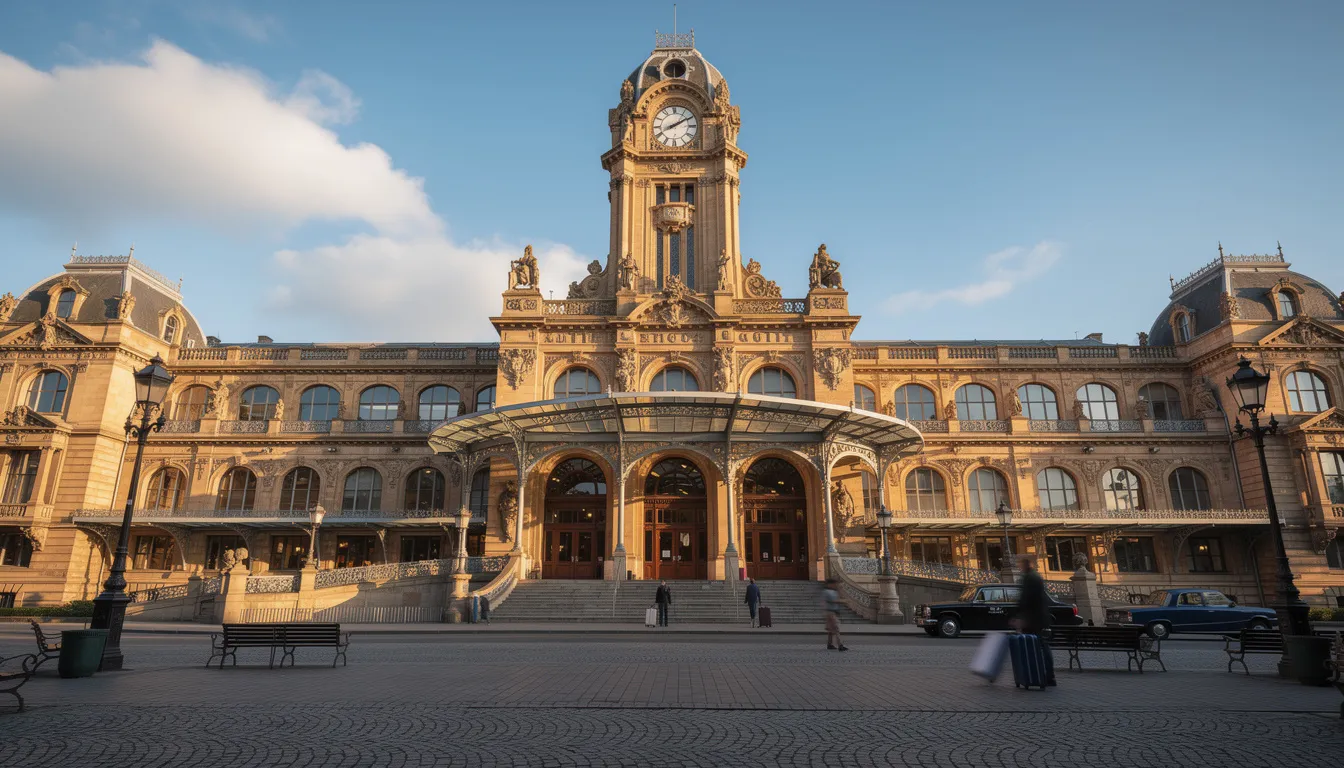
Station facilities include:
-
Ticket offices (typically open 06:00-20:00 on weekdays, reduced hours weekends)
-
Self service machine terminals for tickets and information
-
Luggage lockers (various sizes available)
-
ATMs and currency exchange
-
Tourist information office
-
Shops, bakeries, and cafés
-
Accessible toilets with baby-changing facilities
-
Elevators and escalators to all platforms
-
Full step-free access throughout
The tram terminus is directly in front of the station, with city buses and regional buses departing from adjacent stops. Taxi ranks and kiss-and-ride zones are easily accessible.
Esch-sur-Alzette
Esch-sur-Alzette is Luxembourg’s second-largest city, serving the southern industrial region and connecting to France.
Belval-Université
Belval-Université is a modern station serving the University of Luxembourg campus and the redeveloped Belval district—a showcase of transit-oriented development.
Ettelbruck
Ettelbruck is the main interchange for northern Luxembourg, connecting to services toward Diekirch, Wiltz, and the Ardennes.
Clervaux
Clervaux is the gateway to the northern Ardennes region, home to the famous “Family of Man” UNESCO exhibition at Clervaux Castle.
Pfaffenthal-Kirchberg
Pfaffenthal-Kirchberg is a newer station located below the Kirchberg plateau, connected by funicular to the EU institutions and financial district. An impressive example of Luxembourg’s vertical connectivity strategy.
Intermodal Connections
Most major stations offer:
-
Bike parking (mBox secure bike stations at key locations)
-
P+R (Park and Ride) facilities with attractive tariffs
-
Direct bus connections to areas not served by rail
-
Real-time departure screens showing trains, buses, and trams
Cross-Border Commuting and the Greater Region
Luxembourg’s economy draws tens of thousands of workers from neighbouring countries every single day. This makes the cross-border rail network one of the busiest commuter systems in Europe relative to the country’s size.
Daily Commuter Flows
Workers travel daily by train from:
-
France: Thionville, Metz, Longwy, and the wider Lorraine region
-
Belgium: Arlon, Libramont, and the Belgian Luxembourg province
-
Germany: Trier and the Moselle valley
Peak morning trains from these neigbouring countries are often packed, with services from Thionville and Arlon particularly busy. Evening return services between 17:00-19:00 experience similar crowding.
RegioZone Tickets
Cross-border travel is organised through the RegioZone ticketing system. Important: Luxembourg’s free domestic transport policy does not extend beyond national borders. Once you cross into France, Belgium, or Germany, you need a valid ticket or pass.
Ticketing options for commuters include:
-
Monthly and annual passes from SNCF (France), SNCB (Belgium), and Deutsche Bahn (Germany)
-
RegioZone tickets covering specific cross-border corridors
-
Combined passes offering unlimited travel in defined zones
Digital Tools for Commuters
-
mTicket app: Purchase and validate RegioZone tickets
-
mKaart smartcard: Store monthly or annual commuter passes
-
mShop.lu: Top up passes and manage subscriptions online
CFL collaborates closely with SNCF, SNCB, and Deutsche Bahn to coordinate schedules, pricing, and information systems across borders. This cooperation ensures that despite crossing national boundaries, the travel experience remains relatively seamless.
Stations, Accessibility and Passenger Services
Luxembourg has invested significantly in making its rail network accessible to all passengers, including those with reduced mobility.
Accessibility Features
Most stations on the network offer:
-
Step-free access to platforms via ramps or lifts
-
Tactile paving for visually impaired passengers
-
Accessible toilets at major stations
-
Low-floor trains for easy acces boarding
-
Clear signage and audio announcements
At Luxembourg station, all platforms are accessible via lifts and escalators. Newer stations like Pfaffenthal-Kirchberg and Belval-Université were designed with universal accessibility from the outset.
Assistance Services
Disabled passengers can request boarding assistance from CFL. To arrange help:
-
Contact CFL at least 24-48 hours before travel
-
Call the CFL call centre on +352 2489 2489
-
Specify your requirements (wheelchair assistance, guidance for visual impairment, etc.)
Staff can provide:
-
Assistance boarding and alighting from trains
-
Help with luggage
-
Guidance through stations
-
Information in accessible formats
Park and Ride
Many stations outside the city centre offer P+R facilities, encouraging commuters to leave their cars at suburban stations and complete their journey by train. Parking is often free or heavily subsidised for public transport users. Major P+R sites include:
-
Howald
-
Cessange
-
Kirchberg
-
Belval-Université
Security and Comfort
Stations are generally well-maintained with:
-
Good lighting throughout
-
CCTV coverage
-
Visible staff presence during operating hours
-
Family-friendly facilities including baby-changing where available
Planning Your Journey: Apps, Timetables and Real-Time Information
Digital tools make planning train journeys in Luxembourg straightforward and reliable.
Essential Apps
CFL Mobile App: The official app for Luxembourg’s railways, offering:
-
Timetables and journey planning
-
Real-time train positions and platform information
-
Delay alerts and disruption notifications
-
Ticket purchasing for chargeable services
Mobiliteit.lu: The comprehensive Luxembourg public transport app/website, providing:
-
Door-to-door journey planning across all modes
-
Integration of trains, buses, trams, and the funicular
-
Live updates on all public transport services
-
Accessibility information for each station and stop
Both apps show real-time information including current delays, platform changes, and alternative routes when disruptions occur.
International Journey Planning
For trips beyond Luxembourg, use:
-
Deutsche Bahn Reiseauskunft: Excellent for German connections and through-ticketing
-
SNCF Connect: Essential for TGV bookings to Paris and French destinations
-
SNCB app: For Belgian rail connections
-
Trainline: Aggregates multiple operators for comparison shopping
All these platforms include Luxembourg in their timetable databases.
Practical Tips
-
Download apps before arrival to familiarise yourself with the interface
-
Enable push notifications for your specific train services
-
Check Mobiliteit.lu the morning of travel for any disruption alerts
-
For TGV and international trains, arrive at least 20 minutes early to allow time for platform changes
Popular Routes and Day Trips by Train
Luxembourg’s compact size and excellent rail connections make it perfect for day trips. Best of all, most destinations within the country are completely free to reach by train.
Luxembourg City – Vianden
One of Luxembourg’s most popular excursions combines train and bus. Take a train from Luxembourg station to Ettelbruck (approximately 30 minutes), then connect to bus 570 to Vianden (approximately 25 minutes). The star attraction is Vianden Castle, one of the largest fortified castles west of the Rhine, perched dramatically above the Our valley.
Trains to Ettelbruck run at least hourly, with buses timed to connect. The entire journey is free using 2nd class transport.
Luxembourg City – Clervaux
Head north through the Ardennes to Clervaux (approximately 1 hour by train). This small town is home to the medieval Clervaux Castle, which houses the UNESCO-listed “Family of Man” photography exhibition—one of the most visited cultural sites in Luxembourg. The surrounding forests offer excellent hiking trails.
Regional trains run regularly throughout the day.
Luxembourg City – Esch-sur-Alzette and Belval
A quick 20-minute train ride south brings you to Esch-sur-Alzette, Luxembourg’s second city, and the adjacent Belval district. The former steelworks site has been transformed into a vibrant quarter featuring:
-
University of Luxembourg campus
-
Rockhal concert venue
-
Modern architecture and public spaces
-
Restaurants and cultural venues
Frequent train services connect Luxembourg station to both Esch-sur-Alzette and Belval-Université stations.
Luxembourg City – Wiltz or Diekirch
For hiking and local culture, head to the northern towns of Wiltz (approximately 1 hour) or Diekirch (approximately 45 minutes). Diekirch is famous for its brewery and National Museum of Military History, while Wiltz offers access to Ardennes hiking trails and hosts a renowned summer music festival.
Cross-Border Day Trip: Luxembourg – Trier (Germany)
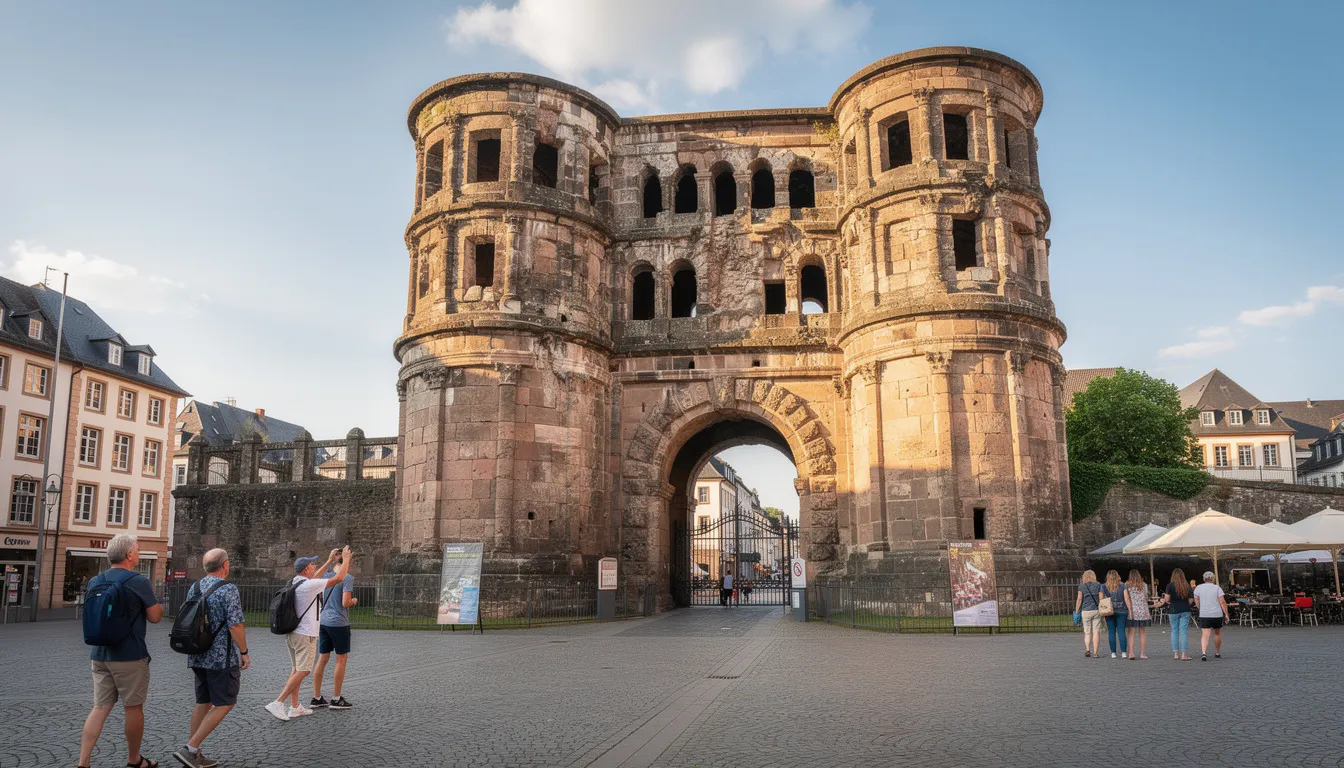
Cross into Germany for a day exploring Trier, one of Europe’s oldest cities. The journey takes approximately 50 minutes through the scenic Moselle valley. Highlights include:
-
Porta Nigra (Roman city gate, UNESCO World Heritage)
-
Roman amphitheatre and imperial baths
-
Trier Cathedral
-
Moselle river promenades
Note: This is an international journey, so you’ll need a ticket for travel beyond the Luxembourg border. Purchase at Luxembourg station or via the CFL app before departure.
|
Day Trip |
Journey Time |
Free? |
|---|---|---|
|
Vianden |
55min (train+bus) |
Yes (2nd class) |
|
Clervaux |
~1h |
Yes (2nd class) |
|
Esch/Belval |
20min |
Yes (2nd class) |
|
Diekirch |
45min |
Yes (2nd class) |
|
Trier (Germany) |
50min |
No (ticket required) |
Practical Tips for Travelling by Train in Luxembourg
To make the most of your train travel in Luxembourg, keep these practical points in mind.
Before You Board
-
Arrive at Luxembourg station 10-15 minutes before departure for international trains
-
Check platform numbers on departure screens—platforms can change
-
For international journeys, validate any paper tickets if required
-
Have your passport or ID available for cross-border services (rare checks but possible)
Luggage and Bikes
-
There are no strict luggage limits on domestic trains. Luggage racks are available at the end of each carriage, with overhead shelves for smaller bags.
-
Bikes are generally allowed on regional trains
-
Peak-hour restrictions may apply on busy commuter routes
-
Folding bikes are always permitted
-
No reservation required for bikes on domestic services
Pets
-
Small pets in carriers can travel free.
-
Larger dogs must be kept on a lead and may need to wear a muzzle on busy services.
-
Guide dogs are always welcome without restriction.
Peak Hour Travel
-
Cross-border routes from Thionville, Arlon, and Trier get extremely crowded during:
-
Morning rush: 07:00-09:00
-
Evening rush: 17:00-19:00
-
-
If possible, travel outside these windows for a more comfortable journey. Domestic routes within Luxembourg are generally less affected.
Etiquette
-
Keep aisles clear for passengers moving through the train
-
Offer seats to elderly passengers, pregnant women, and those with reduced mobility
-
Respect quiet zones where marked
-
Keep phone conversations brief and volume low
Final Thoughts
Luxembourg’s combination of free 2nd class transport, a dense train network, and excellent international links makes it one of the easiest countries in Europe to explore by train. Whether you’re commuting daily from one of the neighbouring countries, making a day trip to a castle in the Ardennes, or connecting through to Paris or Brussels, the rail system offers convenience, comfort, and remarkable value.
Download the CFL or Mobiliteit.lu app before your trip, check the latest timetables, and enjoy the freedom of hopping on any domestic train without reaching for your wallet. In the Grand Duchy, train travel has never been simpler.