

Traveling to Warsaw by train is efficient, comfortable, and eco-friendly. Warsaw, Poland’s capital, is a major rail hub with excellent domestic and international connections. Here’s why trains are a great choice:
-
High-Speed Options: PKP Intercity’s EIP trains reach up to 124 mph, making routes like Warsaw-Krakow as quick as 2 hours 23 minutes.
-
Convenient Stations: Key stations like Warszawa Centralna are in the city center, open 24/7, and connected to public transport.
-
International Routes: Direct trains link Warsaw to cities like Berlin, Prague, Vienna, and Budapest, with affordable fares starting at €27.99. Trains run from major European destinations such as Berlin (Germany), Prague, Vienna (Austria), and London, often requiring transfers for some routes.
-
Eco-Friendly Travel: Trains produce up to 96.5% less CO2 than flights on similar routes.
-
Modern Amenities: Free Wi-Fi, power outlets, and dining options are available on most trains. Most trains also offer free WiFi and an extensive menu of onboard dining options.
Polish Railways (PKP) and other train companies like Deutsche Bahn, ÖBB Nightjet, and Ceske Drahy serve Warsaw. Travelers can search for train times and book tickets for inter-city journeys (such as Warsaw to Krakow) on official websites like PKP Intercity and portalpasazera.pl. Reservations are compulsory on most long-distance trains in Poland, including EIP and EIC services. Traveling by train allows passengers to discover Poland and explore Poland’s scenic countryside. Train tickets to Warsaw can start from as low as $3 (€2) with Deutsche Bahn, and the cheapest price for a train ticket to Warsaw is around $29.84 according to recent searches. Direct trains from Krakow to Warsaw are usually available every day, and tickets from Krakow Central to Warsaw can start from €9.20 when booked in advance.
Quick Comparison of Key Routes
|
Route |
Duration |
|
|---|---|---|
|
Warsaw-Berlin |
5h 50m |
€27.99 |
|
Warsaw-Prague |
8h 30m |
€28.00 |
|
Warsaw-Krakow |
2h 23m |
$11.45 (49 PLN) |
|
Whether you’re planning a domestic trip or exploring Europe, Warsaw’s rail network offers speed, comfort, and accessibility. Ready to learn more? Let’s dive in. |
Introduction to Train Travel
Train travel is one of the most convenient and affordable ways to explore Europe, offering a seamless experience for both seasoned travelers and first-time visitors. With a wide range of train companies operating across the continent, planning a trip to Warsaw, Poland, is straightforward and flexible. Travelers can choose from various train types, including regional trains for short distances, long-distance trains for cross-country journeys, and high-speed trains for the fastest connections. By booking train tickets in advance or taking advantage of special promotions, it’s easy to find cheap train tickets for your journey. Warsaw is exceptionally well-connected, with direct train connections from major cities such as Berlin, Prague, and Vienna. The city center is easily accessible, as the main train station, Warszawa Centralna, is located right in the heart of Warsaw, making it a perfect starting point for your trip. Whether you’re traveling for business or leisure, train travel offers a comfortable and efficient way to reach Poland’s vibrant capital.
Warsaw’s Main Train Stations
|
Location |
||
|---|---|---|
|
Warszawa Centralna |
City Center |
Open 24/7, fully accessible, metro connection. Many hotels and services are conveniently located near the main entrance, making it easy for travelers to access accommodations and transportation. |
|
Warszawa Wschodnia |
East of Vistula River |
7 platforms, 800+ daily trains, limited accessibility |
|
Warszawa Zachodnia |
Western Warsaw |
Links to international buses, undergoing renovation |
Warszawa Centralna Station
Located in the heart of Warsaw, Warszawa Centralna is the city’s main railway hub. This station operates around the clock, offering ticket offices, luggage storage, and free Wi-Fi. It’s directly connected to the Centrum Metro station and nearby landmarks through an underground passage that links it to Warszawa Śródmieście WKD and Warszawa Śródmieście PKP stations. Passengers can enjoy a range of amenities, including VIP waiting lounges, a supermarket, cafés, charging points, currency exchange, and 24/7 restrooms.
Warszawa Wschodnia Station
Warszawa Wschodnia is the city’s second-largest station and handled 13.5 million passengers in 2022, ranking as Poland’s fifth busiest. With over 800 trains passing through daily, it features seven platforms connected by tunnels. Available facilities include:
-
Ticket offices and vending machines
-
Luggage lockers
-
Dining options
-
A pharmacy and supermarket
-
Currency exchange and ATMs
-
A taxi stand
However, the station faces challenges. Its platforms are only partially covered, and accessibility for disabled passengers remains limited.
Warszawa Zachodnia Station
Warszawa Zachodnia serves both rail passengers and international bus travelers. While undergoing renovation, it remains a crucial hub for domestic and international routes. Basic services are available, and public transportation ensures regular connections to central Warsaw.
These stations form the backbone of Warsaw’s extensive rail network, each playing a unique role in connecting the city.
After learning about Warsaw’s train stations, let’s dive into the key rail operators and the routes they manage, both within Poland and internationally.
Polish Railways (PKP) and other options provide connections to Warsaw from major European cities such as Berlin, Prague, and Vienna, with multiple daily departures.
Three main railway companies serve Warsaw, each specializing in specific types of travel and destinations.
PKP Intercity
PKP Intercity offers long-distance and international train services across Poland. Their fleet includes four service categories, each tailored to different needs:
|
Service Type |
Description |
Key Features |
|---|---|---|
|
EIP |
High-speed premium service |
Modern trains, business-class options |
|
EIC |
Long-distance express |
First and second-class seating |
|
IC |
Standard long-distance |
Comfortable, affordable travel |
|
TLK |
Budget-friendly long-distance |
Basic amenities, lower fares |
|
For international routes, PKP Intercity connects Warsaw to major European cities: |
||
|
Route |
Duration |
Service Type |
|
————————————————————————————————————– |
————– |
——————— |
|
Warsaw-Berlin |
5h 50m |
EuroCity |
|
Warsaw-Prague |
8h 30m |
EuroCity |
|
Warsaw-Budapest |
11h 25m |
EuroCity/Euro Night |
|
Warsaw-Vienna |
7h 15m |
EuroCity |
|
While PKP Intercity handles premium and long-distance routes, regional travel is managed by other operators. |
Koleje Mazowieckie (KM)
Koleje Mazowieckie specializes in regional travel within the Masovian region, including the Warsaw metropolitan area. Their network connects passengers to key regional destinations and offers convenient access to Modlin Airport. The airport service includes:
-
A train to Modlin station.
-
A shuttle bus to the airport terminal.
-
Integration with Warsaw’s public transportation system.
Passengers with a valid one-day Warsaw transit ticket can ride KM trains for free.
Additionally, SKM Warszawa complements these regional services with frequent local connections.
SKM Warszawa Local Trains
SKM Warszawa operates a suburban train network, linking Warsaw’s neighborhoods with nearby communities. Fully integrated with the city’s public transportation system, SKM allows easy transfers between trains, metros, trams, and buses.
SKM trains serve all three major Warsaw stations (Centralna, Wschodnia, and Zachodnia) and provide regular connections to:
-
Warsaw Chopin Airport
-
Business hubs
-
Residential areas
-
Shopping destinations
-
Schools and universities
Timetables for SKM and other rail services can be found on the unified Polish rail platform.
International Train Routes
Warsaw’s position as a key rail hub makes it a prime starting point for international train travel across Europe. Trains run frequently between Warsaw and major European capitals, including Vienna in Austria, offering convenient and direct connections. With modern amenities and direct connections, it’s easy to reach several major European capitals.
Berlin-Warsaw Trains
The Warszawa/Gdynia-Berlin-Express runs several times daily between the two capitals, completing the trip in about 5 hours. Passengers can choose between first- and second-class seating, and there’s also a restaurant car for added convenience. Tickets start at roughly $30.79 (€27.99) for second class and $41.79 (€37.99) for first class. Additionally, there are direct train options linking Warsaw and Prague.
Prague-Warsaw Trains
Three direct trains operate daily between Warsaw and Prague. The EuroNight sleeper train departs Warsaw Centralna at 8:00 PM and arrives at Prague Hlavni at 7:51 AM, covering about 740 km (460 miles). Second-class tickets are priced from approximately $30.80 (€28), while first-class options begin at around $52.80 (€48).
Vienna-Warsaw Trains
The “Chopin” EuroNight service offers both daytime and overnight options between Vienna, Austria and Warsaw. Austrian train services, such as ÖBB Nightjet and Austrian Railways, operate on this route. The overnight train leaves Warsaw Centralna at 8:00 PM and arrives at Vienna Hauptbahnhof by 5:25 AM. Travelers can enjoy air-conditioned EuroCity coaches, a variety of seating and sleeping arrangements, and a restaurant car. Second-class fares start at about $47.19 (€42.90).
Make sure to have the proper travel documents. EU citizens can travel with an ID card, while others will need a passport and possibly a visa. Plan to arrive at the station at least 30 minutes before departure.
Trains Within Poland
Poland’s domestic rail routes connect Warsaw to major cities across the country, complementing its international services and playing a key role in the nation’s transportation network. For travelers seeking flexible, single-day travel within Poland, day tickets are available, offering convenient fare options for short-term plans.
Warsaw-Krakow Trains
The Warsaw-Krakow route sees around 30 daily departures. The fastest option, the Express InterCity Premium (EIP), completes the trip in just 2 hours and 23 minutes. Other services take up to 4 hours and 3 minutes.
Here’s a quick breakdown of train types on this route:
|
Train Type |
Travel Time |
Features |
|
|---|---|---|---|
|
EIP Pendolino |
2h 23m |
Air conditioning, buffet car, complimentary drinks |
$11.45 (49 PLN) |
|
EIC |
2h 45m |
Modern coaches with reserved seating |
$9.35 (40 PLN) |
|
IC/TLK |
3h – 4h |
Budget-friendly with basic amenities |
$8.75 (37.40 PLN) |
|
The Warsaw cost for train tickets from Krakow Central can start from as low as €9.20 when booked in advance. Warsaw is also considered the best destination in Poland for foodies, making the journey even more appealing. |
Warsaw-Gdansk Trains
The Warsaw-Gdansk route offers about 24 daily departures. The quickest EIP trains cover the distance in 2 hours and 36 minutes, while other services take up to 3 hours and 41 minutes. These trains operate on a modernized line, reaching speeds of up to 124 mph (200 km/h).
EIP “Pendolino” trains include features like:
-
Mandatory seat reservations
-
Complimentary drinks in first class
-
Access to a buffet car
-
Air-conditioned carriages
-
Power outlets at seats
Warsaw-Wroclaw Trains
Traveling between Warsaw and Wroclaw? This route offers around 17 daily departures, served by Express InterCity (EIC) and InterCity (IC) trains. Passengers can choose between first and second class seating. Seat reservations are mandatory and cost 3 PLN when purchased at Polish train stations. Keep in mind that tickets are specific to the operator you choose.
How to Buy Tickets
Here’s how you can purchase Warsaw train tickets using different methods. Travelers can use online search tools to compare train options, schedules, and prices for routes to and from Warsaw.
Website Booking
You can buy tickets for Warsaw trains through official rail websites or platforms like PolishTrains.eu. These sites support multiple languages, accept major credit cards, and send tickets directly via email or SMS.
Apps and Station Tickets
The Jakdojade app (available for iOS and Android) is a handy tool for real-time transit updates, interactive route maps, and intercity travel planning. It’s frequently updated with station details and integrated features for seamless trip management.
Prefer in-person service? Tickets can also be purchased at staffed station counters, which accept credit cards.
Other Booking Options
For more complex itineraries, specialized rail booking platforms might be a better fit. Additionally, PKP Intercity conductors onboard trains can process payments via mobile credit card systems.
|
Booking Method |
Key Features |
Best For |
|---|---|---|
|
Station Ticket Office |
In-person help, instant ticket issuance |
Last-minute trips, cash transactions |
|
Official Website |
Easy booking with competitive fares |
Advance planning, simple routes |
|
Mobile Apps |
Real-time updates, digital ticket storage |
Local travel, flexible scheduling |
Class Differences
Polish trains provide both first- and second-class options, each catering to different needs. For example, on IC trains traveling from Warsaw to Krakow, a first-class ticket costs around $25, while second class is priced at $17. EIP first-class passengers enjoy perks like complimentary meals and extra legroom, whereas other IC services include a refreshment service and a free drink.
Train Types and Speeds
Polish rail services include a variety of train types, each offering unique features:
-
Regio: Local trains with second-class seating only.
-
TLK: Regional trains offering both first- and second-class seating, along with a refreshment trolley.
-
IC: Inter-regional trains equipped with air-conditioning, Wi-Fi, and a buffet car.
-
Express InterCity (EIC): Premium trains featuring a restaurant car and complimentary drinks.
-
EIP Pendolino: High-speed trains with reserved seating, a buffet car, and meal service for first-class passengers.
These differences also affect ticketing and reservation rules.
Ticket Options
Seat reservations are required for all PKP Intercity services, including TLK, IC, EIC, and EIP trains. Domestic tickets can be purchased up to 30 days in advance, while international tickets are available 60 days ahead. Local Polregio services, on the other hand, offer unreserved seating. Tickets can also be bought directly from onboard conductors (except on EIP trains), though additional fees may apply.
For the fastest travel option, EIP Pendolino trains connect Warsaw to Krakow at a high-speed rate. A basic fare for this route costs approximately €30 ($33).
Choosing the Right Train and Planning Your Trip
When planning your journey to Warsaw by train, using online journey planners is a smart way to find the best train connections and book your tickets with ease. It’s important to select the right train type for your needs, as amenities can vary significantly. Many modern trains feature air conditioning, power outlets at every seat, and even complimentary tea for added comfort. IC trains, including those operated by Deutsche Bahn, are a popular choice for travelers coming from major cities across Europe, offering multiple connections and a smooth, comfortable ride. For those seeking extra comfort, Relax Class or First Class options provide spacious seating and additional perks. As you plan your trip, pay close attention to train times, seat reservation requirements, and whether you’ll need to change trains along the way. Booking your tickets in advance not only secures your seat but often results in better fares, ensuring a stress-free and enjoyable travel experience to Warsaw.
Station Transport Links
At all Warsaw train stations, you’ll find official taxi services like Opti Taxi, Tanie Taxi, Atu Taxi, Ele Taxi, and iTaxi. These services typically charge a base fare of $2–$2.50 (7–8 PLN) and about $0.90 (3 PLN) per km during the day or $1.35 (4.50 PLN) per km in the evening. For instance, a quick 8-minute ride connects Warszawa Centralna and Warszawa Wschodnia. Stick to taxis with visible meters to avoid issues. If taxis aren’t your preference, Warsaw’s public transport system is another convenient way to get around.
City Transport Links
Warsaw boasts an extensive public transit network, making it easy to travel across the city. The system includes metro lines, trams, and buses, all operating on a unified ticketing system. Here’s a quick breakdown of the options:
|
Transport Type |
Operating Hours |
Single Ticket Cost |
Daily Ticket Cost |
|---|---|---|---|
|
Metro Lines |
5:00 AM – 12:00 AM |
$1 (3.40 PLN) |
$4.50 (15 PLN) |
|
Trams |
5:00 AM – 12:00 AM |
$1 (3.40 PLN) |
$4.50 (15 PLN) |
|
Day Buses |
5:00 AM – 11:00 PM |
$1 (3.40 PLN) |
$4.50 (15 PLN) |
|
Night Buses |
11:00 PM – 5:00 AM |
$1 (3.40 PLN) |
$4.50 (15 PLN) |
|
The metro is a particularly fast option. For instance, you can travel from Warsaw Centralna to Warsaw Gdanska in just 7 minutes on metro Line M1. |
Walking Routes
For shorter distances, walking is a great choice. Warsaw Centralna is well-placed for exploring the city on foot. The historic Old Town Square, for example, is just 2.7 kilometers away, a walk of about 33 minutes. The station is equipped with escalators and elevators, making it easy for travelers with luggage.
Warsaw Wschodnia also has useful amenities, including a Costa Coffee, minimarkets, and a pharmacy. To plan your walking routes or integrate them with public transport, the Jakdojade app is a handy tool.
Travel by Season
Planning train travel in Warsaw requires understanding how the seasons can impact schedules and conditions.
Winter Travel
Traveling to Warsaw in winter, from December to February, comes with its own challenges. Temperatures often drop below freezing, which can disrupt rail schedules. Reports from September 2024 highlight frequent weather-related issues, such as train cancellations and temporary border crossing closures.
|
Winter Travel Factor |
Impact |
|---|---|
|
Weather Delays |
Expect frequent updates to schedules due to snow and rain |
|
Border Crossings |
Severe weather may lead to temporary closures |
|
Night Trains |
Book early, especially for routes serving winter sports destinations |
|
Temperature Range |
Below 32°F (0°C), which can affect station operations |
|
As winter conditions ease, travel patterns naturally adjust. |
|
|
Summer is the busiest travel season in Warsaw, with temperatures ranging from 50°F to 75°F (10–24°C). This period sees a significant increase in passenger numbers. |
Here’s what to expect:
-
More Frequent Services: Certain routes run more often to meet tourist demand.
-
Advance Booking: Essential for popular routes during the peak season.
-
Comfortable Conditions: Most modern trains are equipped with air conditioning for a pleasant ride.
Holiday Travel
Polish holidays and festivals can lead to schedule changes. It’s important to check official websites for updates and secure tickets in advance.
Discovering Warsaw and its Attractions
Warsaw is a historic city that captivates visitors with its blend of old-world charm and modern vibrancy. As the capital of Poland, it boasts a rich history reflected in its beautifully restored Old Town, the majestic Royal Castle, and the thought-provoking POLIN Museum of the History of Polish Jews. The city’s historic center is a UNESCO World Heritage site, featuring cobblestone streets and colorful buildings that transport you back in time. Food lovers will delight in Warsaw’s dynamic culinary scene, where traditional Polish dishes are served alongside innovative European cuisine. Thanks to excellent rail connections, travelers can easily use Warsaw as a base to explore other iconic European cities such as Krakow, Berlin, and Prague. Whether you’re passionate about history, culture, or simply want to experience the best of Poland, traveling by train makes it easy to discover Warsaw and beyond.
Customer Support for Train Travel to Warsaw
Travelers heading to Warsaw by train can count on comprehensive customer support from leading train companies such as PKP Intercity and Deutsche Bahn. These companies provide multilingual assistance in English, German, and Polish, ensuring that passengers from across Europe can get the help they need. Whether you have questions about train schedules, ticket prices, or required travel documents, dedicated customer service teams are available online, by phone, and at major stations. Many European train stations, including those in Warsaw, feature information desks and helpful staff ready to assist with your journey. This commitment to service ensures that every step of your trip—from planning to arrival—is smooth and worry-free.
Quick Facts
Here’s a quick overview of Warsaw’s rail network and travel essentials:
|
Station Feature |
Details |
|---|---|
|
Location |
City center |
|
Accessibility |
Fully accessible for passengers with disabilities |
|
Facilities |
Includes shopping centers and underground passages |
|
Connections |
Direct links to key areas of the city |
|
Notable Landmarks |
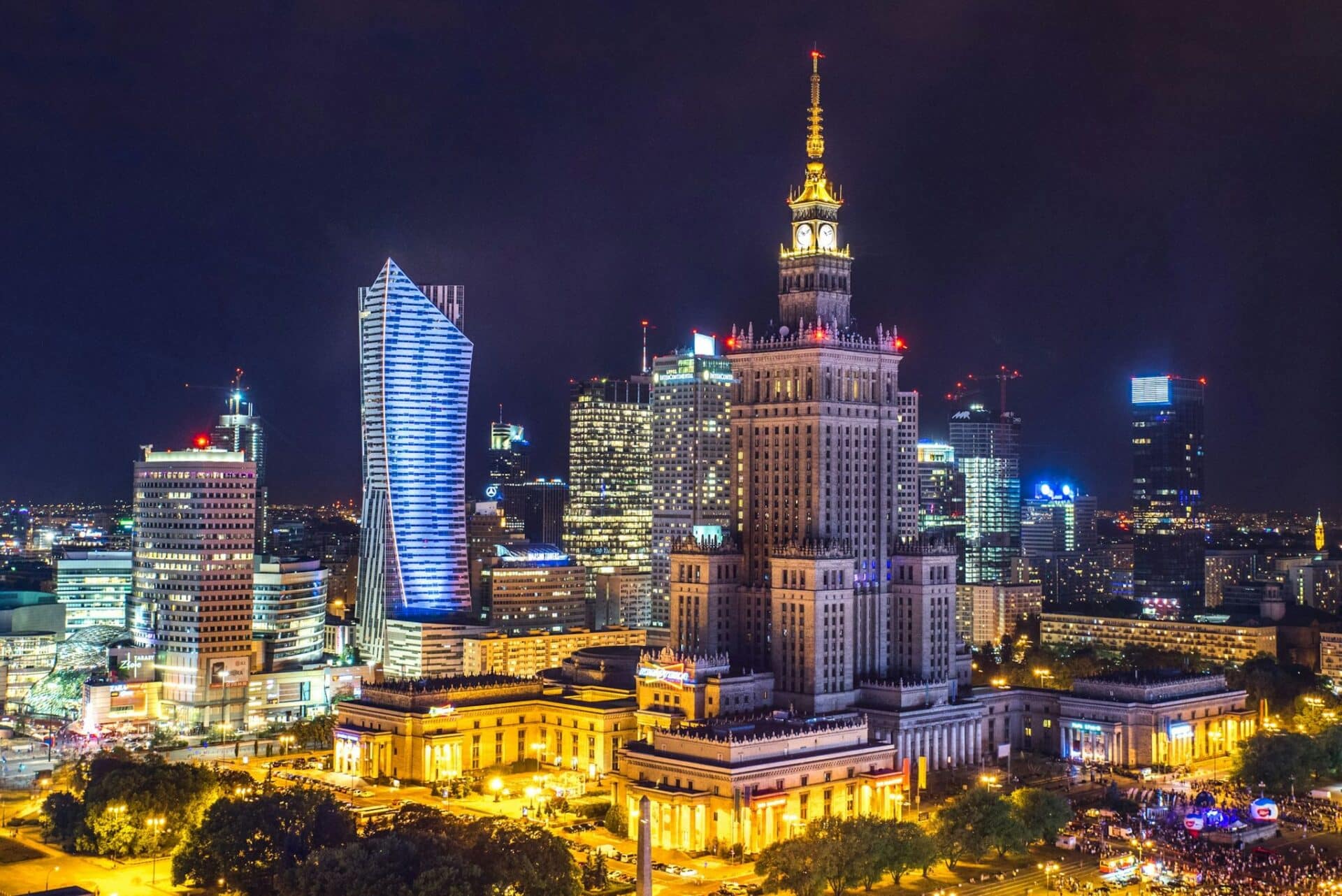
Złote Tarasy, Palace of Culture and Science, Warsaw is a historic city with a rich cultural heritage, the Old Town quarter (a UNESCO World Heritage Site) filled with rebuilt buildings that mimic 14th-century houses, the Royal Castle (a key historical location), the Jewish district (a significant historical area), POLIN Museum of the History of Polish Jews with eye-opening exhibitions, Łazienki Królewskie Museum and its gardens, and the option to relax on a water tram along the Vistula River. |
-
Berlin: 5 hours 30 minutes
-
Vienna: 7 hours 30 minutes
-
Krakow: 2 hours 18 minutes
Travel Tips to Keep in Mind:
-
Seat reservations are required for EIP, EIC, IC, and most TLK trains.
-
Stations display both platform (peron) and track (tor) numbers.
-
Stops at Centralna are typically brief, lasting just a few minutes.
-
Personal alcohol consumption is not allowed in regular seating cars.
-
Save money by booking your train tickets in advance and choosing affordable travel options.
Getting Around the Station: Warszawa Centralna offers modern facilities and excellent connectivity. Its underground network connects directly to major landmarks like Varso Tower and the Złote Tarasy shopping center. The station is fully equipped for passengers with heavy luggage and ensures easy navigation for everyone. Plus, its central location makes it a great starting point for exploring Warsaw’s top attractions.
Key Takeaways
In summary, train travel to Warsaw is a convenient and cost-effective way to experience the city and its many attractions. With a variety of train companies and train types operating throughout Europe, travelers have plenty of options for finding the best train connections to suit their needs. Booking train tickets in advance is the key to securing cheap train tickets and a comfortable seat for your journey. Warsaw’s historic center, cultural landmarks, and lively food scene make it a standout destination in Eastern Europe. With reliable customer support and modern amenities, train travel offers a stress-free and enjoyable way to explore Warsaw and the wider region. Whether you’re planning a solo adventure or a family trip, traveling by train is an excellent choice for discovering the best of Europe.