


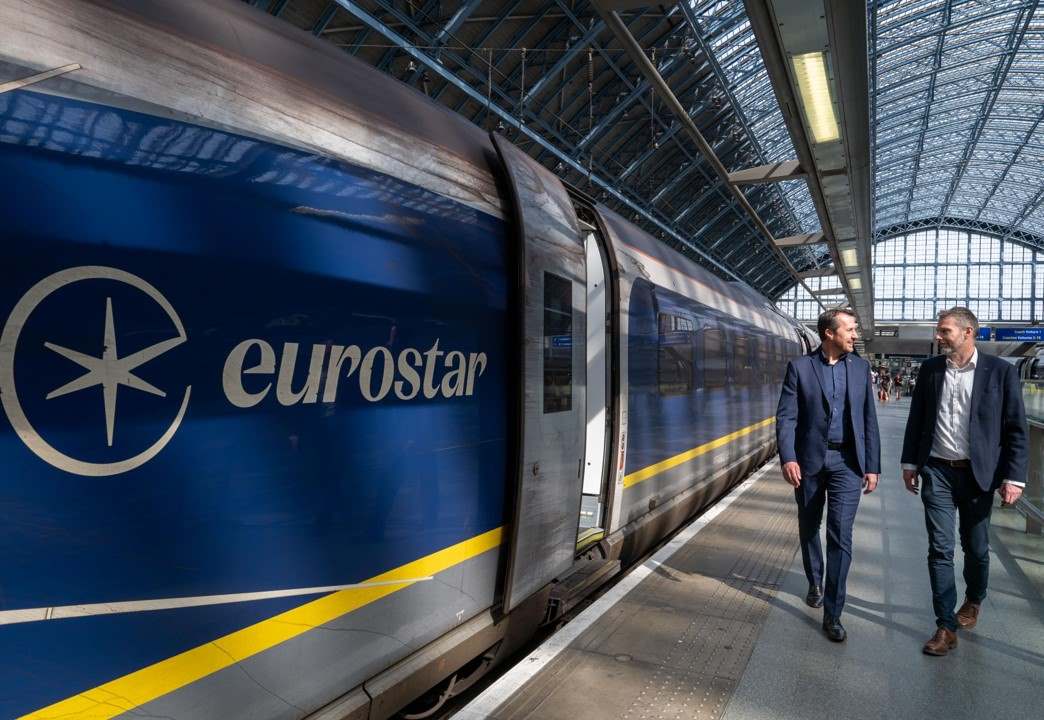
If you’re planning a trip from London to Paris, Brussels, or Amsterdam, you’ve probably wondered about the speed of those sleek Eurostar trains that zip through the Channel Tunnel. This guide is for travelers, train enthusiasts, and anyone curious about Eurostar’s performance. Knowing how fast Eurostar goes helps you plan your trip and compare it to other travel options. Understanding how fast your train travels can help you plan your journey and set realistic expectations for travel times.
Let’s break down everything you need to know about Eurostar speeds—from the maximum velocity on dedicated high speed tracks to why your actual journey time might be longer than a simple calculation would suggest.
Short Answer: Eurostar Top Speed and Typical Speeds
Modern Eurostar e320 trains are engineered for a design speed of 320 km/h (199 mph), but they’re typically limited to 300 km/h (186 mph) on current high speed lines across France, Belgium, and the UK. The original Eurostar e300 trains, still running on some Eurostar routes, have a maximum speed of 300 km/h.
Definitions:
- Top speed refers to the highest speed Eurostar trains reach on high-speed lines (300 km/h or 186 mph).
- Average speed is the overall speed including slower sections like the Channel Tunnel (160 km/h or 100 mph) and urban approaches.
- Design speed is the maximum speed the trainsets are engineered to achieve; the e320 trainsets are designed for speeds up to 320 km/h.
Inside the Channel Tunnel, however, all Eurostar trains are capped at just 160 km/h (99 mph) for safety reasons. This undersea restriction, combined with slower approaches into stations like London St Pancras and Paris Gare du Nord, means your average speed across the entire Eurostar journey will be lower than the headline figures suggest.
For the London to Paris route covering approximately 488-492 km, the fastest journey takes around 2 hours 15 to 2 hours 20 minutes. That works out to an average speed of roughly 215 km/h—still remarkably fast compared to driving, and competitive with air travel when you factor in airport transfers, security lines, and the convenience of arriving in central Paris or central London rather than a distant airport terminal.
Maximum Speed by Train Type (e300 vs e320)
Eurostar isn’t just a single train—it’s a brand operating two main families of high speed train with different technical specifications and performance characteristics.
The original Class 373 sets, now branded as e300, entered service in 1994 when the first train departed for mainland Europe. These passenger trains were built as elongated versions of the French TGV, featuring 16-car configurations specifically designed for the Channel Tunnel rail link. With a top speed of 300 km/h, the e300 fleet proved reliable for decades, though only about 8 of the original 38 sets remain in active passenger service as of late 2024. Many have been refurbished trains over the years, but their acceleration is notably slower than newer models.
The Siemens Velaro-based e320 fleet arrived in 2015 and now dominates Eurostar services. These new trains feature a design speed of 320 km/h, better acceleration, free wifi throughout, power sockets at every seat, and improved air conditioning. With around 900 seats across eight carriages in each set, the e320 offers enhanced ride quality and efficiency. Despite their higher technical capability, current route constraints prevent exceeding 300 km/h on core services.
Both train types remain restricted by local line speed limits—even if the train can go faster, the infrastructure dictates the actual maximum speed.
How Fast Does Eurostar Go on Each Main Route?
The answer to “how fast does Eurostar go?” varies significantly depending on which country you’re in and which specific section of track the train travels.
London to Paris
The London Eurostar service to Paris covers approximately 492 km with the fastest journey time of 2 hours 15 to 2 hours 16 minutes. On High Speed 1 (HS1) in the UK and LGV Nord in northern France, trains run at the full 300 km/h maximum speed. However, the 160 km/h limit applies during the tunnel transit, and speeds reduce further on the approaches to St Pancras International station and Paris Nord.
The direct train from London St Pancras to Gare du Nord represents one of the most efficient rail services in Europe, whisking passengers from central London to central Paris faster than most short-haul flights when door-to-door time is considered.
London to Brussels
Covering roughly 373 km, the London to Brussels route has a fastest journey time of around 2 hours 01 minutes. The speed pattern mirrors the Paris-London service: 300 km/h on HS1 and the Belgian high speed lines, reduced speeds through the Channel Tunnel, and slower approaches into Brussels Midi (also known as Brussels South).
This makes Brussels easily accessible for business class travelers and tourists alike, with three Eurostar trains or more running daily on this popular corridor.
London to Amsterdam
The Amsterdam-Paris and London to Amsterdam routes cover between 548-620 km depending on the alignment, with fastest journeys taking just over 4 hours. High speed services achieve 300 km/h on HS1, LGV Nord, and Belgian high speed sections. However, conventional lines in the Netherlands—particularly around Schiphol and approaching Amsterdam Centraal train station—require significantly slower running.
The integration of former Thalys trains into the Eurostar network has streamlined Brussels-Paris and Amsterdam-Paris connections, with NS International coordination improving timetables across these routes.
Eurostar Speeds on Specific Lines and in the Channel Tunnel
Eurostar shares infrastructure with national high speed rail networks, each with its own maximum line speed and operational constraints.
Channel Tunnel
The rail tunnel stretches approximately 50 km in total, with around 37-38 km running beneath the English Channel—making it the world’s longest underwater rail section. Despite the technical capability of Eurostar trains, the tunnel speed is capped at 140-160 km/h, resulting in a transit time of roughly 20-21 minutes.
This restriction exists for critical safety reasons. Evacuation constraints, train spacing requirements, and fire safety protocols (informed by incidents in 1996 and 2008) all mandate conservative speeds. The tunnel, owned by Getlink which levies tolls on rail services, prioritizes safety over speed in this unique environment.
High Speed 1 (HS1), United Kingdom
HS1 runs 108 km from London St Pancras to the Channel Tunnel entrance. Fully opened in 2007, this new high speed line allows Eurostar to reach 300 km/h for most of its length. The train typically achieves full speed within 15-20 minutes of departing Stratford International station.
Notably, Eurostar set a British speed record of 334.7 km/h during test runs on HS1 in July 2003—a milestone that still stands. A weathered monument near Fawkham Junction in Kent marks the approximate location. However, this exceeds normal operating speed and was achieved under controlled test conditions.
LGV Nord, France
This high speed line enables 300 km/h running for Eurostar between Calais-Fréthun, Lille Europe station, and the approaches to Paris and Brussels. The infrastructure connecting the Channel Tunnel to Lille Europe and onward represents some of Europe’s most advanced rail engineering.
Belgian and Dutch High-Speed Lines
Belgian high speed sections allow 300 km/h operation, maintaining momentum from France. However, the Dutch HSL-Zuid runs Eurostar at high speed only on certain portions. Classic tracks, particularly near urban areas, require reduced speeds of 160-250 km/h. This explains why the Amsterdam journey takes proportionally longer despite the infrastructure being modern in many sections.

Average Speed vs Top Speed: Why They Differ
Understanding the difference between “headline” maximum speed and real-world average speed explains why your Eurostar journey takes longer than simple arithmetic might suggest.
Using the London to Paris route as the main example: the distance is approximately 492 km, and the fastest journey takes about 2 hours 15 minutes. This yields an average speed of roughly 215 km/h—significantly below the 300 km/h top speed.
Several factors account for this gap:
- Acceleration and deceleration at stations consume time without covering much distance
- The 160 km/h Channel Tunnel limit persists for approximately 20 minutes
- Slower approaches through urban areas near London St Pancras and Paris Gare du Nord
- Potential stops at intermediate stations like Lille Europe or Stratford International station
- Speed restrictions on certain track sections for infrastructure reasons
Compare this to a typical short-haul flight. Aircraft cruise at 800-850 km/h—roughly three times Eurostar’s top speed. Yet the city-center-to-city-center journey time is remarkably similar once you account for airport transfers, check-in requirements, security screening, and baggage collection. Air fares might look attractive, but the total door-to-door time often favors the train.
On stretches like HS1 and LGV Nord, Eurostar cruises at or near the 300 km/h limit for sustained periods, maximizing time savings where infrastructure permits.
Record Runs and Notable Eurostar Speed Milestones
Beyond daily operating speeds, Eurostar has achieved notable speed records during test runs that demonstrate the technical capability of these high speed train designs.
The most significant British record came on July 30, 2003, when an e300 set reached 334.7 km/h (208.0 mph) on the newly constructed HS1 between the Channel Tunnel and Fawkham Junction in Kent. This remains the fastest train speed ever recorded in Britain, achieved just two months before public transport services commenced on that line.
During early 1990s testing before the 1994 service launch, pre-service Eurostar sets validated their performance on French LGV lines, reaching speeds over 300 km/h to confirm operational readiness. These runs helped ensure the trains could meet demanding TGV services standards.
It’s worth noting that these record speeds are not used in everyday timetabled service. Trains run reliably at 300 km/h on relevant high speed lines, prioritizing passenger safety, infrastructure longevity, and operational consistency over chasing maximum velocity.
How Eurostar’s Speed Compares with Other Trains and Travel Modes
Eurostar’s 300 km/h operational speed places it among Europe’s fastest scheduled services. French TGV and German ICE trains typically operate at similar speeds of 300-320 km/h. Italian Frecciarossa and Spanish AVE services reach 300-350 km/h on their fastest routes, though few European services significantly exceed Eurostar’s capability.
Within the UK, Eurostar remains unmatched—domestic services on HS1 and other rail services elsewhere operate at considerably lower speeds. The Eurostar standard for international travel sets a benchmark that British domestic services haven’t approached.
For comparison with North American developments, Brightline West’s projected operating speeds of around 300 km/h on the planned Las Vegas-Southern California corridor would deliver average speeds broadly comparable to Eurostar’s London-Paris performance (~215 km/h) once stops and approaches are factored in.
Why can Eurostar often beat flying time between London and Paris or Brussels despite aircraft cruising at three times the speed?
- Central station locations eliminate lengthy airport transfers
- No requirement to arrive 2 hours before departure
- Minimal security theater—UK passport check and French passport check are streamlined
- No baggage restrictions or checked luggage delays
- Productive travel time with free wifi and standard class comfort
- Direct arrival at destinations like Notre Dame’s neighborhood or the French Alps connection at Lille
For trips to Disneyland Paris, the dedicated Eurostar offers connections that bring families directly to the resort area, avoiding the complexity of Charles de Gaulle airport navigation.
Stations and Travel Information: How Station Stops and Logistics Affect Your Journey Time
When you’re planning high speed train travel, it’s not just about how fast you’ll zip along – it’s about how smoothly you’ll glide from one city center to another. Let’s walk through how Eurostar nails this experience, starting with the stations that’ll become your gateway to Europe.
London St Pancras International
London St Pancras International Station is where your European adventure kicks off. You’re smack in the heart of London here, and this gorgeous restored Victorian beauty connects you to everything – the Tube, national rail, the works. Here’s the sweet part: scan your ticket (digital works great), breeze through UK and French passport checks, and you’re done. The whole setup – modern gates, free WiFi, plenty of shops if you need last-minute snacks – makes catching your train to Paris, Brussels, or Amsterdam feel effortless.
Paris Gare du Nord
Once you’ve zipped under the Channel, Paris Gare du Nord drops you right into central Paris. This isn’t some distant airport situation – you’re minutes from Notre Dame and all those neighborhoods you’ve been wanting to explore. The station handles TGV services and Metro lines like a champ, so whether you’re grabbing coffee or catching your next connection, everything flows.
Lille Europe Station
Lille Europe Station becomes your best friend if you’re heading toward the French Alps, Disneyland Paris, or deeper into mainland Europe. The modern design keeps things simple, and since you’re close to Lille’s historic center, it’s perfect for a quick stopover or a full connection to other high speed services.
Brussels Midi (Brussels South)
Brussels Midi (Brussels South) is where Belgium opens up for you. This hub connects Eurostar with Thalys trains and a bunch of international rail services, so if you’re planning to hop around Europe, this station’s got the connections you need.
Here’s where things get technical but cool: the Channel Tunnel Rail Link – now called High Speed 1 – lets your Eurostar hit 300 km/h (186 mph) for most of the ride from London to the tunnel. Once you’re actually in the Channel Tunnel, trains slow to 160 km/h (99 mph) for safety, but you won’t even notice the transition. The ride stays smooth and quiet throughout.
Eurostar’s schedule works with your life, not against it. Multiple trains run daily between major cities, so whether you’re catching that early morning departure or an afternoon train, you’ve got options. Eurostar Standard gives you comfortable seats and free WiFi. Step up to Eurostar Premier or Business Premier and you’ll get roomier seats, complimentary meals, and lounge access. Every class includes air conditioning, power sockets, and onboard food and drinks.
The real magic here is city-center-to-city-center travel. Skip the airport shuffle – no trudging to distant terminals or waiting through lengthy transfers. Eurostar delivers you straight to where you want to be. This especially shines for trips like Disneyland Paris, where dedicated services take families directly to the resort, or when you’ve got business meetings in central London or Paris.
Logistically, these trains run like clockwork. Eight carriages, room for over 900 passengers, and the boarding process stays quick and organized. The train manager and crew keep everything running smoothly from departure to arrival.
Bottom line: Eurostar combines smart station choices, efficient logistics, and genuine high speed service to create something better than just fast travel. Whether you’re heading to work, the French Alps, Amsterdam, Brussels, or taking the kids to Disneyland Paris, you’re looking at seamless European exploration – no airport hassle required. With competitive fares, travel class options, and a focus on keeping you comfortable, Eurostar remains the smart choice for crossing the Channel.
Future Eurostar Speeds and New Trains
Eurostar’s future speed profile depends more on new rolling stock orders and infrastructure efficiency than on dramatically higher maximum speeds.
New Train Orders
The most significant development is Eurostar Group’s order of 30 Alstom Avelia Horizon double-deck trains, expected to enter service around 2031. These new trains are designed for 320 km/h operation, matching the e320’s technical capability while offering increased capacity and improved sustainability.
Infrastructure and Speed Limits
However, current high speed lines will still limit normal running to 300 km/h on most of the network. The infrastructure, rather than the trains, sets the ceiling.
Future time savings are more likely to come from:
- Improved acceleration and braking performance reducing station approach times
- Shorter station dwell times through better train manager coordination and efficient ticket gates
- More streamlined border processes reducing delays at booking reference checks
- Minor line upgrades on approaches rather than wholesale maximum speed increases
- Enhanced travel classes and Eurostar Premier amenities attracting more passengers
The car width and seating configuration of new double-deck trains may also improve capacity without requiring faster operation, addressing demand growth differently than speed increases would.
For passengers booking an Eurostar ticket, overall journey time and reliability matter more than marginal increases in technical top speed. Whether you’re traveling in Business Premier luxury or Eurostar Standard comfort, the practical experience depends on the entire system—from end cars to platform access—functioning smoothly.
Key Takeaways
- Eurostar’s operational top speed is 300 km/h (186 mph) on high speed lines, though e320 trains are designed for 320 km/h
- Channel Tunnel speeds are limited to 160 km/h for safety, adding time to every cross-Channel journey
- Average speed London-Paris is approximately 215 km/h due to acceleration, tunnel limits, and urban approaches
- The 2003 British speed record of 334.7 km/h demonstrated capability but isn’t used in regular service
- Future improvements will come from efficiency gains rather than dramatically higher maximum speeds
- Door-to-door, Eurostar competes effectively with air travel for London-Paris/Brussels despite lower cruising speed
Understanding how fast Eurostar goes requires looking beyond the impressive 300 km/h headline figure. The reality involves a sophisticated interplay of train capability, infrastructure limits, safety requirements, and operational practicality.
For travelers, the meaningful number isn’t maximum speed—it’s the 2 hours 15 minutes from central London to central Paris, or the roughly 4 hours to Amsterdam. These journey times, combined with the convenience of city-center stations and minimal check-in hassle, make Eurostar trains remarkably competitive with flying.
Whether you’re planning a romantic weekend in Paris, a business trip to Brussels, or a family adventure to Disneyland Paris, the Eurostar journey delivers speed where it matters most: getting you there efficiently while you relax, work, or simply watch the European countryside blur past your window at 186 miles per hour.
Ready to experience high speed rail travel yourself? Check current timetables and fares for your preferred route, and consider booking early—Eurostar offers the best prices well in advance of travel dates.