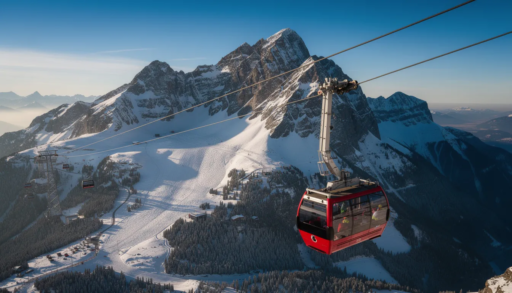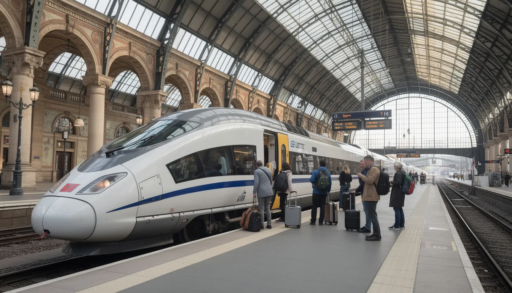


Before you continue, download the Europe train map referenced throughout this guide. It provides a clear overview of major high-speed routes, regional connections, and night trains across Europe. Use the map to understand how countries connect by rail, identify key corridors, and plan an efficient itinerary before checking schedules and ticket prices.
Download the Europe train map (PDF)
Introduction to European Railways
Europe has extensive train networks that include high-speed, regional, and overnight services. This guide is for travelers planning to explore Europe by train, whether you’re a first-timer or a seasoned rail enthusiast. Understanding the Europe train map helps you make the most of your journey, save money, and travel efficiently across the continent.
Europe’s rail network isn’t just extensive – the Europe train map is your ticket to freedom. You’ll hop between countries like locals switch subway lines, connecting bustling capitals to tucked-away towns most tourists never find. High-speed trains slice through distances in half the time you’d expect, while overnight services let you wake up somewhere completely new. Here’s the thing: you’re not just getting from A to B, you’re collecting stories between the stations.
Let’s talk passes – the Eurail and Interrail options open up the continent with one smart purchase. You’ll want that two-page map they include; it’s not decoration, it’s your tactical guide. Scan it for routes that need reservations (marked clearly), then book those first. A quick way to handle this: pick your must-see cities, trace the connections, spot the reservation-required segments. The pass gives you flexibility, but that map keeps you moving efficiently. Tuck it in your day bag – you’ll check it more than your phone.
From Spain’s sun-baked coastal routes to Switzerland’s mountain climbers that hug impossible peaks, European trains deliver you right into the story. Your pass and that well-marked map? They’re your tools for turning wanderlust into actual movement. Check your route, book what needs booking, then step aboard.
The Eurail Railway Map shows major high-speed and intercity lines covered by a rail pass and assists in itinerary planning.
Interactive Europe train map overview
The Europe train map is your visual gateway to understanding one of the world’s most connected rail networks. In 2025, this map covers major routes across Spain, France, Switzerland, Germany, Italy, Austria, the Netherlands, the UK, Scandinavia, and Central & Eastern Europe—giving you a bird’s-eye view of how to connect popular cities by rail. Travelers can use the map to easily find routes and connections between cities, making trip planning more efficient.
An interactive train map of Europe highlights popular rail routes across various countries. A well-designed Europe train map should highlight three key corridor types: high speed trains linking major capitals, regional lines reaching smaller towns, and night trains that let you cover long distances while you sleep. The interactive train map of Europe highlights popular rail routes across various countries. Major hubs like Paris, London, Berlin, Milan, Vienna, Zurich, Madrid, and Amsterdam serve as the anchor points where most routes intersect.
One important note: European rail timetables typically change each year around mid-December, with minor adjustments in spring and summer. Routes can shift, new services launch, and older lines may be discontinued. Always confirm live schedules before you travel.
This map is designed for inspiration and trip planning, not as a legally binding timetable or guarantee of service. Think of it as your starting canvas for sketching out a journey before you check official booking platforms.

Legend for route types:
- Solid thick lines = High-speed rail corridors (TGV, ICE, AVE, Frecciarossa)
- Solid thin lines = Regional and intercity routes
- Dashed lines = Night train and sleeper services
- Dots = Major hub cities and interchange stations
Now that you have an overview of the map, let’s dive into how to use it for planning your trip.
How to use the Europe train map for trip planning
Step-by-Step Planning
Ready to turn inspiration into a real itinerary? This section walks you through how to use the map to create your own itinerary—step by step.
- Choose your starting city and final destination.
Open the map and locate both points. For example, London as your departure city and Budapest as your endpoint. - Identify 1–3 logical rail corridors connecting them.
Trace potential paths across the map. A London–Budapest route might follow: London → Paris → Zurich → Vienna → Budapest, or alternatively: London → Brussels → Cologne → Berlin → Prague → Vienna → Budapest. - Look for direct high-speed connections between major hubs first.
These save time and simplify booking. Examples include Paris–Lyon, Madrid–Barcelona, Milan–Rome, and Berlin–Munich. Branch out on regional lines only after anchoring your route with fast segments. - Cross-reference with a journey planner.
The map shows what’s possible; timetable tools show what’s running when. Use Deutsche Bahn (bahn.com), SNCF Connect, Trenitalia, or national rail websites for accurate departure times and prices. - Check border crossings carefully.
Where you cross from France into Spain, Germany into Poland, or Italy into Switzerland, train frequencies and reservation rules can differ. Mark these on your map so you know where to double-check requirements. - Note key stops where you might want to add a city break.
The map helps you see which cities lie naturally along your corridor, making it easy to build in stopovers without major detours.
By following these steps, you can go from a blank canvas to a mapped-out trip in under an hour. Take action now by sketching out your itinerary and planning your rail adventure using the Europe train map.
The Eurail Railway Map shows major high-speed and intercity lines covered by a rail pass and assists in itinerary planning.
Now that you know how to plan your route, let’s explore the major high-speed train corridors that form the backbone of European rail travel.
Major high-speed train corridors in Europe
High-speed trains in Europe can reach speeds of 250–350 km/h and are concentrated in Western Europe. The Europe train map should clearly emphasize high-speed lines operating in 2024–2025. These are the backbone of efficient cross-country travel, often covering hundreds of kilometers in just a few hours.
Table: Major High-Speed Train Corridors in Europe
| Corridor | Train Type | Approximate Fastest Time |
|---|---|---|
| Paris–Lyon–Marseille | TGV/INOUÏ | ~2h (Paris–Lyon) |
| Paris–Bordeaux | TGV | ~2h |
| Paris–Lille–Brussels–Amsterdam | Thalys/Eurostar | ~3h20 (Paris–Amsterdam) |
| London–Paris/Brussels | Eurostar | ~2h15 (London–Paris) |
| Madrid–Barcelona–Figueres | AVE | ~2h30 (Madrid–Barcelona) |
| Milan–Florence–Rome–Naples | Frecciarossa/Italo | ~3h (Milan–Rome) |
| Berlin–Munich | ICE | ~4h |
| Frankfurt–Cologne | ICE | ~1h |
| Zurich–Basel–Bern–Geneva | SBB Intercity | ~2h45 (Zurich–Geneva) |
Spain’s AVE network reaches speeds up to 310 km/h, while Italy’s Frecciarossa and Germany’s ICE routinely operate above 250 km/h. These lines should be visually emphasized—think thicker, brighter colored lines on the map.
Most high-speed services in France, Spain, and Italy require advance seat reservations. In Germany, Switzerland, and Austria, reservations are often optional but recommended during peak periods. On an interactive map, users should be able to hover or click to see route names, sample travel times, and links to booking pages.
Now that you know the main high-speed routes, let’s look at how these corridors connect different regions and countries across Europe.
European countries by train
The Europe train map can be zoomed in by region or country to help you understand local networks and plan cross-border connections.
Western Europe (France, Belgium, Netherlands, UK)
Dense networks with frequent trains. Example cross-border routes include:
- Amsterdam–Brussels–Paris (Thalys/Eurostar)
- London–Paris–Brussels (Eurostar)
- Paris–Geneva (TGV Lyria)
France’s TGV dominates high-speed travel, while the Netherlands boasts one of Europe’s busiest networks with frequent intercity services.
Central Europe (Germany, Switzerland, Austria, Czechia)
Germany’s Deutsche Bahn operates one of Europe’s most comprehensive systems with ICE high-speed services and robust regional coverage. Switzerland’s SBB excels in punctuality, connecting remote Alpine villages seamlessly. Key routes visible on the map include:
- Vienna–Prague
- Munich–Zurich
- Berlin–Vienna via Nightjet
Southern Europe (Italy, Spain, Portugal, Greece)
Italy offers Frecciarossa and Italo high-speed options, while Spain’s AVE network ranks among the world’s longest. Cross-border routes like:
- Barcelona–Montpellier
- Milan–Nice
Portugal’s scenic Atlantic routes and Greece’s improving rail links add variety.
Northern & Eastern Europe (Scandinavia, Poland, Hungary, Croatia, Romania, Baltics)
Norway’s dramatic fjord and mountain journeys, Sweden’s efficient nationwide services, and Finland’s northern landscapes stand out. In the east, popular corridors include:
- Vienna–Budapest–Zagreb
- Berlin–Warsaw–Krakow
Croatia relies more on buses for coastal destinations, but inland rail routes through Bosnia offer stunning mountain scenery.
Example country-to-country connections:
- Amsterdam–Brussels–Paris
- Vienna–Budapest
- Copenhagen–Stockholm
- Zurich–Milan
- Prague–Berlin
- Barcelona–Marseille
Each country has different train categories and ticketing rules. Rail passes and point-to-point tickets can both be used across many of these countries, but reservation rules and supplements vary significantly.
With a sense of how countries connect, let’s look at how long it takes to travel between major cities.
Travel times on popular Europe train routes
The map helps visualize approximate travel times between major city pairs, making it easier to plan realistic itineraries.
Table: Fastest Direct Travel Times on Popular Europe Train Routes
| Route | Fastest Direct Time | Typical Train Type | Notes |
|---|---|---|---|
| London–Paris | 2h 15m | Eurostar | Reservations required |
| Paris–Amsterdam | 3h 20m | Thalys/Eurostar | Reservations required |
| Berlin–Prague | 4h 15m | EC/railjet | Optional reservation |
| Vienna–Budapest | 2h 50m | railjet/EC | Optional €3 reservation |
| Rome–Florence | 1h 30m | Frecciarossa | Reservations required |
| Barcelona–Madrid | 2h 30m | AVE | Reservations required |
| Zurich–Milan | 3h 20m | EC | Optional reservation |
| Munich–Venice | 6h 30m | EC (via Brenner) | Change may be required |
| Prague–Vienna | 4h 25m | railjet | Optional €3 reservation |
| Paris–Lyon | 2h 00m | TGV | Reservations required |
| Amsterdam–Berlin | 6h 00m | ICE | Optional reservation |
| Copenhagen–Stockholm | 5h 00m | SJ High-Speed | Reservations required |
These times are based on 2024/2025 schedules and may change annually. Some routes require a change en route—London–Amsterdam via Brussels, Paris–Venice via Milan, or Munich–Venice via Innsbruck. These transfer points should be signposted on the map and in the table.
Always check up-to-date timetables on official railway sites before booking. Travel times shown represent fastest direct connections; slower regional alternatives often exist at lower prices.
Discounts are often available for advance bookings, and full-price train tickets are generally more expensive than advance purchase tickets, which can offer significant savings.
With travel times in mind, let’s explore how night trains can help you cover long distances while you sleep.
Night trains and sleeper routes on the Europe map
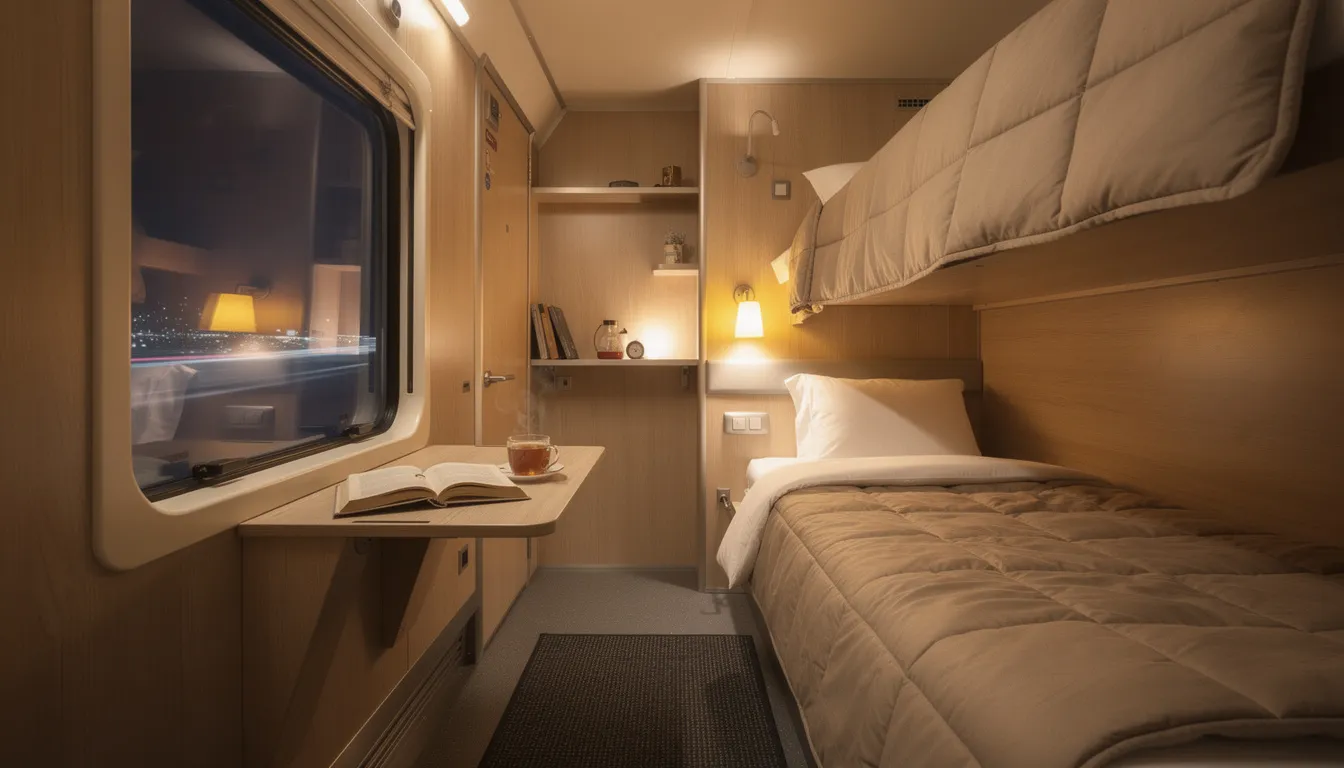
The Europe train map should also indicate key night train routes operating in 2024–2025. These services let you cover long distances while you sleep, saving both time and hotel costs.
The ÖBB Nightjet is the primary operator for night trains in Europe, offering sleeper services.
Example night train corridors to highlight:
- Vienna–Zurich (Nightjet)
- Vienna–Venice (Nightjet)
- Vienna–Berlin–Hamburg (Nightjet)
- Munich–Rome (Nightjet)
- Zurich–Hamburg/Amsterdam (Nightjet)
- Paris–Vienna (Nightjet)
- Brussels–Berlin–Prague (European Sleeper)
- Stockholm–Narvik
- Prague–Budapest
Night train lines should appear in a distinct color or dashed style on the map, with icons indicating sleeper, berth, or couchette services.
Night train reservations are mandatory and not covered by a pass alone. You’ll need to buy a separate reservation or supplement, typically ranging from €30 for a couchette to €150+ for a private sleeper cabin.
Strategic placement of night trains in your itinerary can save on accommodation costs and allow you to cover distances over 1,000 km overnight. The Back-on-Track.eu website maintains a 2025 database-driven map cataloging all current European night lines—useful for confirming which services are running.
Now that you know about night trains, let’s compare the two main ways to book your European rail journey: rail passes and point-to-point tickets.
Travel Europe with rail passes and point-to-point tickets
Overview: Rail Passes vs. Point-to-Point Tickets
There are two main ways to use the Europe train map: with a multi-country rail pass (like the Eurail or Interrail Global Pass) or with individual point-to-point tickets.
The map should visually show which rail routes are covered by major passes, while making clear that separate reservations and supplements are often required for TGV, Eurostar, AVE, Frecciarossa, and Nightjet services.
When to Use a Rail Pass
- You’re planning 5–10 long journeys across 1 month
- Your trip spans multiple countries
- You want flexibility to change plans without rebooking
- You’re taking several night trains (which often have lower reservation fees for pass holders)
When Point-to-Point Tickets May Be Cheaper
- You have 1–3 fixed routes planned well in advance
- You can book tickets months ahead for the best prices
- Your trip focuses on one country with competitive domestic fares
- You’re traveling primarily on routes with compulsory expensive reservations
Reservations can sell out during peak periods—summer, public holidays, Easter, and Christmas through New Year. Use the map early in your planning to identify key high-speed segments and lock in reservations before they disappear.
For detailed comparisons, visit dedicated pages explaining the Eurail Pass (for non-European residents), Interrail Pass (for European residents), and national passes like the German Bahntard or Swiss Travel Pass.
Choosing the Right Pass for Your Europe Train Route
Matching a pass to the route you’ve drawn on the map requires practical thinking, not guesswork. Here’s how different scenarios play out:
Scenario 1: 10-day multi-country tour
Route: Paris → Brussels → Amsterdam → Berlin → Prague → Vienna → Budapest
This spans 6 countries and 6+ train segments. A Eurail Global Pass with 7 travel days in 1 month would likely offer good value, especially since many of these routes (Berlin–Prague, Vienna–Budapest) have low or no reservation fees.
Scenario 2: Focused one-country trip
Route: Milan → Venice → Florence → Rome → Naples
All within Italy, where point-to-point Frecciarossa tickets booked in advance can cost as little as €19–€29. A pass may not save money here unless you add spontaneous side trips.
Scenario 3: Short weekend break
Route: Paris → Amsterdam return
Just two high-speed segments requiring reservations. Booking Thalys/Eurostar tickets directly is usually cheaper than a pass plus mandatory reservation fees.
Mark your intended travel days on a printable or digital copy of the map to see if a pass with fixed “travel days” matches your needs. The two page map from Eurail/Interrail shows orange lines for routes that require reservations or supplements, helping you estimate total costs.
Now that you know how to choose between passes and tickets, let’s look at how to secure your seat reservations for a smooth journey.
Seat Reservations and Booking
You’ll want to get smart about seat reservations when you’re hopping trains across Europe – they’re your ticket to a smooth ride. Most high-speed trains and night trains, especially those connecting the big-name cities, won’t let you aboard without a reservation, even if you’re packing a rail pass like the Eurail. These reservations lock down your spot and keep you from getting stranded when popular routes fill up fast during peak season.
Let’s start by scanning which routes need reservations – the maps and booking platforms flag this clearly, so you won’t miss it. Here’s the deal: about 95% of trains covered by the Eurail Pass let you book seat reservations online or right at the station. The cost shifts depending on where you’re headed. Frecce trains in Italy typically run around €13, while France’s TGV trains can hit €45. Night trains price their reservations based on your comfort level – basic seats cost less, private sleeper cabins cost more.
Keep this in mind: reservation prices shift with the seasons, demand, and how many seats are left. Book early and you’ll snag your preferred departure while keeping costs down. Always double-check reservation requirements for your chosen routes – rules can flip from year to year and even between different train types. Stay sharp, book ahead, and you’ll dodge last-minute headaches while cruising worry-free across Europe.
With your reservations sorted, you can start mapping out sample itineraries for your European rail adventure.
Sample Europe rail itineraries using the map
Sample Itineraries by Region
These concrete sample itineraries can be traced directly on the Europe train map, giving you a template to adapt for your own trip. Popular itineraries often include routes that connect iconic cities like Amsterdam, Florence, and Barcelona. Travelers often have questions about planning these routes, and the following examples help answer those questions.
Classic Western Europe Route
- London → Paris → Brussels → Amsterdam → Berlin
- Duration: 10–14 days
- Train segments: 4 main legs
- Key stops: London (2 nights), Paris (3 nights), Brussels (1 night), Amsterdam (3 nights), Berlin (3 nights)
- Scenic highlights: Eurostar through the Channel Tunnel, Rhine Valley views between Cologne and Frankfurt (if you detour)
- Reservation notes: Eurostar and Thalys require reservations; German ICE sections are optional
This is a perfect rail adventure for first-time European train travelers, connecting iconic cities with frequent, reliable services.
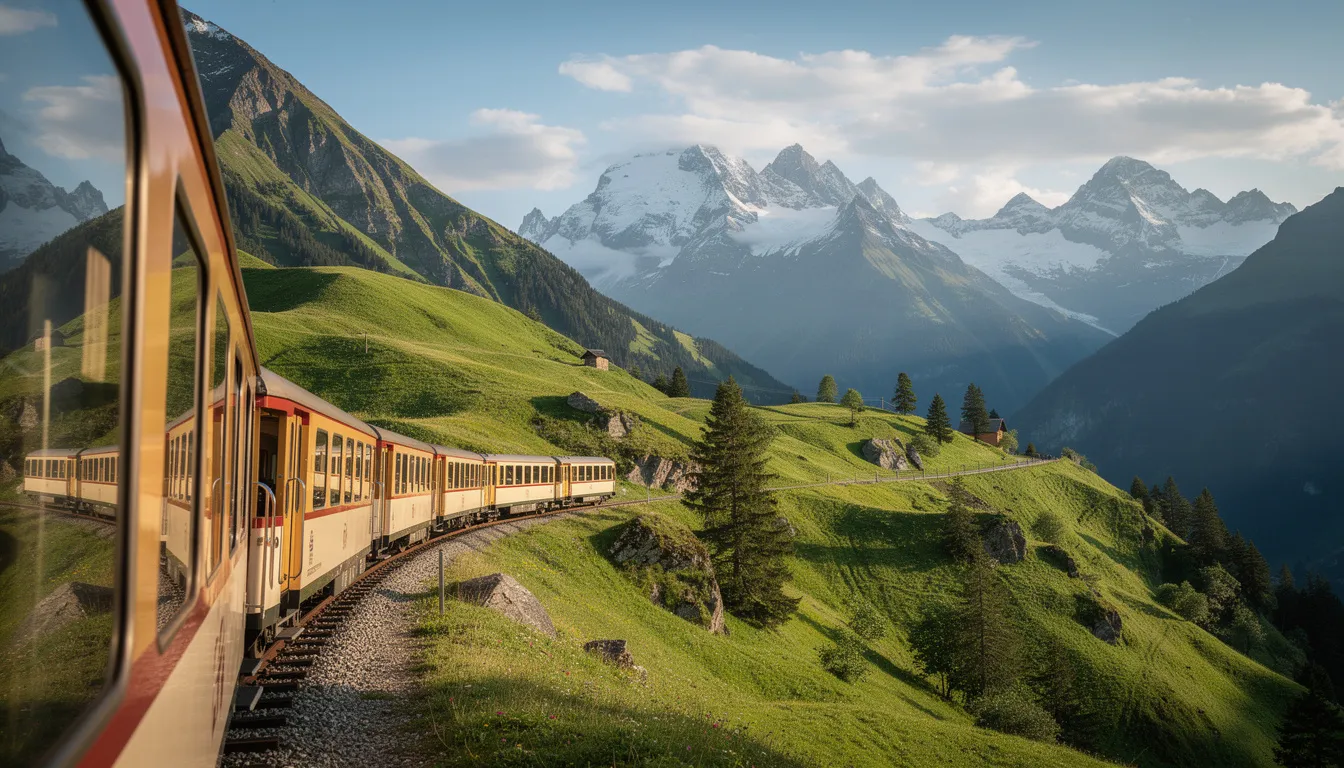
Scenic Alps Route
- Zurich → Lucerne → Interlaken → Spiez → Milan
- Duration: 7–10 days
- Train segments: 4–5 legs depending on stopovers
- Key stops: Zurich (2 nights), Lucerne (2 nights), Interlaken (2 nights), Milan (2 nights)
- Scenic highlights: Golden Pass panoramic route, Gotthard Base Tunnel, Lake Como approach
- Reservation notes: Most Swiss routes don’t require reservations; the EC to Milan is optional but recommended
Switzerland’s SBB network offers legendary punctuality and stunning scenery. This itinerary lets you learn firsthand why Alpine rail travel is world-famous.
Central/Eastern Europe Route
- Berlin → Prague → Vienna → Budapest → Zagreb → Split
- Duration: 14–18 days
- Train segments: 5 main legs
- Key stops: Berlin (2 nights), Prague (3 nights), Vienna (3 nights), Budapest (3 nights), Zagreb (1 night), Split (3 nights)
- Scenic highlights: Bohemian countryside, Danube Valley approach to Budapest, Croatian coastal mountains
- Reservation notes: Optional low-cost reservations (€3) for Prague–Vienna and Vienna–Budapest; Croatia section may require bus for coastal stretches
This itinerary works well with a Eurail Global Pass, covering 5 countries with a mix of high-speed and regional travel.
These itineraries can be modified by adding or skipping stops. The Europe train map is a flexible tool—not a rigid route.
Short City-to-City Break Ideas
For travelers with limited time, these 2–5 day trips between major cities appear clearly on the map and require minimal planning.
Table: Short City-to-City Breaks in Europe
| City Pair | Travel Time | Ideal Trip Length | Notes |
|---|---|---|---|
| Paris–Amsterdam | 3h 20m | Long weekend | Direct Thalys, book ahead for best prices |
| Berlin–Prague | 4h 15m | Weekend | Scenic route, no reservation required |
| Madrid–Seville | 2h 30m | Weekend | AVE high-speed, reservations required |
| Rome–Florence | 1h 30m | Long weekend | Frecciarossa, perfect for art lovers |
| Vienna–Salzburg | 2h 20m | Weekend | Frequent railjet services |
| Munich–Innsbruck | 1h 45m | Weekend | Alpine gateway, easy hop |
Many of these routes rely on frequent high-speed or intercity services, making them easy to book even close to departure. However, prices are typically lower if you search and buy tickets in advance—sometimes half the cost of last-minute fares.
With sample itineraries in hand, let’s look at the major train stations and hubs that will anchor your journey.
European Train Stations and Hubs
European train stations aren’t just departure points – they’re your launchpads to everywhere you want to go. With your Eurail Pass tucked in your pocket, you’ve got access to stations across dozens of countries, so you can kick off your journey from pretty much anywhere in Europe.
Let’s talk about the heavy hitters: Paris Gare du Nord, Berlin Hauptbahnhof, and Amsterdam Centraal. These aren’t just architectural showstoppers – they’re packed with restaurants, shops, and luggage storage that’ll sort you out before you even board.
Here’s a quick way to handle the bigger stations: build in extra time. These places buzz with activity, and you might find yourself navigating multiple platforms or hunting down the right level. But here’s the payoff – these hubs pump out frequent connections to other cities and countries, making them perfect home bases for your next adventure.
Whether you’re grabbing a quick bite, snagging travel essentials, or just soaking up the energy, these stations boost your whole travel game.
The beauty of your pass? You can switch things up on the fly. Spot something interesting on the departure board? Go for it. Change your mind about your next stop? No problem. European train stations work hard to keep your journey smooth, so you can focus on the good stuff – enjoying your travel time and discovering what makes each country tick.
Now that you know about the main stations, let’s review some essential tips for smooth train travel across Europe.
Train Travel Tips and Advice
Want to nail your European train adventure? Let’s start smart with that Eurail map – scan those routes like you’re plotting treasure locations. You’ll spot which journeys your pass covers and where you’ll need to book ahead.
Quick tip: check the fine print on high-speed and sleeper trains before you roll up with three oversized bags and discover they don’t fit.
Pack like you mean it – you’re hauling that gear on and off trains yourself, and overhead racks fill fast on busy routes. Tuck snacks and water into your day pack because regional trains often skip the dining car entirely.
Here’s the move that saves you €50 fines: always validate your ticket or pass before boarding. One minute with that little machine beats explaining to a conductor why you forgot.
Planning to hop countries or catch tight connections? Keep tabs on those reservation requirements – some routes book solid during peak season. Give yourself breathing room between transfers, especially at major hubs like Brussels or Frankfurt where platforms stretch for days.
Nail these basics, and you’ll cruise through Europe with the confidence of someone who actually knows what they’re doing.
With these tips, you’re ready to travel smarter and more comfortably across the continent.
Train Travel and Sustainability
You’re looking at one of Europe’s smartest moves – hopping trains instead of planes. Here’s the deal: electric and hybrid engines now power most of the continent’s rail network, slashing your carbon footprint by up to 80% compared to flying that same route. Grab a Eurail Pass or Interrail Pass, and you’re set to crisscross borders without the guilt trip. The numbers don’t lie – trains beat cars and planes hands down for keeping Europe’s air clean.
Let’s talk money and conscience together. Planning your route by rail doesn’t just save you cash – it backs the operators who’re dropping serious euros into cleaner tech and faster lines. DB’s new ICE trains? They’re 25% more energy-efficient than the previous generation. SNCF’s investing billions in renewable-powered routes. When you choose tracks over tarmac, you’re voting with your wallet for the kind of travel infrastructure we actually want to see more of.
Map out your journey with some pride in the mix. The right pass plus a thoughtful route means you’ll experience Europe’s best while actually helping preserve those Alpine views and coastal stretches for the next wave of travelers. Adventure and doing right by the planet? They’re not opposites – they’re travel partners.
Now that you know the environmental benefits, let’s make sure your plans stay up to date with the latest schedules and disruptions.
Staying up to date: timetable changes and disruptions
The Europe train map is a planning tool, not a real-time service tracker. To build reliable itineraries, you must combine map-based planning with live timetable and disruption information. Always check for updates regarding schedule changes, disruptions, and map revisions before planning your travel.
European rail timetables typically change once a year around mid-December, with minor adjustments in spring and summer. A route that works perfectly on the current map may operate differently in the next timetable year. Always verify your planned connections before you start booking.
Official rail websites and apps to check:
- DB Navigator (Germany)
- SNCF Connect (France)
- Trenitalia (Italy)
- ÖBB Scotty (Austria)
- Renfe (Spain)
- SBB Mobile (Switzerland)
- NS International (Netherlands)
Temporary disruptions—engineering works, strikes, route closures—are usually not shown on static maps. Check rail disruption pages or sign up for alerts from the relevant national operator. The Eurail/Interrail website maintains a disruption announcements page that’s worth bookmarking.
Download an offline copy or screenshot of your planned map route for reference, but rely on live data for final departure and arrival times, platform information, and any last-minute changes.
The Europe train map gives you the big picture. Official apps and websites fill in the details. Together, they help you feel inspired to explore while keeping your itinerary grounded in reality.
The Man in Seat 61 is a widely regarded independent guide for European train travel, offering practical advice on routes and ticket booking.
Ready to start planning? Sketch your route on the Europe train map, identify your key high-speed connections and must-visit destinations, then verify everything with official timetables. Whether you’re chasing the perfect rail adventure across 33 countries or planning a simple weekend break, the map is your first step toward turning inspiration into tickets booked and bags packed.