

Traveling Italy by Train: A Complete Guide to Trenitalia
Imagine this: the sun-drenched Italian countryside whizzing by your window, a steaming cappuccino in hand, and the anticipation of your next adventure building with every mile. This isn’t a dream; it’s the reality of traveling Italy by train, and more often than not, it’s courtesy of Trenitalia. If you’re planning a trip to Italy, understanding Trenitalia is your golden ticket to a seamless and memorable experience. Consider this your personal guide, demystifying Italy’s primary rail operator and empowering you to explore this beautiful country with confidence.
Why Choose Trenitalia for Your Italian Adventure?
Traveling through Italy is about more than just getting from point A to point B; it’s about the journey itself. And when it comes to experiencing Italy authentically and efficiently, the train often comes out on top.
The Romance of Rail Travel
There’s an undeniable charm to train travel, especially in a country as picturesque as Italy. Unlike the hurried experience of an airport or the stress of navigating unfamiliar roads, train journeys offer a chance to slow down, gaze out the window, and truly absorb the evolving landscape. From rolling Tuscan hills to dramatic coastal stretches, the scenery becomes an integral part of your adventure. It’s a chance to connect with the rhythm of the country, watching daily life unfold outside your window as you glide effortlessly towards your next destination. This isn’t just transportation; it’s an experience in itself, a nostalgic nod to a bygone era, yet delivered with modern comforts.
Efficiency and Convenience
Beyond the romance, choosing Trenitalia is a practical decision. Italy’s train network is extensive, connecting major cities, charming towns, and even many smaller villages. Imagine stepping off a train in the heart of Florence or Rome, often just a short walk or quick public transport ride from your accommodation. No dealing with airport transfers miles outside the city, no wrestling with GPS or finding parking in crowded urban centers. Trains are generally punctual, especially the high-speed services, making it easy to plan your day with precision. This efficiency translates directly into more time for sightseeing, savoring pasta, and soaking up the Italian atmosphere.
Sustainability
In an increasingly environmentally conscious world, choosing train travel is also a choice for sustainability. Trains are a significantly more eco-friendly mode of transport compared to flying or driving, particularly for intercity travel. By opting for Trenitalia, you’re not just enjoying a convenient and picturesque journey; you’re also making a positive impact on the environment, contributing to a greener way of exploring Italy. It’s a small but meaningful way to ensure the beauty you’re witnessing today will be preserved for future generations.
Trenitalia: The Main Player in Italian Rail
To truly leverage Italy’s rail system, it’s crucial to understand Trenitalia’s role and how it fits into the broader transport landscape.
A Brief History
Trenitalia isn’t just a company; it’s a national institution. Established in 2000 as the primary operator of passenger rail services in Italy, it’s part of the Ferrovie dello Stato Italiane (FS Italiane) group, which has roots stretching back to 1905 when the Italian railway network was nationalized. Over the decades, FS Italiane has overseen the development and modernization of Italy’s rail infrastructure, transforming it from a post-war necessity into a sophisticated, high-speed network. Trenitalia, as its passenger division, carries this legacy forward, continually investing in new trains and improved services, making it the bedrock of Italian public transport. Understanding its history helps appreciate the depth and reach of its network today.
Trenitalia vs. Italo: Understanding the Landscape
While Trenitalia is the dominant force, it’s not the only player. You’ll likely encounter another name: Italo. Think of it like this: Trenitalia is the national airline, offering a vast array of routes from major hubs to tiny regional airports, with different tiers of service. Italo, on the other hand, is a newer, private competitor that focuses exclusively on high-speed routes connecting Italy’s major cities (like Milan, Florence, Rome, Naples, Venice).
Italo trains are typically sleek, modern, and often compete aggressively on price, especially when booked in advance. They have fewer stops and generally offer a consistent, high-end experience. Trenitalia, conversely, offers everything from those lightning-fast high-speed “Frecce” trains to the slow, local “Regionale” services that stop in every small town. So, while Italo might be perfect for zipping between Milan and Rome, Trenitalia is your go-to for pretty much everywhere else, and it also offers competitive high-speed options. When planning, it’s always worth checking both, especially for intercity travel, as prices and schedules can vary. For regional exploration, Trenitalia is your undisputed champion.
Navigating Trenitalia’s Network: Train Types and What They Offer
Trenitalia operates a diverse fleet, each type designed for different travel needs. Understanding these categories is key to choosing the right ticket and managing your expectations.
High-Speed Trains: Frecce (Frecciarossa, Frecciargento, Frecciabianca)
These are Trenitalia’s pride and joy, the sleek, bullet-like trains that form the backbone of Italy’s intercity travel. “Frecce” literally means “Arrows,” and they live up to the name, whisking you across the country at impressive speeds.
- Frecciarossa (Red Arrow): This is the flagship service, the crème de la crème. These trains are the fastest, connecting Italy’s major cities (think Turin to Naples, Milan to Rome, Venice to Florence) often with minimal or no stops. They boast modern amenities, Wi-Fi, power outlets, and multiple classes of service (Standard, Business, Premium, Executive) offering varying levels of comfort and catering. If you’re looking for speed, comfort, and direct connections between big cities, Frecciarossa is your best bet. Booking these well in advance is highly recommended for the best prices.
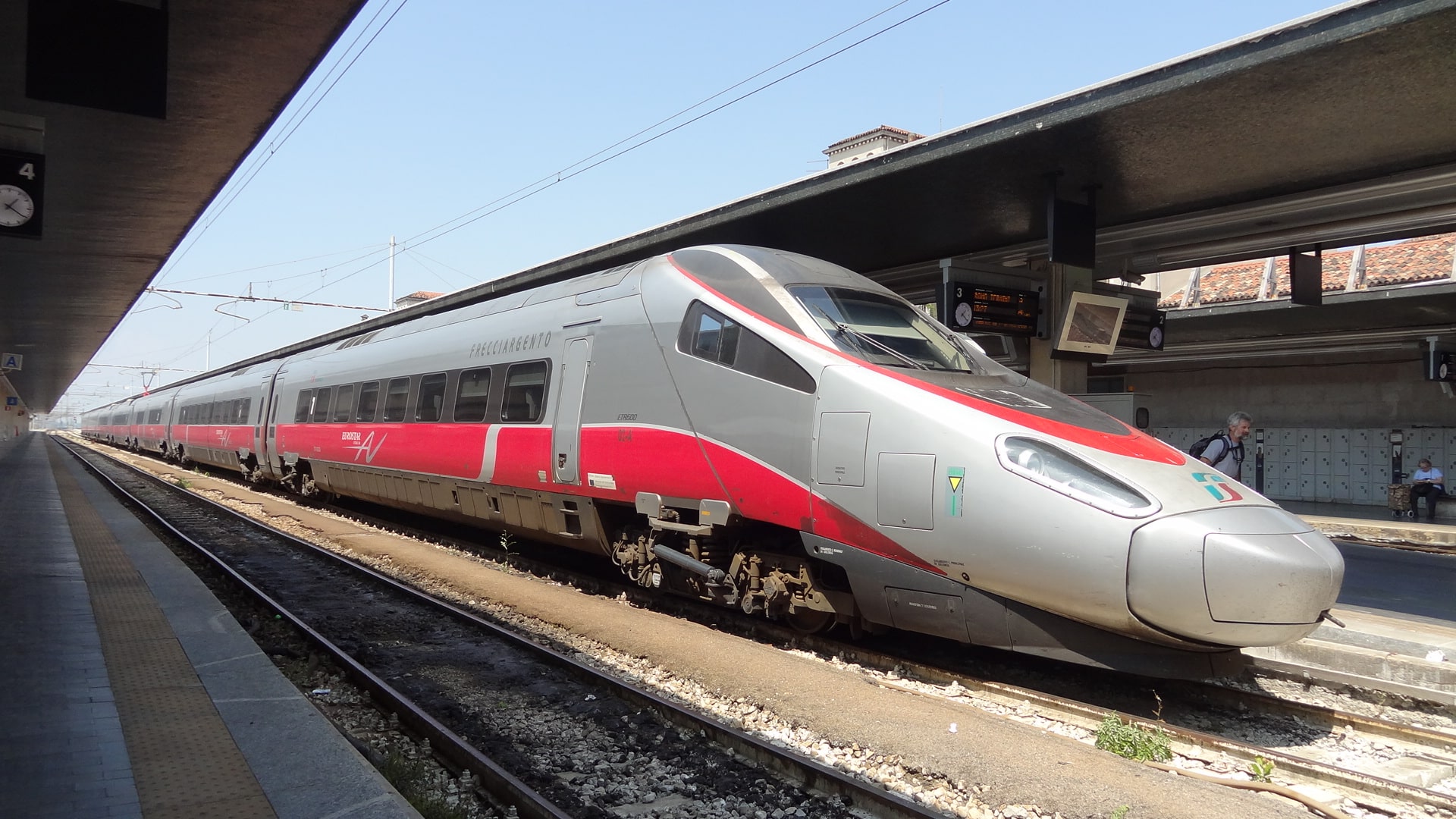
- Frecciargento (Silver Arrow): Slightly less fast than Frecciarossa, Frecciargento trains often operate on both high-speed and traditional lines, connecting Rome to other important cities like Venice, Verona, and Lecce, and serving a broader range of destinations. They offer a similar level of comfort and amenities to the Frecciarossa, just with a few more stops and slightly slower journey times on certain routes. Still an excellent choice for intercity travel.
- Frecciabianca (White Arrow): These are the workhorses of the high-speed network, typically operating on traditional lines rather than the dedicated high-speed tracks. They connect medium-sized cities and coastal towns not served by Frecciarossa or Frecciargento. While not as blindingly fast, they still offer a comfortable and relatively quick journey, bridging the gap between the premium Frecce and the slower Intercity services. They are a good option for reaching destinations like Sicily (via ferry train) or coastal resorts.
Intercity and Intercity Notte (Overnight) Trains
Stepping down slightly from the Frecce in terms of speed, but offering excellent value and convenience, are the Intercity services.
- Intercity: These trains connect major and medium-sized cities across Italy, making more stops than the Frecce but still offering a comfortable and efficient way to travel. They are a great middle-ground option, often significantly cheaper than the high-speed Frecce, especially if you’re not in a rush or your destination isn’t on a primary high-speed corridor. They typically have both First and Second class seating.
- Intercity Notte (Overnight): For longer distances, especially if you want to save on a night’s accommodation and wake up in a new city, the Intercity Notte is a fantastic choice. These overnight trains offer various sleeping arrangements, from basic reclining seats to comfortable couchette compartments (shared bunk beds) and even private sleeping cabins with amenities. They often connect major hubs like Milan or Rome with destinations further south, such as Sicily or Puglia. It’s an adventure in itself, watching the lights of Italy fade as you drift off to sleep and awaken to a new sunrise in a different part of the country.
Regional Trains (Regionale, Regionale Veloce)
These are the backbone of local travel, your essential companions for exploring smaller towns, coastal villages, and making short hops.
- Regionale: These are the slowest trains, stopping at almost every station along their route. They are unreserved, meaning you don’t book a specific seat – just a ticket for the route. Regional trains are incredibly affordable and perfect for exploring local areas, like day trips from Florence to Siena (though you’d likely take a bus for that specific route) or hopping between Cinque Terre villages. They are the most frequent service in many areas.
- Regionale Veloce (Fast Regional): As the name suggests, these are slightly faster versions of the Regional trains, making fewer stops but still covering local routes. They offer the same unreserved, affordable travel as the standard Regionale trains, just with a bit more efficiency.
Key takeaway for Regional trains: Because they are unreserved, prices are fixed and don’t change, even if you buy them last minute. However, you MUST validate your ticket before boarding (more on this later!). Failure to do so can result in a hefty fine.
Booking Your Trenitalia Tickets: A Step-by-Step Guide
Booking your train tickets might seem daunting at first, but with a few pointers, it’s straightforward. The key is knowing where to look and understanding the options.
The Official Trenitalia Website
This is often your best bet for booking tickets, especially for high-speed routes. The Trenitalia website (www.trenitalia.com) is user-friendly and available in multiple languages.
- Navigate to the Site: Go to trenitalia.com. Look for the language selector (often a flag icon) and change it to English if needed.
- Enter Your Journey Details: Input your departure station, arrival station, date of travel, and approximate time. You can specify “Departure” or “Arrival” time.
- Select Passengers: Indicate the number of adults and any children, along with their ages to check for relevant discounts.
- Search: Click “Search” to view available trains.
- Review Options: The results page will show various train types, departure times, and prices. For high-speed trains (Frecce), you’ll see different fare levels (Base, Economy, Super Economy) and classes (Standard, Business, etc.). For regional trains, you’ll typically just see one fixed price.
- Choose Your Train and Fare: Select the train and fare option that suits your budget and schedule. Pay attention to the fare rules (e.g., non-refundable for Super Economy).
- Select Seats (Optional): For Frecce trains, you often have the option to choose your seat from a seat map, or the system will automatically assign one.
- Enter Passenger Details: Provide the names of all passengers.
- Payment: Proceed to payment using a credit card.
- Confirmation: Once paid, you’ll receive an email with your e-ticket. For high-speed trains, this email with a PNR code is usually all you need; you don’t typically need to print it, as conductors can scan the code on your phone.
Insider Tip: When entering station names, start typing, and the system will suggest options. For example, “Rome” might bring up “Roma Termini,” “Roma Tiburtina,” etc. Make sure to select the correct station, usually the main one for the city (e.g., Roma Termini, Firenze Santa Maria Novella, Milano Centrale).
Third-Party Booking Platforms
While the Trenitalia site is reliable, sometimes third-party platforms offer additional convenience or aggregate options.
- Omio (formerly GoEuro) and Trainline: These popular platforms allow you to compare and book tickets for both Trenitalia and Italo, as well as other European train operators. They offer a clean interface, often make it easier to understand fare rules, and can be useful if you’re planning a multi-country trip. They usually charge a small booking fee.
- Rail Europe: Another well-established platform, particularly good for multi-country passes or more complex itineraries.
These platforms essentially act as intermediaries, selling the same tickets you’d find on Trenitalia but sometimes with a slightly different user experience. Always compare prices and read their terms and conditions.
At the Station: Ticket Machines and Counters
If you prefer to book in person, or if you’re making a last-minute decision, the station is always an option.
- Self-Service Ticket Machines: These red or blue machines are found in virtually every train station. They are multilingual and relatively easy to use. You can buy tickets for all train types, including regional. They accept credit cards and sometimes cash. This is a quick and efficient way to buy regional tickets right before departure.
- Ticket Counters (Biglietteria): For more complex journeys, questions, or if you prefer human interaction, the traditional ticket counter is available. Be prepared for potentially long queues, especially at major stations during peak times. It’s best to use these for assistance, not for a simple purchase that could be done online or at a machine.
Important Note: For regional trains, purchasing at the station (machine or counter) is perfectly fine, as prices don’t change. For high-speed Frecce trains, buying at the station means you’ll almost certainly pay the “Base” fare, which is the most expensive. Booking Frecce in advance online is key to securing cheaper Economy or Super Economy fares.
Understanding Trenitalia Fares and Discounts
Trenitalia’s pricing structure can seem a bit complex at first glance, but understanding the basic categories will save you money.
Base Fare
This is the standard, full-price ticket. It’s the most flexible option, allowing you to change your departure date/time or even request a refund (with certain conditions and fees) before the train departs. If you book last minute for a Frecce train, this is usually the fare you’ll pay. For regional trains, the price is always a “base” price and does not fluctuate.
Economy and Super Economy Fares
These are your best friends for saving money on high-speed Frecce trains.
- Economy: A discounted fare that offers slightly less flexibility than the Base fare. You can typically change your ticket once (sometimes with a fee) before departure, but generally no refunds are allowed.
- Super Economy: This is the cheapest fare available, often significantly discounted. However, it comes with strict limitations: no changes, no refunds. Once you buy it, it’s set in stone for that specific train, date, and time.
Golden Rule: For high-speed Frecce trains, book as far in advance as possible (up to 4 months out) to snatch up those Super Economy and Economy fares. They are limited in number and sell out quickly, especially on popular routes and times. If you have firm travel plans, this is the way to go.
CarteFRECCIA Loyalty Program
If you’re a frequent traveler in Italy or planning an extended stay with multiple train journeys, signing up for the free CarteFRECCIA loyalty program can be beneficial. It allows you to collect points on your purchases, which can then be redeemed for free tickets or upgrades. More importantly, members sometimes get access to exclusive discounted fares and special promotions. It’s worth a quick sign-up online if you anticipate using Trenitalia extensively.
Regional Pass Options
While Italy doesn’t have a single, universal “regional pass” in the same vein as some other countries, there are sometimes specific regional passes or multi-day tickets for particular areas. For example, some regions might offer daily or multi-day passes for unlimited travel within their specific boundaries (e.g., a Cinque Terre train card). These are generally purchased at local stations or tourist information centers rather than on the main Trenitalia site. Always check the official regional tourism websites for specific areas you plan to visit for any local pass offerings. For most general regional travel, individual tickets are usually sufficient and very affordable.
Before You Board: Essential Tips for a Smooth Journey
A little preparation goes a long way in ensuring your train travel is stress-free.
Validating Your Ticket (Regional Trains)
This is critical and cannot be stressed enough. For regional (Regionale and Regionale Veloce) train tickets purchased at a station or ticket machine, you absolutely must validate them before boarding. Look for small, usually green or yellow, validation machines (obliteratrici) on the platform or in the station concourse. Insert your ticket until it makes a stamping sound or prints a date/time stamp. This timestamps your ticket, showing that you’ve started using it.
Why is this important? Regional tickets are open-ended for a period (e.g., 4 hours from validation for a specific route). Validation prevents you from reusing the same ticket multiple times. If a conductor finds you on a regional train with an unvalidated ticket, they will assume you are attempting to travel for free, and you will face a significant fine (often €50 or more, plus the cost of the ticket).
What about high-speed Frecce and Intercity tickets? If you bought your ticket online or via an app and received an e-ticket with a PNR code, you do not need to validate it. The PNR code electronically reserves your seat for a specific train, date, and time, so it’s already “validated.” Simply show the PNR on your phone or a printout to the conductor.
Luggage Considerations
Generally, Trenitalia is very generous with luggage. Unlike airlines, there are no strict weight limits or per-bag fees (unless you’re bringing something truly extraordinary).
- Standard Luggage: You can bring a reasonable amount of luggage that you can comfortably carry yourself. The main constraint is that it must fit in the designated luggage areas.
- Storage: On high-speed Frecce trains, there are overhead racks for smaller items and larger racks at the end of each car (or sometimes in the middle of double-decker trains) for bigger suitcases. On regional trains, space is more limited, with overhead racks and often just floor space around your seat.
- Security: While Italy is generally safe, always keep an eye on your belongings, especially when boarding, alighting, or when the train is in stations. Keep valuables on your person.
Arriving at the Station
Aim to arrive at least 15-20 minutes before your high-speed train’s departure. This gives you time to find your platform (binario), grab a coffee, and settle in. For regional trains, 5-10 minutes is usually sufficient, as they are less formal.
- Platform Numbers: Check the electronic departure boards (partenze) for your train number and destination. The platform (binario) number will usually be displayed around 10-15 minutes before departure for Frecce trains. For regional trains, it might be displayed earlier.
- Locating Your Carriage: For reserved seats on Frecce and Intercity trains, your ticket will indicate your carriage (carrozza) and seat number. Look for the carriage number prominently displayed on the side of the train as it pulls into the station.
Food and Drink on Trenitalia Trains
- High-Speed Frecce: These trains often have a bar car where you can purchase coffee, snacks, sandwiches, and sometimes hot meals. In Premium and Business class, a welcome drink and snack are usually included. Executive class offers a full meal service.
- Intercity and Regional: These trains generally do not have dedicated food service. It’s a good idea to bring your own snacks and drinks for these journeys, especially on longer Intercity routes. Most stations have cafes or shops where you can stock up.
Restroom Facilities
All train types, from regional to high-speed, are equipped with restrooms. While generally clean, their condition can vary. It’s always a good idea to carry a small pack of tissues or hand sanitizer, just in case.
Onboard Experience: What to Expect
Once you’re on board, Trenitalia aims to make your journey comfortable.
Seating Comfort and Amenities
- High-Speed Frecce (Frecce and Intercity): Expect comfortable, reclining seats with good legroom. Most seats have power outlets, and Wi-Fi is usually available (though signal strength can vary). There are often fold-down tables and reading lights. First Class/Business offers wider seats, more space, and sometimes additional services like newspapers.
- Regional Trains: Seating is more basic, often in a 2×2 or 2×3 configuration. Seats are less padded, and amenities are minimal – no power outlets or Wi-Fi. However, they are perfectly functional for shorter journeys.
The Quiet Car Option
On many Frecciarossa and Frecciargento trains, there is a designated “Area Silenzio” or Quiet Car. This is an area where passengers are expected to refrain from loud conversations, phone calls, or playing music without headphones. It’s a fantastic option if you want to work, read, or simply relax in peace. When booking, if you see the option to select a seat in the quiet car, and you value tranquility, take it!
Dealing with Delays and Cancellations
While Trenitalia trains are generally reliable, delays and cancellations can happen, especially due to strikes (scioperi), technical issues, or weather.
- Information: Keep an eye on the electronic display boards at the station for updates. Announcements are made in Italian and sometimes in English at major stations. The Trenitalia app can also provide real-time updates.
- Compensation: For significant delays on high-speed trains, Trenitalia has a compensation policy. For example, delays over 30 minutes often entitle you to a voucher for future travel. Keep your ticket as proof.
- Strikes: Train strikes in Italy are not uncommon, though usually announced in advance. Check the Trenitalia website or local news sources for “scioperi” if your travel dates seem affected. During strikes, some minimum services are usually guaranteed, but travel can be severely disrupted. Flexibility is key if you encounter a strike.
Common Pitfalls and How to Avoid Them
Even with the best intentions, travelers can sometimes stumble. Here’s how to sidestep common Trenitalia blunders.
Misinterpreting Ticket Validation Rules
As emphasized, this is the most common and easily avoidable mistake. Always, always, always validate your regional train ticket in the green/yellow machines before boarding. For Frecce/Intercity e-tickets, relax – no validation needed. Just show your PNR. Don’t let a simple misunderstanding lead to a hefty fine and a ruined start to your day.
Ignoring Station Announcements
While they can be rapid-fire Italian, major stations often have announcements in English, especially for platform changes or significant delays. Even if you don’t understand the language, watch the electronic boards diligently. Platform numbers can change last minute, and missing an announcement could mean missing your train. Use a translation app if you need to quickly decipher something critical.
Last-Minute Booking Scramble
For high-speed Frecce trains, booking last minute is a surefire way to pay the highest “Base” fare. The cheap Economy and Super Economy tickets vanish quickly. Plan your intercity routes as far in advance as possible – ideally 2-3 months out, or at least a few weeks. This strategy can save you a significant amount of money that can then be spent on gelato!
Overlooking Regional Train Nuances
Regional trains are fantastic for flexibility and cost, but they come with trade-offs. They are slower, make many stops, and lack amenities like Wi-Fi or power outlets. Don’t book a regional train for a long intercity journey thinking you’ll save time; you’ll end up frustrated. Understand their role for local exploration and short hops, and pair them strategically with faster services. Also, remember they are unreserved; if it’s peak commuter time, you might have to stand.
Beyond the Tracks: Connecting Your Train Journey with Local Transport
Your train journey doesn’t always end right at your accommodation. Knowing how to navigate the “last mile” is crucial.
Metro, Bus, and Tram Connections
Most major Italian train stations are transport hubs, offering excellent connections to local public transport networks.
- Metro: Major cities like Rome, Milan, and Naples have extensive metro systems directly accessible from the main train stations (e.g., Roma Termini, Milano Centrale). This is often the fastest way to reach your final destination in a big city.
- Buses and Trams: You’ll find bus stops and tram lines just outside virtually every train station. Look for signs pointing to “Autobus” or “Tram.” Tickets for local transport are usually purchased at newsstands (tabacchi), kiosks within the station, or dedicated ticket machines. It’s rare to buy tickets directly from the driver in Italy. Always validate your bus/tram ticket once you board.
Taxi and Ride-Sharing Options
- Taxis: Taxi stands are always located directly outside train stations. Look for official white taxis with a “TAXI” sign and a meter. Avoid unmarked cabs or individuals soliciting rides inside the station. Be aware that fixed fares often apply for certain routes (e.g., from Rome Termini to Fiumicino Airport), and there can be surcharges for luggage or night travel.
- Ride-Sharing: Uber is available in some Italian cities, but it operates differently than in many other countries. Often, it’s limited to Uber Black (luxury cars) or works with licensed taxi companies, making it less ubiquitous and sometimes more expensive than in, say, the US. Check app availability and pricing for your specific location.
Walking Distances from Stations
Italian cities are generally very walkable. Many train stations are centrally located, and you might find that your hotel or main attractions are within a 10-20 minute walk. Always check a map in advance to gauge the distance and decide if walking, public transport, or a taxi is best for your luggage and energy levels.
Is Trenitalia the Right Choice for Your Italian Adventure?
After delving into the details, let’s distill the essence.
Summarizing the Pros and Cons
Pros:
- Extensive Network: Connects virtually every corner of Italy, from major cities to small towns.
- Efficiency: High-speed trains are fast, punctual, and get you to city centers quickly.
- Cost-Effective: Especially with advance booking for high-speed trains or always-affordable regional services.
- Comfort: Modern trains offer comfortable seating, amenities, and often scenic views.
- Eco-Friendly: A sustainable way to travel.
- Cultural Immersion: Offers a window into Italian daily life.
Cons:
- Complexity: Can be a bit confusing with different train types, fares, and validation rules.
- Strikes: Potential for disruptions due to national train strikes.
- Regional Train Experience: Slower, fewer amenities, and can be crowded at peak times.
- Language Barrier: While websites and machines are multilingual, announcements and staff at smaller stations might be Italian-only.
Making an Informed Decision
For the vast majority of travelers to Italy, Trenitalia is not just a good choice; it’s the best choice. It balances efficiency with affordability, comfort with convenience, and allows you to truly experience the country at a pace that suits you.
If your itinerary primarily involves zipping between Rome, Florence, Venice, and Milan, definitely compare Trenitalia’s Frecce services with Italo, and book whichever offers the best price and schedule. But for anything off the main high-speed corridor, or for flexible, budget-conscious local travel, Trenitalia’s comprehensive network is unparalleled.
Embrace the journey, understand the nuances, and you’ll find that traveling by Trenitalia is an integral and delightful part of your Italian adventure.
Ready to Ride the Italian Rails?
You’re now equipped with the knowledge to confidently navigate Trenitalia’s network. From understanding the speedy Frecciarossa to the charming regional trains, from snagging those Super Economy fares to knowing the critical validation rules, you have the tools to plan a seamless and enjoyable Italian train journey. So, go ahead – book that ticket, find your seat, and let the magic of Italy unfold outside your window. Buon viaggio!