
Night trains are scheduled overnight rail services equipped with beds, couchettes, or reclining seats that let you sleep your way across Europe while the landscape rolls by in darkness. As a form of travel, night trains are both practical and cost-effective, offering a variety of accommodation options to suit different budgets and preferences. These services run mainly across Europe, though you’ll find overnight trains in other regions too.
Why would you choose to board a train at night instead of booking a quick flight? The benefits are compelling: you save on a hotel night, arrive in the city centre ready to explore, and skip the hassle of airport transfers, security queues, and baggage carousels. For eco-conscious travellers, rail travel produces a fraction of the carbon emissions compared with flying.
Popular night train operators include ÖBB Nightjet (connecting Vienna to Paris, Amsterdam, and Rome), European Sleeper (Brussels to Berlin and Prague), Swedish SJ night trains running all the way to Narvik above the Arctic Circle, and Finland’s “Santa Claus Express” from Helsinki to Rovaniemi. European Sleeper is working to revive night trains in Europe by expanding from one route to three routes in just six months. The European Sleeper initiative is powered by passionate night train enthusiasts aiming to bring back night trains to Europe.
Here’s how night train travel works in practice: you board in the evening at your departure station, settle into your seat, couchette bunk, or sleeper bed, and wake up the next morning in a new destination. The conductor typically checks your ticket and passport early in the journey so you can sleep undisturbed.
Key advantages of night trains:
- Save a hotel night by combining accommodation and transport
- Arrive at central stations near major sights, not distant airports
- Maximise your trip by travelling while you sleep
- Reduce your carbon footprint compared with flying
- Enjoy a relaxing, screen-free journey with time to unwind
Introduction to Night Train Travel
Night train travel is one of the most memorable and efficient ways to experience Europe. Imagine boarding a train in the evening, settling into your reserved seat or sleeper compartment, and drifting off to sleep as the countryside glides by in the night. By morning, you wake up refreshed in a new destination, ready to start your day of exploration.
Whether you’re traveling solo, as a couple, with small groups, or with children, night trains offer a range of accommodation options to suit every preference and budget. Choose from reclining seats for a budget-friendly ride, shared couchettes for a social experience, or private compartments and sleeper compartments for maximum comfort and privacy. Families and groups can reserve an entire compartment, ensuring a relaxing and secure journey together.
A seat reservation is essential for night train travel, guaranteeing your place and preferred level of comfort. With your reservation in hand, you can look forward to a smooth journey—no airport stress, no early-morning check-ins, just the gentle rhythm of the train as you sleep your way across Europe. Night trains are designed to make travel as relaxing as possible, so you arrive at your destination rested and ready for adventure.
From the moment you board to the morning you wake, night train travel transforms your journey into part of the adventure itself. With a variety of seats and compartments available, every passenger can find the right balance of comfort, privacy, and value for their trip across Europe.
Types of accommodation on night trains
Most European night trains offer three main options for passengers: seats, couchettes, and sleeper compartments. Each comes with different price points and comfort levels, so you can decide based on your budget and how well you need to rest.
Seated carriages provide reclining seats, similar to what you’d find on a long-distance day train. This is the cheapest option, typically starting from about €39 on many routes. Seats are fine for shorter overnight hops or for travellers on a tight budget who can sleep anywhere.
Couchettes offer 4–6 bunks in a shared compartment with basic bedding—sheets, blankets, and a pillow. Couchettes are available as second class options, offering a more budget-friendly alternative to first class sleepers. These are economical sleeping options, typically accommodating 4-6 bunks per compartment and providing bed linens, blankets, and towels. You’ll share with other passengers unless you book the whole compartment for small groups or families. Expect to pay around €59–€79 for a couchette berth.
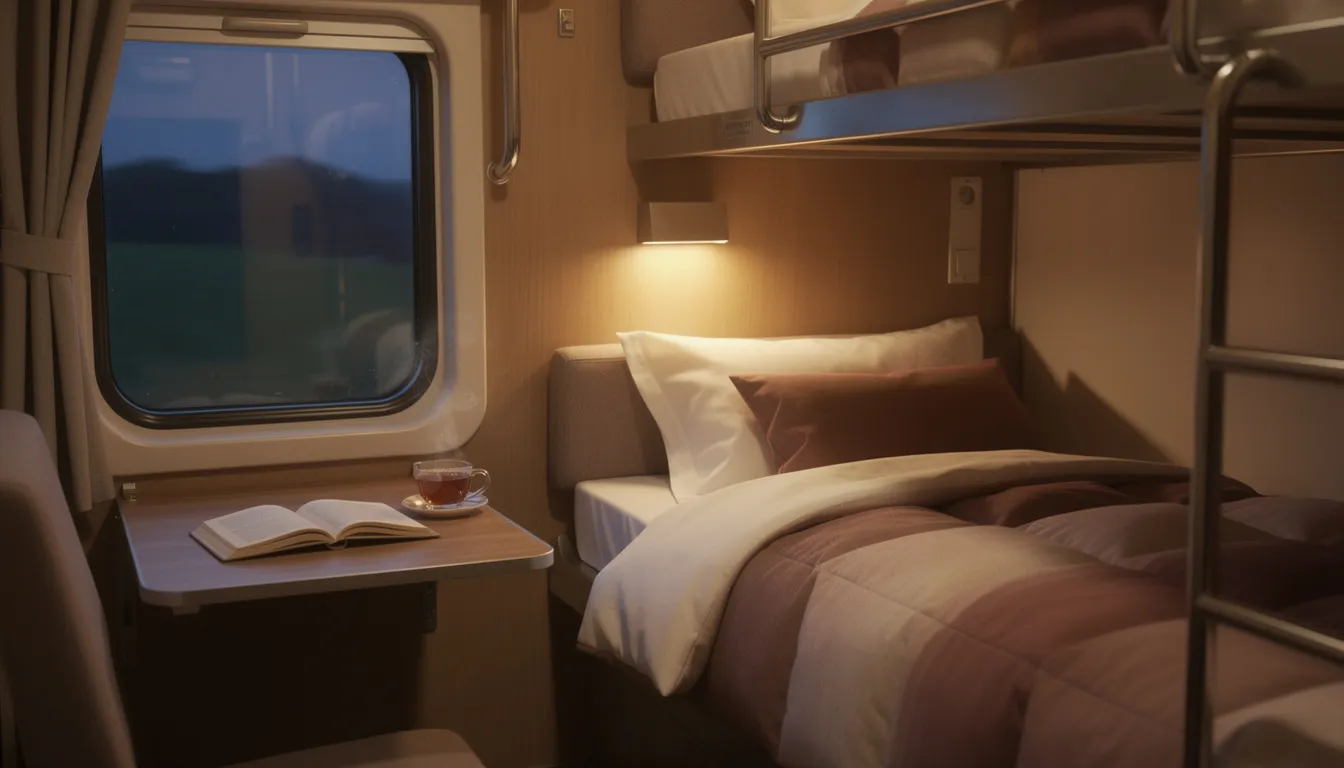
Sleeper compartments give you the most privacy, with 1–3 berths per room, real mattresses, fresh linens, and often a washbasin. Premium sleepers on some services include private bathrooms with a shower. Prices typically range from €89 to €150 or more, depending on the route and how early you book. Both first- and second-class sleeper options may be available, with second class offering a more affordable choice.
Here’s what each option looks like in practice:
- ÖBB Nightjet offers seated coaches, 4- and 6-berth couchettes, and sleeper cabins with single, double, or triple occupancy
- Italian InterCity Notte runs “Comfort” sleepers and 4–6 berth couchettes on routes like Rome to Sicily and Milan to Naples, highlighting Italy’s extensive night train network with a variety of routes and carriages both within Italy and to neighboring countries
- Swedish SJ night trains feature sleeper cabins with private facilities in first class, plus 6-berth couchette carriages
Trade-offs to consider:
- Seats suit budget travellers and short journeys where you can catch a few hours’ rest
- Couchettes work well for backpackers, students, and anyone comfortable with hostel-style accommodation
- Sleepers are ideal for couples, business travellers, families with children, and anyone who values waking refreshed
Sleeper vs couchette: what’s the difference?
Both options give you a flat bed to sleep on, but sleepers are “hotel-like” while couchettes are “hostel-like.” The difference comes down to privacy, amenities, and price.
Sleeper compartments typically feature 1–3 berths with a lockable door, real mattress, fresh linens, and often towels. Higher-end options like the Nightjet Deluxe, Italian Excelsior Sleeper, or Swedish first-class sleeper include a private shower and toilet. You may also receive bottled water, a toiletry kit, and breakfast included in your fare.
Couchettes pack 4 or 6 bunks into a shared compartment. By default, you’ll share with strangers unless your travel party fills the room. Most services default to mixed-gender compartments, though women-only couchettes are available on some trains. Amenities are simpler: expect sheets, a blanket, and a pillow, but not much else.
Concrete examples of sleeper categories:
- Excelsior Sleeper on Italian InterCity Notte offers single, double, and suite cabins with private facilities and breakfast
- Nightjet “Comfort” couchette provides 4 or 6 bunks with basic bedding
- MU Classic Sleeper features single, double, or triple cabins with washbasins and shared toilets
- Tourist Class Sleeper offers single and double cabins with washbasins and adjoining doors for families
Who should choose what:
- Solo budget backpacker: 6-berth couchette for the lowest cost
- Couple on a city break: double sleeper with private door
- Family of four: private 4-berth couchette to keep everyone together
- Business traveller: single sleeper with ensuite for maximum rest
Reservations and rail passes on night trains
Almost all European night trains require a mandatory seat reservation, regardless of whether you hold a rail pass. You cannot simply hop on with a valid ticket—you need to reserve your specific bed or seat in advance. Most European night trains are covered by Eurail and Interrail passes, but a reservation is still required.
Reservations are mandatory for all night trains, and the type of accommodation you choose will affect the reservation fee.
If you travel with a Eurail or Interrail pass, the pass covers the base fare on many night train services, including ÖBB Nightjet, some Swedish night trains, and Italian InterCity Notte routes. However, you must pay a separate reservation fee for your accommodation, which functions as a surcharge on top of your pass.
Where to make reservations:
- Official railway websites: nightjet.com or oebb.at for Nightjet, sj.se for Swedish trains, trenitalia.com for Italian services, europeansleeper.eu for European Sleeper
- Station ticket counters at staffed railway stations across Europe
- Rail pass reservation services for pass holders who cannot book directly online
Typical reservation costs (per person):
| Accommodation | Approximate Cost |
|---|---|
| Seat | €10–€25 |
| Couchette | €25–€50 |
| Sleeper | €40–€100+ |
Book as early as possible, especially on popular routes like Vienna–Paris, Brussels–Berlin–Prague, Hamburg–Stockholm, and Italian overnight services. Some trains sell out weeks in advance during peak periods: Christmas markets in December, Easter holidays, July–August summer travel, and ski season weekends.
Night trains are not like regular regional trains where you can board freely. A reservation is compulsory, and walking onto the platform without one means you won’t be travelling that night.
How to make a reservation step by step
Making a reservation is straightforward once you know where to look. Follow these steps:
- Choose your route and date — Decide where you want to go and when
- Check rail pass validity — If you hold an Interrail or Eurail pass, confirm the night train accepts it for the base fare
- Visit the railway’s website or app — Go to oebb.at for Nightjet, trenitalia.com for Italian routes, sj.se for Swedish trains, or europeansleeper.eu for European Sleeper
- Select accommodation type — Choose between seat, couchette, or sleeper, and specify occupancy (solo, double, triple, 4-berth, 6-berth)
- Review the total price — Check any supplements, pass-holder discounts, or peak-season surcharges
- Pay and receive your ticket — Complete payment and download your e-ticket or printable confirmation
For rail pass holders, some national booking sites don’t support pass-holder reservations online. In these cases, visit a staffed station ticket counter or use a third-party reservation service.
Important reminders:
- Always check whether you’re booking a gender-specific compartment (ladies-only couchettes are available on some Nightjet and Italian services)
- Note your car and berth number—the conductor will direct you to the correct carriage
- Keep your passport handy for border crossings during the journey
Travel days and how night trains work with passes
One of the biggest advantages for rail pass holders is the “night train rule”: only the departure date counts as a travel day on your pass, even if you arrive after midnight the following morning.
Here’s a concrete example: if you board a Nightjet from Munich to Rome at 20:00 on 10 June and arrive at 09:00 on 11 June, your pass uses only 10 June as a travel day. This means you’ve effectively gained a free night of accommodation without using an extra pass day.
However, once you step off the night train and want to continue on new services later that day, you’ll need to activate another travel day on your pass. The night train rule only covers the overnight journey itself.
What happens on board:
- Staff typically check your ticket, pass, and passport early in the evening
- The conductor often keeps your documents and returns them before your morning arrival
- Border crossings rarely require you to wake—staff handle passport checks while you sleep
- For digital passes, activate your journey in the app before boarding
Cost and time benefits:
- Use an overnight Brussels–Berlin train instead of paying for a hotel night in either city
- Take the Stockholm–Kiruna night train for winter adventures instead of flying plus an overnight stay
- Travel Paris–Rome in a sleeper and wake up ready for sightseeing, saving both a flight and a hotel
Popular night train routes in Europe
Night trains are experiencing a genuine revival, with operators launching new routes and upgrading rolling stock. Several well-known connections link Europe’s major cities and holiday destinations.
Key night train routes to consider:
| Route | Operator | Frequency | Starting Fare |
|---|---|---|---|
| Vienna/Salzburg – Paris | ÖBB Nightjet | 3x weekly | From €69.99 |
| Innsbruck – Amsterdam/Hamburg | Nightjet | Regular | From €39.99 |
| Brussels – Berlin – Prague | European Sleeper | 3x weekly | From €49.99 |
| Amsterdam – Berlin – Dresden – Prague | European Sleeper | Varies | From €39.99 |
| Zurich – Hamburg/Berlin | Nightjet | Regular | From €59.99 |
| Berlin – Stockholm – Narvik | Swedish SJ | Regular | Varies |
| Helsinki – Rovaniemi | Finnish Railways | Nightly (peak) | Varies |
| Milan – Naples | InterCity Notte | Nightly | From €29.90 |
| Rome – Sicily | InterCity Notte | Nightly | From €39.90 |
ÖBB Nightjet trains travel to major cities in Austria, Germany, Italy, Belgium, Netherlands, France, and Switzerland, and also connect to Spain via partner services. The Intercités de Nuit connects Paris with many other exciting cities in France. Travel by night from Budapest to Bucharest takes approximately 17 hours. The Santa Claus Express travels from Helsinki to snow-covered Lapland.
Some Nightjet services allow you to bring your car or motorbike on board, particularly useful for routes to Hamburg or destinations in Austria. Check the Nightjet website for specific carriages equipped for vehicle transport.
Emerging routes continue to expand the network. European Sleeper, a cooperative venture, aims to grow from its initial Brussels–Berlin–Prague service to additional lines across the continent. In just six months, European Sleeper expanded from one route to three routes. The mission is to revive overnight rail as a practical, sustainable travel option.
City snapshots: Berlin, Prague, Paris, Brussels, Amsterdam
Berlin
- Night train fares from about €39.99 in a seat on selected routes
- Arrive at Berlin Hauptbahnhof, walking distance from the Reichstag and Brandenburg Gate
- Book early for weekend and holiday departures
Prague
- Fares from approximately €59.99 via European Sleeper from Brussels or Amsterdam
- Arrive at Praha hlavní nádraží, a short metro ride from Old Town Square
- Popular with travellers combining Germany and Czech Republic trips
Paris
- Nightjet services from Vienna/Salzburg from around €69.99
- Arrive at Gare de l’Est, with metro connections across the city
- High demand during fashion weeks and major events
Brussels
- European Sleeper departures from about €49.99
- Bruxelles-Midi station connects to Eurostar and domestic Belgian trains
- Good base for multi-country night train itineraries
Amsterdam
- Fares from roughly €39.99 on Nightjet routes
- Amsterdam Centraal sits directly behind the city centre
- Consider chaining Brussels–Berlin–Prague–Amsterdam for a multi-city week
On-board experience and amenities
What you experience on board depends heavily on your accommodation type and the specific operator. Generally, you can expect basic to genuinely comfortable amenities across European night trains, with many essentials covered in your fare.
Standard features across most services:
- Climate control (heating and air conditioning)
- Reading lights at each berth or seat
- Power sockets for charging devices
- Luggage racks or under-bed storage
- Lockable doors in compartments
- Call buttons to summon staff
- All cabins are typically air-conditioned and equipped with power sockets for charging devices
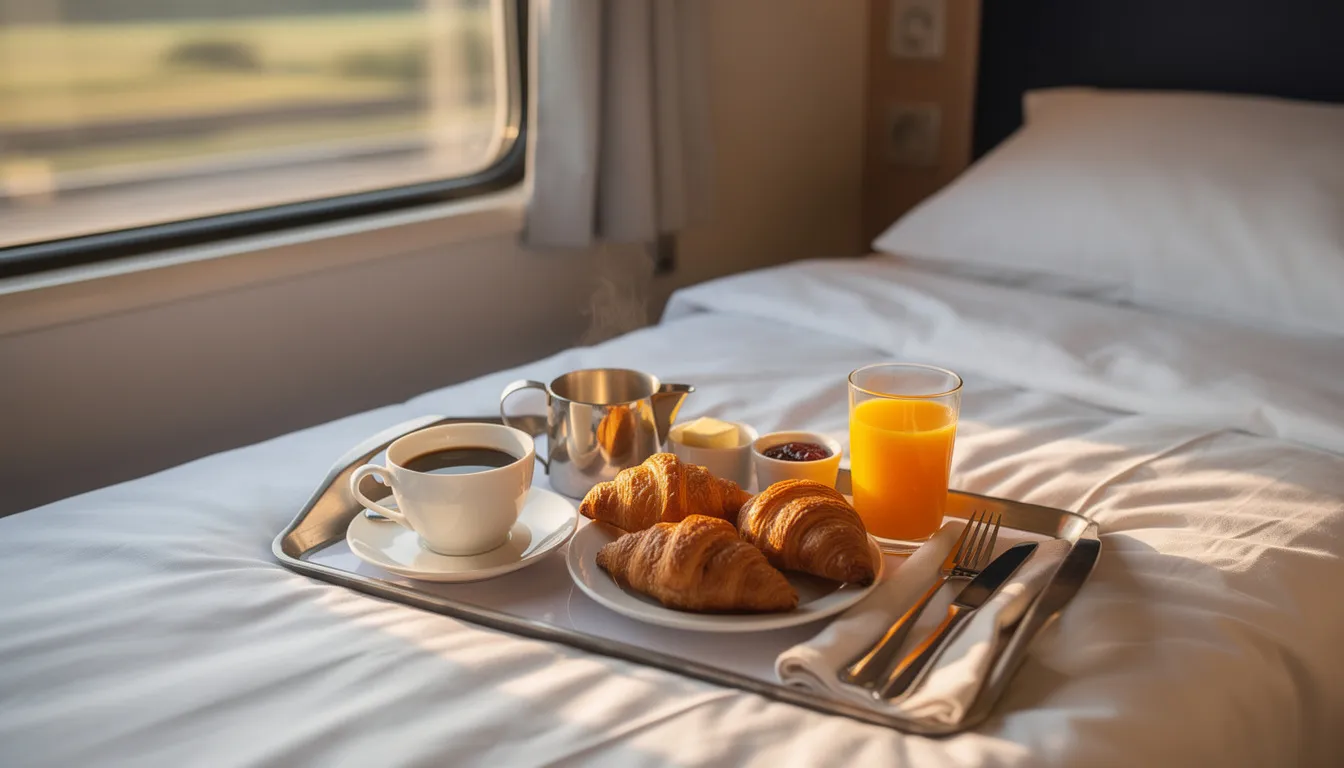
In higher-end sleepers, you’ll find private facilities that rival budget hotels: a shower, toilet, washbasin, towels, and toiletry kits. Many premium cabins include bottled water and a continental breakfast served to your room in the morning. Bed linens, blankets, and towels are covered and provided in almost all sleeper and couchette compartments. Onboard services might also include access to a dining car and a dedicated attendant for sleeper cabins.
In couchettes and standard sleepers, amenities are simpler. Expect sheets, blankets, and a pillow provided, with perhaps a hot drink offered before arrival. You won’t get hotel-style turndown service, but you’ll have everything needed for a decent night’s rest. Noise from the train can make it difficult to get a good night’s sleep, even in sleeper compartments, though the rhythmic, rocking motions can be soothing for some passengers.
Operator-specific examples:
- Italian Excelsior Sleeper: Single, double, and suite cabins with private shower/WC and breakfast included
- TS3 and MU Classic sleepers: Mix of private and shared facilities, breakfast or hot drinks depending on category
- Swedish SJ first class: Breakfast included, some cabins with private shower
- Nightjet: Snacks or breakfast depending on fare class, bistro car on some services
Most trains feature a small bistro or bar car, or a trolley service passes through carriages selling drinks, snacks, and light meals. You’re also free to bring your own food and drinks on board—a good option for dietary restrictions or budget-conscious travellers. Night trains often travel at slower speeds to give priority to freight trains, which can make the total travel time longer than some daytime options.
Cabin categories in more detail
Specific cabin types vary by operator and route, but understanding the main categories helps you choose wisely when booking.
Excelsior Sleeper (Italian InterCity Notte)
- Single, double, or suite configurations
- Private shower and toilet in each cabin
- Breakfast included; 7 twin cabins with up to 23 beds per carriage
TS3 Sleeper
- Combination of Excelsior-style and MU Classic cabins
- Single, double, and triple layouts
- Private facilities and breakfast in higher categories
MU Classic Sleeper
- 12 cabins per carriage, accommodating up to 36 passengers
- Single, double, or triple occupancy with washbasins
- Shared toilets; hot drinks and wake-up service included
Tourist Class Sleeper
- 17 cabins per carriage in single and double configurations
- Washbasins in each room, shared toilets
- Adjoining doors available for families with children
Comfort Sleeper
- 17 compartments with 34–36 bunks total
- Economical option for small groups
- Simple bedding and night light; shared facilities
Couchette carriages
- 10 compartments per car with 4 or 6 bunks each
- Capacity of 40–60 passengers per carriage
- Basic bedding provided; mixed or gender-segregated options
Common features across categories include secure lockable doors, call buttons for assistance, and safe boxes for valuables in many sleeper classes. Always check the specific train’s cabin map when booking—configurations and names vary by operator and route.
Cost-effectiveness, comfort, and practical tips
At first glance, a sleeper ticket might seem expensive compared with a budget airline fare. However, night trains are a practical and cost-effective form of travel, offering a variety of accommodation options such as seats, couchettes, and private sleepers to suit different budgets and comfort levels. But factor in the true cost of flying—airport transfers, checked baggage fees, a hotel night at your destination, and lost daytime hours—and night trains often come out competitive or cheaper.
Consider this: a €150 sleeper from Paris to Venice includes transport and accommodation. The equivalent trip by air might cost €50 for the flight, €30 for airport transfers at both ends, €20 for checked luggage, and €80–€120 for a hotel. Add in the stress of security queues and the environmental cost, and the train looks increasingly attractive.
Scenarios where night trains save money:
- Paris to Venice sleeper vs flight plus hotel: roughly equivalent cost, but you wake in the city centre
- Brussels–Berlin weekend break: skip the hotel entirely by travelling overnight in each direction
- Stockholm–Kiruna winter adventure: combine transport and accommodation instead of flying plus an overnight stay
- Multi-city Interrail trip: use night trains to cover distance without losing sightseeing days
Practical comfort tips for your ride:
- Pack earplugs and an eye mask—compartments aren’t soundproof, and corridor lights can intrude
- Keep valuables in a small bag near your pillow or use the safe box if provided
- Wear light layers; temperatures can fluctuate during the night
- Bring a refillable water bottle and snacks, especially if you’re on a budget
- Set an alarm before your station—announcements can be easy to miss
- Double-check your car number and berth assignment before boarding
Safety considerations:
- Lock your compartment door from the inside at night
- Be discreet with expensive electronics and valuables
- In shared couchettes, consider a luggage strap or small padlock for your bag
- Keep your passport and ticket within easy reach for any checks
One reality to acknowledge: night train networks are smaller than in past decades. Competition from high-speed day trains and low-cost airlines has reduced some routes. Check timetables and connecting services carefully to avoid long morning layovers at intermediate stations.
Environmental and future perspectives
Night trains produce significantly lower carbon emissions than equivalent flights. A Vienna–Paris sleeper emits roughly 10g of CO2 per passenger kilometre, compared with 150g or more for a plane covering the same distance.
Current initiatives expanding night rail:
- ÖBB Nightjet is rolling out “new generation” trains with modern, energy-efficient carriages and improved accessibility
- European Sleeper operates as a cooperative, allowing individuals to invest (minimum around €160) in expanding the network from one to several lines
- Governments in Austria, Germany, the Netherlands, Belgium, and France are slowly reintroducing and subsidising cross-border overnight services
The revival is driven partly by climate awareness and partly by demand. Post-2016, passenger numbers on Nightjet services grew steadily, countering the decline of the early 2010s. Industry predictions suggest pan-European night train networks could expand significantly by 2030, with hybrid battery-electric locomotives enabling travel on non-electrified track sections.
Choosing a night train isn’t just a travel decision—it’s a vote for sustainable mobility across Europe. As more routes return and rolling stock improves, the golden age of overnight rail may be making a quiet comeback.
Ready to plan your first overnight journey?
Start by picking a route that fits your itinerary, then head to the operator’s website to check availability and fares. Book early for the best prices and cabin choices—especially during peak travel weeks. Whether you’re a solo traveller looking to stretch your budget, a couple seeking a romantic way to wake up in Paris, or a family with children wanting a stress-free connection to your holiday destination, night trains offer something no flight can match: the simple pleasure of falling asleep in one city and waking up in another.
Staying Safe and Secure
Safety and peace of mind are top priorities for night train travel in Europe, and a few simple precautions can help ensure a smooth, worry-free journey. Most night trains are designed with passenger security in mind, offering lockable compartments and attentive staff to assist throughout the night.
When you board, always keep your ticket and passport within easy reach—many conductors will check these soon after departure, allowing you to relax for the rest of the journey. If you’re traveling in a private compartment or sleeper, use the lock on your door once inside. For those in shared couchettes or reclining seats, keep valuables like wallets, phones, and travel documents close by, ideally in a small bag you can secure or keep under your pillow.
Families with children and small groups often find extra peace of mind by reserving an entire compartment, ensuring privacy and control over who shares the space. Solo travellers can request women-only compartments on some routes, or opt for a single sleeper for added security.
Most night trains have conductors or staff regularly patrolling the carriages, ready to offer assistance if needed. If you have any concerns during your journey—whether it’s about your compartment, another passenger, or a missing item—don’t hesitate to contact the conductor. Emergency call buttons are available in many compartments for immediate help.
At stations and during boarding, stay aware of your surroundings, especially late at night. Keep an eye on your luggage and avoid displaying expensive items. Once on board, secure your bags with a strap or small lock if you’re in a shared space.
By following these simple steps—locking your compartment, keeping valuables close, and knowing how to contact staff—you can enjoy your night train journey across Europe with confidence, focusing on the relaxing ride and the excitement of waking up in a new city.
Key takeaways
Night train travel in Europe is more than just a way to get from one city to another—it’s an experience that combines comfort, convenience, and a sense of adventure. With a wide range of sleeper compartments, private rooms, and reclining seats, there’s an option for every traveller, whether you’re seeking a budget-friendly trip or a luxurious overnight journey.
By booking your reservation early, you secure the best seats and compartments, ensuring a relaxing night’s sleep as you travel to your next destination. Night trains let you maximize your time, save on accommodation, and wake up ready to explore—all while enjoying the unique charm of rail travel across Europe.
If you’re planning your next European adventure, consider making night train travel part of your itinerary. It’s a memorable way to see the continent, meet fellow travellers, and arrive at your destination refreshed and ready for whatever the day brings. Book your journey, pack your bags, and get ready to wake up to a new city—your European night train adventure awaits.