
The train from Munich to Zurich takes about 3 hours 32–40 minutes on the fastest direct services, with the fastest train covering the approximately 150 miles (242 km) between the cities in as little as 3 hours and 33 minutes. Advance tickets start around 30–35 EUR one way. Direct EuroCity trains run roughly every two hours throughout the day, and there are approximately 15 trains per day, with about 8 to 10 direct trains, making the journey convenient for most travelers. Trains depart from Munich Hbf and arrive at Zurich HB—both zurich munich stations are centrally located with easy access to city transit and offer amenities such as shops, restaurants, and comfortable waiting areas. Let’s break down everything you need to know.
Quick answers: duration, frequency, prices
The Munich to Zurich train covers approximately 310–330 km by rail, winding through the Bavarian Allgäu region and along the shores of Lake Constance before crossing into Switzerland. Most direct services are EuroCity (EC) or EuroCity-Express (ECE) trains jointly operated by Deutsche Bahn and Swiss Federal Railways (SBB).
Direct trains typically run every two hours during daytime, with around 10–15 departures daily between the two cities. When engineering works affect the route, you might find options with one change at Lindau, St. Gallen, or Bregenz instead.
Reservations are optional on most daytime services but worth securing for Fridays, Sundays, and holiday periods when trains fill quickly.
En snabb överblick:
- Journey time: 3 h 32–40 min (direct), 4–5+ hours with changes
- Frequency: Direct EC/ECE every 2 hours during daytime
- First train: Around 06:48 from München Hbf
- Last train: Around 18:48 (direct), later options with changes
- Ticket prices: 30–35 EUR (advance saver) to 90–140 EUR (flexible) in 2nd class
Munich–Zurich route overview & scenery
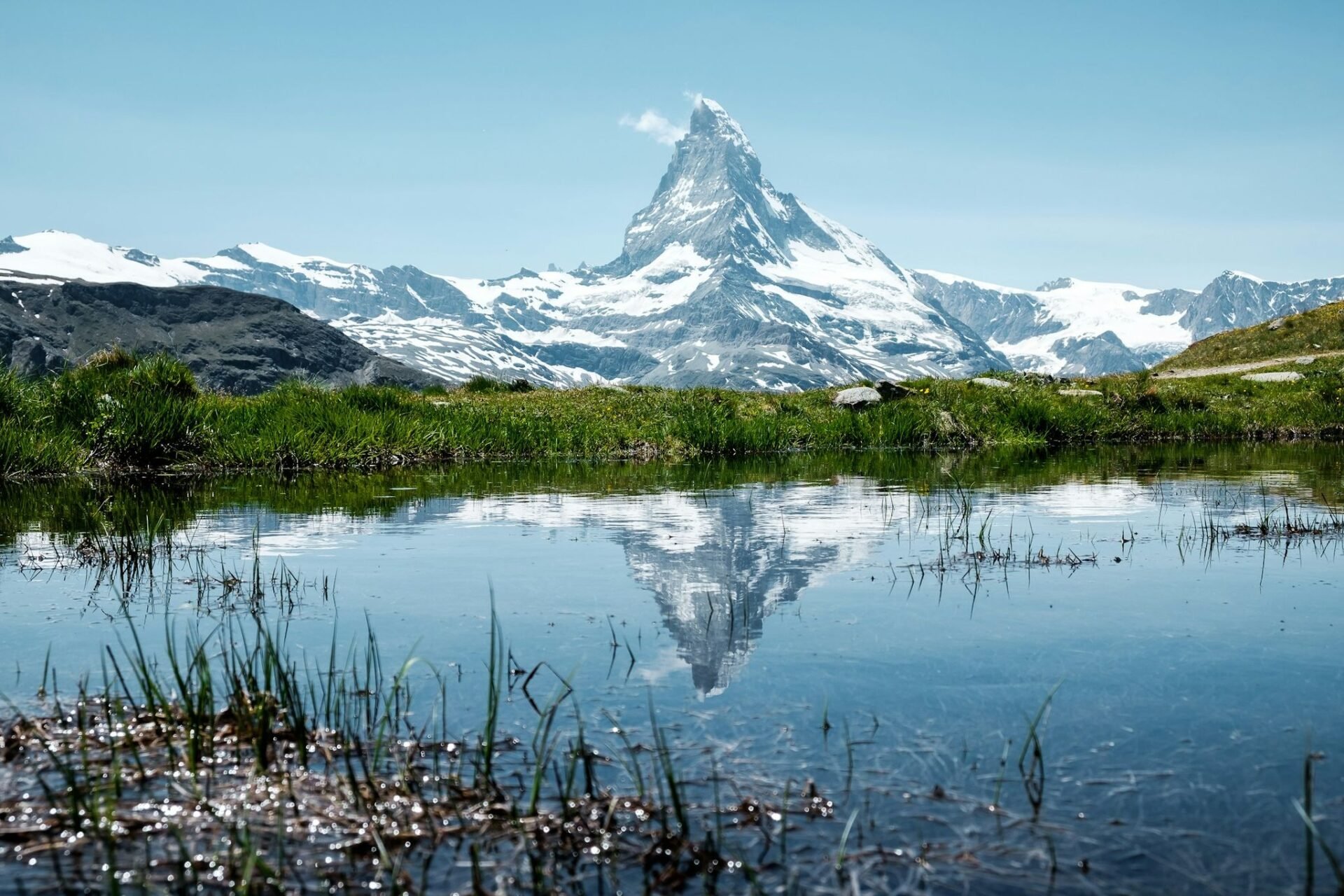
This is one of the most scenic cross-border rides between Germany and Switzerland, threading through rolling Bavarian countryside, traditional Allgäu towns, and the dramatic foothills of the Alps. The journey delivers breathtaking views without requiring a single transfer.
The main route follows this path: Munich – Buchloe – Kempten – Lindau-Reutin – Bregenz – St. Margrethen – St. Gallen – Winterthur – Zurich. Modern EC/ECE trains using tilting Astoro trainsets handle the curves through Alpine terrain smoothly, reaching speeds up to 200 km/h on upgraded sections.
Grab a window seat for the approach to Lake Constance (Bodensee) near Lindau and Bregenz—vineyards cling to hillsides while the lake glitters below. As you approach Switzerland, charming villages give way to Swiss urban landscapes and the spires of Zurich.
Buses exist but take 4.5–6+ hours and miss the stunning views. Flying? By the time you factor in airport transfers (45–60 minutes each end) plus security, you’re looking at 4–5 hours door-to-door for a 1-hour flight. The train wins.
Timetables: first and last trains, how often they run
Exact train times shift with seasonal timetable changes (typically mid-December each year), but the overall pattern stays consistent. Here’s what a typical weekday looks like in spring 2026.
The first direct departure from Munich Hauptbahnhof leaves around 06:48, arriving in Zurich by 10:28. Direct EC/ECE services then run approximately every two hours throughout the day: 08:48, 10:48, 12:48, 14:48, 16:48, and 18:48.
The last direct train typically departs around 18:48, with journey time around 3 hours 40 minutes. Later options exist (up to 20:55 or 22:46) but usually require one change and take 5–8+ hours.
Frequency summary:
- Direct trains: Every 2 hours during daytime
- First train: ~06:48 (arrives ~10:28)
- Last train (direct): ~18:48 (arrives ~22:28)
- Average journey time: 3 h 40 min direct, 4–5+ hours with changes
A quick note: always verify exact departure and arrival times a few days before travel using official rail apps. Engineering works occasionally affect this route, and schedule adjustments happen.
Tickets and prices: what a one-way trip costs
Two main ticket types cover this route: flexible fares (Flexpreis/Standard) that let you hop on any train that day, and advance saver fares (Sparpreis/Supersparpreis Europa) that lock you to a specific train but cost significantly less. Both one way tickets and return tickets are available, with one way tickets starting from as low as €33.99 depending on the time of booking, class of service, and type of train.
All ticket prices for the Munich to Zurich route are quoted in EUR, even though you’re crossing into Switzerland.
2nd class price ranges:
- Advance saver (booked 4–12 weeks ahead): 30–35 EUR
- Cheapest tickets booked well in advance: as low as €118
- Mid-range advance fares: 45–70 EUR
- Fully flexible fares: 90–140 EUR
- Average ticket price if purchased on the day of travel: around €139
1:a klass:
- Typically 40–60% more than 2nd class
- Example: 2nd class at 70 EUR means 1st class around 110 EUR
When booking, you’ll choose between class tickets—First Class and Second Class—which determine your level of comfort and onboard services. First Class offers more spacious seating, quieter coaches, and additional amenities, while Second Class provides standard comfort at a lower price.
Advance tickets tie you to a specific train on the long-distance leg—miss it and the ticket becomes worthless. Flexible tickets cost more but allow same-day changes, which suits uncertain itineraries.
Cheap train tickets disappear first. Dynamic pricing means weekend departures and peak travel days (Friday evenings, Sunday afternoons) run 20–50% higher than midweek. Children under 6 travel free; ages 6–14 get 50% off when traveling with a paying adult.
Tickets often go on sale up to 6 months in advance, and booking typically opens 3 to 6 months before the travel date, offering significant savings over last-minute tickets.
Booking your Munich–Zurich train: when and how to buy
Booking 4–12 weeks in advance typically yields the best combination of low prices and preferred departure times on this international route.
Official channels work best: railway websites, mobile apps (DB Navigator, SBB Mobile), station ticket machines, and staffed counters at both Munich and Zurich stations. Skip third-party resellers that add 10–20 EUR in fees for the same ticket.
Smart bokningstaktik:
- Target direct EC/ECE services with 3 h 30–40 min journey times first
- Search flexible dates—Tuesday to Thursday departures often cost less
- Consider mid-morning or early afternoon trains for lower fares and lighter crowds
- Look for Supersparpreis Europa fares, the cheapest advance option
Ticket delivery is straightforward. E-tickets (QR-coded PDFs) have been standard since 2020—download to your phone or print at home. Station machines also issue paper tickets if you prefer.
Seat reservations cost a small additional fee (around 4–6 EUR) and are optional on EC/ECE trains. Worth it on Fridays, Sundays, and school holidays when load factors exceed 80%.
Train types, onboard facilities and classes
Most direct services are EuroCity or EuroCity-Express trains jointly branded by DB and SBB, often using modern tilting Astoro trainsets designed for Alpine terrain. EuroCity trains on the Munich to Zurich route are known for their spacious seating and air-conditioned coaches, providing a comfortable travel environment.
2nd class features:
- Comfortable seating in open-plan coaches (2+2 configuration)
- Power outlets at 90% of seats (230V European sockets)
- Overhead luggage racks plus larger spaces by doors for hand luggage
- Air conditioning throughout
- Free wi fi (coverage can weaken in Alpine tunnels)
- Accessible toilets in each coach
Trains from Munich to Zurich typically offer free Wi-Fi, power outlets, and comfortable seating to enhance the travel experience.
1st class upgrades:
- More spacious 2+1 seating layout
- Quieter carriages, often with dedicated quiet zones
- Adjustable seats for extra comfort
- Occasional at-seat trolley service depending on train composition
- In-seat meals and exclusive services such as discounted or included meal options and enhanced accessibility features are available for first class passengers
Onboard services:
- Restaurant car or bistro serving hot meals, snacks, and drinks (5–15 EUR, payable in EUR or CHF)
- Small pets travel free in carriers; larger dogs need a leash, muzzle, and a small fee
- Bicycle spaces available (8–12 per train) at 10 EUR with advance booking required
Class tickets determine whether you travel in First or Second Class, affecting the level of comfort and onboard services available to you.
Exact amenities vary slightly by trainset, so don’t expect identical layouts on every departure.
Departure and arrival: Munich Hbf and Zurich HB logistics
Both ends of this route use the main station in each city, putting you right in the heart of things.
München Hbf
Munich Hauptbahnhof sits just west of the city center, about 10 minutes by S-Bahn or U-Bahn from Marienplatz. It’s a sprawling station with 32 platforms.
What you’ll find:
- DB Reisezentrum (staffed ticket counters, open 07:00–21:00)
- Ticket machines accepting cards and cash
- Supermarkets, bakeries, fast food, pharmacies, and ATMs
- 500+ left-luggage lockers (4–10 EUR per day)
- Information desk with English-speaking staff
- Clear signage in German and English
Long-distance Zurich trains typically depart from the main concourse. Arrive 20–30 minutes early—platforms stretch up to 1,000m, and you might want to grab snacks for the ride.
Zurich HB
Zürich Hauptbahnhof anchors the northern end of Bahnhofstrasse, the city’s famous shopping street. The Old Town and Lake Zurich are a short walk away.
What you’ll find:
- SBB ticket office (open 06:00–22:00)
- ShopVille underground mall with lockers (5–12 CHF per day), supermarkets, and restaurants
- Integrated tram, S-Bahn, and bus connections
- 20+ platform tracks with clear numbered signage
Onward connections to Swiss cities like Lucerne (45 minutes) or Bern depart frequently from the same station.
Border note: Germany and Switzerland are both Schengen members, so there’s no routine passport control. Still, carry valid ID—random checks happen onboard, and customs officers occasionally board near the border to spot-check luggage. Duty-free limits apply (200 cigarettes, 1L spirits).
Connections and alternative routes if no direct train is available
During engineering works or off-peak periods, direct EC/ECE services may be reduced. Here’s how to handle connections.
Common 1-change options:
| Vägbeskrivning | Change at | Total time |
|---|---|---|
| Munich – Lindau – Zurich | Lindau-Reutin | ~4 timmar |
| Munich – Bregenz – St. Gallen – Zurich | St. Gallen | ~4–5 hours |
| Munich – Kempten – onward regionals | Varierande | ~5+ hours |
The good news: you buy one through ticket from Munich to Zurich, valid across both German and Swiss segments. No need for separate tickets per country when booked correctly through official channels.
Allow at least 10–15 minutes for transfers. Cross-platform changes at Lindau-Reutin are typically quick and well-signed.
If major construction closes the Allgäu route entirely, an alternative runs via Stuttgart and Schaffhausen using ICE plus Swiss trains. This takes 5–6 hours and usually costs 20% more—not ideal but workable.
Regional trains can cover portions of the journey but extend travel time significantly. Stick to IC/EC connections where possible.
Seat reservations, classes and traveling at busy times
Germany and Switzerland both allow travel on long-distance trains without mandatory reservations. You can board, find an empty seat, and sit down. But on busy routes like this one, a reserved seat brings peace of mind.
When to reserve:
- Friday afternoon and evening departures from Munich
- Sunday afternoon trains in either direction
- School holidays, Christmas, Easter, and summer Saturdays
- Major trade fair dates (Munich hosts several annually)
How it works:
- You select a specific train, carriage, and seat (window or aisle) at booking
- Reserved places show on small LED displays or paper slips above each seat
- The reservation fee is typically 4–6 EUR, fixed regardless of class
A reservation does not replace a ticket. You need both: valid ticket plus reservation for your chosen train.
Solo travelers can often wing it off-peak. Families and groups should reserve to guarantee sitting together—open seating fills unpredictably, and asking multiple passengers to shuffle rarely works smoothly.
Rail passes on the Munich–Zurich route: Interrail, Eurail and Swiss passes
Most direct Zurich trains accept major European rail passes, but the math doesn’t always favor a pass on this single route.
Interrail and Eurail
Both Interrail (for European residents) and Eurail (for non-European visitors) passes covering Germany and Switzerland are valid on DB and SBB-operated EC/ECE trains between Munich and Zurich.
- Seat reservations remain optional but advisable, costing 4–6 EUR if you want one
- A 3-day flexi Interrail/Eurail pass covering Germany and Switzerland runs approximately 200–250 EUR for adults
Value check: If you’re only traveling Munich–Zurich round-trip, a pass rarely makes sense. Two advance point-to-point tickets might cost 70–80 EUR total. You’d need 3+ long-distance journeys within your pass validity period for it to pay off.
German Rail Pass / Regional Passes
German-only passes (like Quer-durchs-Land-Ticket at 44 EUR/day for 2nd class) cover only the German section to the border—typically Lindau-Reutin or Bregenz. You’d then need a separate Swiss ticket from there to Zurich (roughly 30 CHF for St. Gallen–Zurich).
This patchwork approach can work but requires careful planning. Confirm exactly where your pass validity ends before boarding.
Schweiziskt resekort
The Swiss Travel Pass activates at the Swiss border (stations like St. Margrethen). It doesn’t cover the German portion at all.
Practical combination: Buy a point-to-point ticket from Munich to Lindau-Reutin (~25 EUR), then use your Swiss Travel Pass from St. Margrethen onward.
Bottom line
Passes offer flexibility—hop on any valid train without advance booking. Standard ticket prices are usually lower but lock you to specific departures. For a focused Munich to Zurich trip, advance tickets typically win on price. For multi-country rail adventures, passes start making sense.
Cross-border travel practicalities: currency, tickets and checks
The journey crosses from the Eurozone (Germany) into Switzerland, which uses Swiss francs (CHF). However, tickets for the entire trip are priced and sold in EUR when purchased through German or international outlets.
Currency tips:
- Onboard bistro accepts EUR and CHF but typically gives change in CHF
- Cards with no foreign transaction fees work well on both sides
- ATMs at Zurich HB dispense CHF if you need cash
ID and customs:
- No routine passport control (Schengen applies), but carry valid ID—random checks happen onboard
- Customs officers occasionally board near the border for spot checks
- Standard duty-free limits: 200 cigarettes, 1L spirits
Mobile data:
- Switzerland isn’t in the EU, so roaming charges may apply depending on your plan
- Download offline maps and e-tickets before departure to avoid surprises
Is the Munich–Zurich train better than bus or plane?
For most travelers, the train hits the sweet spot of speed, comfort, and value on this route.
Compared to flying:
- Flight time is about 1 hour, but add 45–60 minutes each way for airport transfers plus check-in and security
- Total door-to-door time: 4–5 hours, roughly matching the train
- Ticket prices often higher once baggage fees are included
- Both airports sit outside city centers; both train stations are downtown
- Train travel minimizes waiting times at airports and avoids delays, making it a more convenient option for most travelers
Compared to bus:
- Bus fares run 15–40 EUR, occasionally cheaper than trains
- Journey time: 4.5–6+ hours depending on traffic
- Fewer daily departures than trains
- Stations may be less central than Munich Hbf or Zurich HB
Environmental impact:
- Rail emits roughly 10–20 gCO₂ per passenger-kilometer
- Flying: 150–200 gCO₂/pkm
- Coach: 30–50 gCO₂/pkm
Train travel wins on sustainability while delivering comfortable seating, power sockets, wi fi, and scenic views.
Day or weekend itinerary using the Munich–Zurich train
The direct train schedule supports easy day trips or weekend breaks between these two major cities. Here’s a concrete example.
Morning departure:
- Board the 08:48 from Munich Hbf
- Arrive Zurich HB around 12:28
- The journey takes about three and a half hours, starting in Bavaria and finishing in Switzerland by lunchtime
Afternoon in Zurich:
- Walk to the Old Town (5 minutes from station)
- Explore the lakefront, Grossmünster church, or ride up Uetliberg for panoramic views
- Families might detour to Zurich Zoo (tram from city center)
Evening options:
- Return on the 18:48 train, arriving Munich around 22:28 after another three and a half hours
- Or stay overnight and catch an early SBB train to Lucerne (45 minutes) the next morning
The train journey itself becomes part of the experience—use the three and a half hours to work, read, or simply watch the Alpine scenery roll past. Window seats on the right side offer the best Lake Constance views heading toward Zurich.
The Munich to Zurich train delivers on every front: speed, scenery, and simplicity. Book early for the best prices, grab a window seat, and let the journey be as rewarding as the destination. Check current schedules a few days before departure using DB Navigator or SBB Mobile, then sit back and enjoy the ride.