

Connecting two of Germany’s most dynamic cities, the train journey from Berlin to Cologne runs multiple times daily on high speed trains and budget-friendly alternatives alike. Whether you’re heading west for business, to explore Cologne’s charming old town, or simply passing through, this guide covers everything you need to know – journey times, ticket types, prices, and whether a rail pass actually makes sense for this route.
Berlin to Cologne by train at a glance
The fastest direct trains from Berlin to Cologne take around 3 hours 43 minutes, though most journeys clock in between 4 and 5 hours. Slower options involving a change can stretch to 6–8 hours or more. There are approximately 35 trains per day running from Berlin to Cologne, combining Deutsche Bahn ICE/IC services with FlixTrain departures. Advance tickets on quieter services start from as little as €9.98 when booked early, while flexible last-minute fares can exceed €120 in 2nd class.
Här är den snabba uppdelningen:
- Snabbaste restiden: 3 hours 43 minutes (direct ICE)
- Typisk restid: 4 hours 11 minutes to 5 hours 8 minutes
- Tåg per dag: Around 35 (DB and FlixTrain combined)
- Cheapest advance fare: From €9.98–€19.99
- Average ticket price: Approximately €51
- On-the-day flexible fare: Often €90–€151 or more
Several direct trains run daily, plus frequent connections with one change – often in Hannover or Düsseldorf. If you’re hoping for a sleeper train, there’s no dedicated night service specifically operating Berlin to Cologne. However, Österreichische Bundesbahnen (ÖBB) offers overnight services across Europe that connect with major German cities like Cologne on other routes. For this corridor, late-evening ICE services departing up to 23:53 are your best option for travelling after dark.
Rail passes such as Interrail and Eurail are valid on DB trains between these two cities, but not on FlixTrain services. We’ll dig into pass value in a dedicated section below.
Train operators, route and journey times
Two main operators cover the Berlin to Cologne route: Deutsche Bahn (Germany’s national railway) and FlixTrain (the low-cost challenger).
Deutsche Bahn ICE and IC services
Deutsche Bahn (DB) is Germany’s main train operator, running around 40,000 domestic and international services each day. On this corridor, ICE (Intercity Express) trains are the fastest and most frequent choice for travel, departing approximately every hour. These high speed trains reach 250–300 km/h on upgraded sections of track, making them the quickest way to cover the 476 km distance.
The Deutsche Bahn ICE fleet features air conditioning, free Wi-Fi (sometimes patchy in tunnels), power sockets at most seats, and a bistro or restaurant car. IC (InterCity) trains also run this route – slightly older rolling stock with similar seating but sometimes fewer amenities than the newest ICE types.
FlixTrain services
FlixTrain operates intercity connections in Germany, providing services on routes such as Berlin to Cologne, and runs on 100% renewable energy. You’ll typically find 8–10 FlixTrain departures spread across the day. Base prices tend to be lower than DB, all seats come pre-reserved, and you’ll get free Wi-Fi and power outlets – though there’s no full restaurant service onboard.
The route and journey times
The main direct route runs from Berlin Hbf via Wolfsburg and Hannover, sometimes stopping at Bielefeld or Hamm, before terminating at Köln Hbf. Some services stop at Köln Messe/Deutz instead.
Concrete journey time bands:
- Fastest direct: 3 hours 43 minutes to 4 hours 10 minutes
- Typical ICE/IC (0–1 changes): 4 hours 30 minutes to 5 hours
- Slower regional combinations: 6–8+ hours
Direct trains exist for many routes, although some may require transfers that can extend travel time. The average journey time from Berlin to Cologne by train is approximately 4 hours and 50 minutes, with the fastest services taking just 3 hours and 43 minutes. Trains from Berlin to Cologne typically take between 4 hours 11 minutes and 5 hours 8 minutes, depending on the service.
DB long-distance cologne trains usually run at least hourly during the day, with some gaps late evening. Watch out for engineering works – especially weekends and late evenings – which can add 20–40 minutes via diversions.
Avgångs- och ankomststationer
Multiple Berlin stations offer departures, but Berlin Hbf is the primary long-distance hub. Cologne has two main long-distance train stations worth knowing.
Berlin departure stations
| Station | Plats | Anteckningar |
|---|---|---|
| Berlin Hbf | Central | Main hub for ICE/IC, most trains stop here |
| Berlin Südkreuz | South | Some ICE services |
| Berlin Spandau | West | FlixTrain and occasional ICE |
| Berlin Gesundbrunnen | North | Limited long-distance stops |
| Berlin Ostbahnhof | Öst | Some services |
ICE trains depart from Berlin Hauptbahnhof (Hbf) and arrive at Köln Hauptbahnhof (Hbf). Not every long-distance train stops at all Berlin stations, so check your ticket carefully.
Berlin Hbf is a multi-level through-station opened in 2006. You’ll find clear multilingual signage, DB Reisezentrum ticket counters, coin-operated lockers (3–6 EUR/day), supermarkets like REWE, bakeries, and step-free access via lifts and escalators. It gets busy during peak hours, so allow 15–20 minutes to find your platform.
Some FlixTrain trains departing may leave from Berlin Hbf or Berlin Spandau – always verify the departure point on your printed or digital ticket before your journey start.
Cologne arrival stations
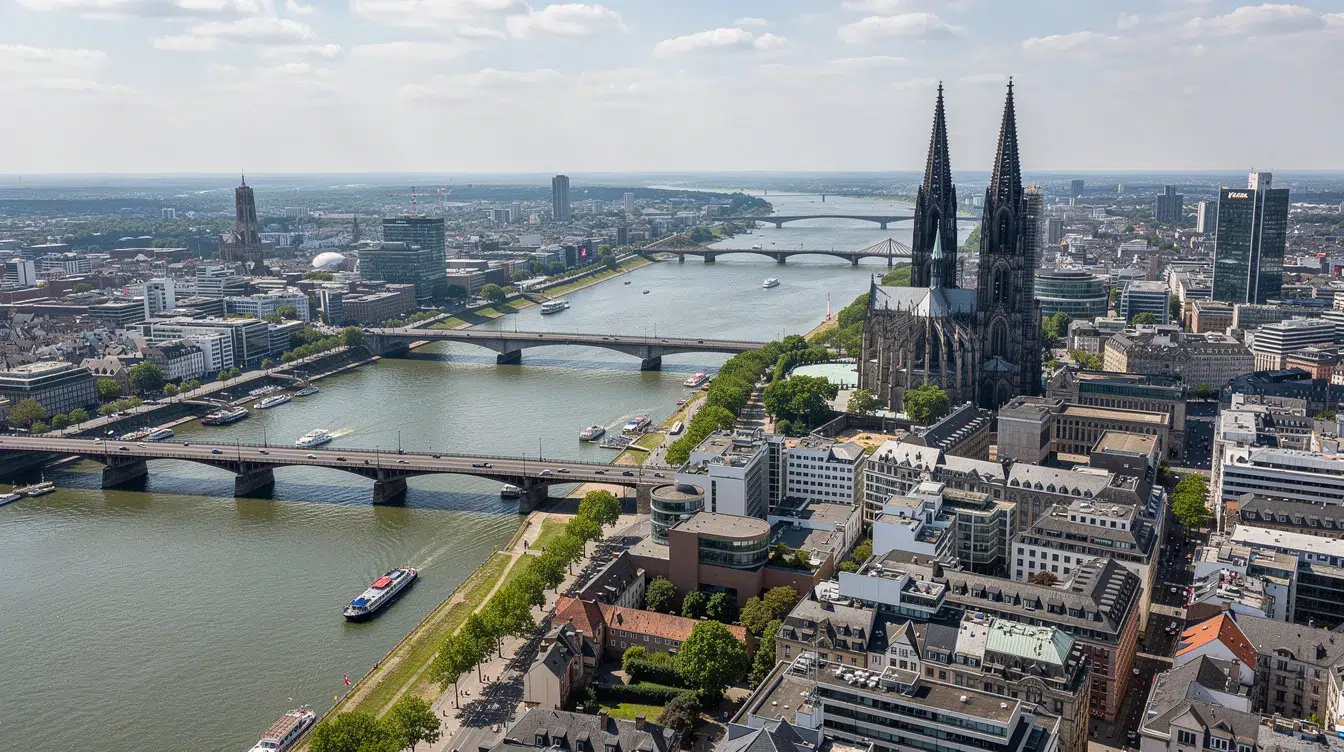
Köln Hbf sits directly beside Cologne Cathedral and the Rhine, making it the most convenient arrival point for exploring the city centre. Facilities mirror Berlin Hbf: lockers, shops, Reisezentrum, ramps and lifts for accessibility, and taxi ranks right outside. S-Bahn lines 6 and 7 reach Cologne/Bonn Airport in about 15 minutes.
Köln Mässa/Deutz lies across the river, near trade fairs and the Lanxess Arena. A 5–10 minute S-Bahn or tram ride connects you to Köln Hbf and the old town. Both stations offer local transport connections, bike parking (2–4 EUR/day), and luggage forwarding services.
Quick tip: during major Cologne trade fairs, Deutz can get hectic. Allow 15 minutes for transfers if you need to change here.
Biljetter, priser och hur du bokar
Understanding ticket types helps you book train tickets at the right price. DB offers three main fare categories, while FlixTrain tickets work completely separately.
DB ticket types
| Fare type | Flexibilitet | Typical price (2nd class) |
|---|---|---|
| Super Sparpreis | Fixed train, no refund | €9.99–€29.99 |
| Sparpris | Fixed train, partial refund | €19.99–€59.99 |
| Flexpris | Any train same day, full refund | €90–€151+ |
Train tickets from Berlin to Cologne can start from as little as €9.98 when booked in advance, while average prices can reach around €151 if purchased on the day of travel. The average ticket price for a train from Berlin to Cologne is around €51, while the cheapest tickets can be found for approximately €20 if booked early.
What affects price?
Several factors push prices up or down:
- Time of day: Peak departures (early morning, late afternoon) cost more
- Day of week: Friday and Sunday evenings see highest demand
- Advance booking: Advance booking of tickets can be done 3 to 6 months ahead and often results in significantly lower prices
- Class: First class adds 50–100% to standard fares
- Events: Cologne trade fairs and major concerts spike demand
DB vs FlixTrain tickets
DB and FlixTrain tickets are not interchangeable. Each operator’s ticket is only valid on its own trains – if you buy a FlixTrain fare, you cannot board a DB service, and vice versa. FlixTrain promo fares start around €9.99–€16.98 for early bookings.
Platsreservation
On DB long-distance trains, seat reservations are optional extras in 2nd class (around €4.90–€6.90), though they’re usually bundled with first class tickets and some saver fares. FlixTrain always includes a specific assigned seat with each ticket.
Booking tips for cheap train tickets
The best way to find cheap train tickets from Berlin to Cologne is to book as far in advance as possible and to avoid traveling during rush hour. Here’s how to score the best deals:
- Boka tidigt: DB releases tickets about 6 months ahead – cheapest quotas sell out first
- Var flexibel: Off-peak departures (late morning, early afternoon) often cost less
- Jämför alternativ: A 1-change connection via Hannover might save €10–30 over a direct ICE
- Avoid busy times: Friday and Sunday evening berlin trains command premium prices
- Check both operators: FlixTrain may undercut DB on quieter routes
DB’s pricing works dynamically, similar to airlines. A booking made 30 days ahead might average €51–56, while waiting until 7 days before travel pushes that to €70–80 or more.
Timetables, frequency and first/last trains
Berlin to Cologne is an all-day corridor with frequent departures. You’ll rarely wait long for a suitable connection.
How often do trains run?
Trains from Berlin to Cologne typically operate every hour during the day. There are approximately 35 trains per day running from Berlin to Cologne when you combine DB and FlixTrain services. During peak daytime hours (roughly 06:00–20:00), you’ll find at least one DB long-distance departure per hour, including direct ICEs and ICE/IC connections with a change in Hannover or elsewhere.
FlixTrain usually offers around 8–10 departures spread across the day, though exact numbers vary by timetable period and day of week.
First train and last train
The first train from Berlin to Cologne departs at around 00:01, and the last train leaves at 23:58. Here’s an illustrative breakdown of train times:
| Time band | Typical services |
|---|---|
| 00:00–06:00 | Night/early morning – slower services, fewer directs |
| 06:00–10:00 | Morning peak – frequent fast ICEs |
| 10:00–15:00 | Midday – good frequency, often quieter |
| 15:00–19:00 | Afternoon peak – busy, more expensive |
| 19:00–00:00 | Evening – gradual reduction in frequency |
Early morning and late-evening trains may have slightly longer journey times due to additional stops or slower sections. The last useful fast departure typically leaves around 21:00–22:00 for arrival before midnight.
Timetable changes
German rail timetables shift in December and June each year. Real-time checks on the day of travel are essential, especially when there are planned works or seasonal adjustments. The DB Navigator app or bahn.de website gives you live platform information and delay alerts.
Onboard experience and facilities
Both DB and FlixTrain offer comfortable onboard services for the 4–5 hour train ride, though experiences differ slightly between operators.
ICE-tåg
ICE trains are known for their amenities, including air conditioning and dining options. Here’s what you can expect:
- Sittplatser: 1st and 2nd class, open-plan and some compartment coaches
- Tysta zoner: Designated carriages for working or resting
- Family areas: Compartments near play spaces on some trains
- Bagage: Generous overhead racks and dedicated luggage shelves between carriages
Trains from Berlin to Cologne typically offer free WiFi, power outlets, and comfortable seating as standard amenities. Most ICE services include free wifi throughout the train, though connectivity can drop in tunnels. Every seat has access to power sockets, so you can keep devices charged throughout your pleasant journey.
Onboard dining options include a bistro car where passengers can purchase snacks and drinks, as well as a restaurant car on some services. Expect to pay around €5–10 for sandwiches, €3.50 for beer, and €12–18 for hot meals. First class passengers often receive at-seat service from the on board restaurant.
IC-tåg
IC trains offer similar seating layouts to ICEs but in slightly older rolling stock. You’ll still find a restaurant car on most services, along with power outlets in many (though not all) carriages. Air conditioning is standard.
FlixTrain
FlixTrain services feature modernised carriages with all seats reservable by default. Free Wi Fi and power outlets come standard, but there’s no bistro or restaurant car – bring your own food and drinks. The carriages are clean and functional, prioritising affordability over luxury.
Families, luggage, bikes and pets
Families: Children under 6 usually travel free on DB when accompanied by an adult. Kids aged 6–14 pay half fare. Some ICE trains have family compartments with play areas that can be reserved.
Bagage: Passengers can bring luggage onboard for free, with specific size limits for carry-on and checked bags, and there are designated storage areas available. A typical carry on bag fits in overhead racks, while larger suitcases go on designated shelves. No need to pay extra for normal travel luggage.
Bikes: Bike space requires prior reservation on both DB and FlixTrain (around €9 on DB). Limited spaces fill up quickly on popular routes.
Pets: Small pets in a transport box usually travel free on DB. Larger dogs need a reduced-fare ticket (half the adult fare) and must wear a muzzle on some services. FlixTrain has similar policies – check current rules when booking tickets.
Rail passes: Interrail, Eurail and value on this route
Interrail and Eurail passes are valid on Deutsche Bahn trains between Berlin and Cologne, but not on FlixTrain services. If you hold a valid pass, you can board most ICE and IC trains on this route without booking separate train tickets – you’ll only need to pay for optional seat reservations.
Do you need reservations with a pass?
Seat reservations on ICE trains are optional but highly recommended during weekends or holidays to ensure a seat. Reservations for pass holders typically cost €4–7. On quieter midweek services, you can often board without one and find a seat.
When reservations become essential:
- Friday and Sunday evenings
- German public holidays
- Major Cologne trade fairs (spring and autumn)
- Any time you’re travelling with a group or need specific seats
Is a rail pass worth it for Berlin to Cologne?
Let’s run the numbers. A typical point-to-point advance ticket costs €20–60, while flexible same-day fares reach €100–140. If you’re making only the Berlin Cologne journey, a stand-alone advance ticket will almost always be cheaper than using a whole pass day.
Consider a 4-day flexi pass priced around €200. That works out to roughly €50 per travel day. If you can book an advance Berlin to Cologne ticket for €30, the pass doesn’t make sense for this single leg.
Rail passes become good value when you’re planning multiple medium or long-distance trips across Germany – for example, Berlin to Cologne followed by Cologne to Frankfurt and Frankfurt to Munich over several days. In that scenario, the per-day pass cost often beats buying separate point-to-point tickets, especially at short notice.
What passes don’t cover
Passholders must still pay separate supplements for private or special services not covered by the pass. FlixTrain always requires its own ticket regardless of any rail pass. If you’re budget-focused and find a €10 FlixTrain fare, that’ll beat using a pass day every time.
Seat reservations and choosing the best train
Reservations are optional but often worthwhile on DB long-distance trains, while FlixTrain assigns a seat with every ticket by default.
When to reserve
Book a seat on busy days, for larger groups, if you’re travelling with heavy luggage, or when you need to sit together as a family. Reservations are particularly useful for:
- Weekend travel
- Holiday periods
- Trains departing during peak hours
- Routes through Cologne during major fairs
Seat selection tips
When booking tickets on DB, you can often view carriage layouts and choose specific seats:
- Tysta zoner: Ideal for working or sleeping – no phone calls, low conversation
- Family areas: Near play spaces, more tolerance for children’s noise
- Window vs aisle: Window for views, aisle for easier overhead racks access
- Direction of travel: Some prefer forward-facing seats
Choosing the best train
The fastest direct ICE services (3h43m–4h10m) cost more and fill up quickly. A 1-change connection via Hannover might save €10–30 but adds 20–40 minutes to your trip.
If you have tight onward connections in Cologne – catching a train to Paris or a flight from Cologne/Bonn – favour direct or faster ICE services to reduce missed-connection risk. A day trip with limited time? Go direct.
Passengers with large suitcases or bikes should pick direct trains where possible, avoiding stressful platform changes. If you must change, ensure you’ve got at least 15–20 minutes between trains.
Accessibility and special needs
Both DB and FlixTrain offer facilities for passengers with reduced mobility, though DB provides more comprehensive nationwide assistance services.
Station accessibility
Berlin Hbf, Köln Hbf, and Köln Messe/Deutz all feature step-free access with lifts, ramps, tactile guidance paths, and accessible toilets. Clear signage in German and English helps navigation. Staff are generally available to assist.
Faciliteter ombord
Many ICE and IC trains have:
- Wheelchair spaces (reserve in advance)
- Accessible toilets
- Lower-height doors or mobile ramps on some platforms
- Priority seating areas
These spaces should be reserved ahead of time through DB’s assistance service – call 01806-996633 at least 24 hours before travel, ideally earlier for complex journeys.
Assistance dogs and guide dogs
Assistance dogs and guide dogs travel free and are allowed in passenger areas on both DB and FlixTrain. Check current carrier policies for any documentation requirements, though in practice, clearly identified service animals rarely face issues.
Passengers with limited mobility
For those using wheelchairs or walking aids, DB’s Mobilitätsservice can arrange assistance at stations – helping with boarding, luggage, and navigating platforms. Book at least one day ahead for straightforward journeys, or 2–3 days for peak periods.
Visual and hearing accessibility
Onboard announcements cover major stops and connections. Information screens display station names and train times. Staff can provide additional support for passengers who need extra help – don’t hesitate to ask.
When to travel, crowd levels and travel tips
Berlin to Cologne is a busy business and leisure route, with noticeable differences between peak and off-peak periods.
Peak vs off-peak
To find lower fares, it is advisable to travel outside of peak hours, generally between 06:00–10:00 and 15:00–19:00. These windows see highest demand from commuters and business travellers, especially on Mondays and Fridays.
| Dag | Peak times | Crowd level |
|---|---|---|
| Måndag | 06:00–10:00, 15:00–19:00 | Hög |
| Tisdag-torsdag | 07:00–09:00, 16:00–18:00 | Måttlig |
| Fredag | 14:00–20:00 | Mycket hög |
| Lördag | Midday onwards | Måttlig |
| Söndag | 16:00–21:00 | Mycket hög |
Major trade fairs in Cologne (spring and autumn) and big events in either city push up demand and prices on specific dates. If you’re flexible, midweek travel between 10:00 and 15:00 typically offers quieter trains and better deals.
Practical tips for day traveling
Arrive at the station 15–20 minutes early, especially at large Berlin Hbf where platform changes happen and crowds build during rush hour. Check real-time platform displays – German trains occasionally switch platforms without much warning.
Keep both digital and printed ticket copies ready. If your phone dies or the app glitches, a PDF backup on another device saves stress.
Pack snacks and water even when an onboard bistro is available – queues can be long on busy services. Label luggage clearly with your name and contact details (a simple luggage tag works).
For a return journey, the same rules apply. Book early, avoid peak times, and check for any engineering works that might affect your route.
Continuing your journey in Cologne and Berlin
Both cities have dense public transport networks, making onward travel from the station straightforward.
Getting around Cologne
Köln Hbf offers direct access to S-Bahn, regional express trains, trams, and buses. You’ll reach most central districts in 5–15 minutes. The city centre and Cologne’s vibrant culture are within easy walking distance – Cologne Cathedral stands literally next door.
Köln Messe/Deutz is ideal if you’re attending trade fairs or events. A quick S-Bahn or tram hop (5–6 minutes) takes you across the Rhine to the cathedral and old town. Cologne offers excellent connections to other cities too – Frankfurt, Düsseldorf, and Paris are all easily accessible.
Getting around Berlin
From Berlin Hbf, the S-Bahn city ring and U-Bahn lines connect you to central neighbourhoods within minutes:
- Mitte: 5-10 minuter
- Kreuzberg: 15-20 minuter
- Charlottenburg: 10–15 minutes
Berlin Südkreuz and Berlin Spandau also have strong local connections, with S-Bahn, bus, and tram links.
Local transport tickets
Public transport tickets in both cities are booked separately from long-distance train fares. In Berlin, most central journeys fall within the AB zone (around €3). Cologne’s KVB system uses similar zone-based pricing. Buy tickets from station machines or apps like DB Navigator, BVG (Berlin), or KVB (Cologne).
Signage and real-time displays in both cities are clear and widely available in German and English. If you’re unsure, station staff can point you in the right direction.
Making your Berlin to Cologne trip work
With frequent departures, competitive prices, and a comfortable ride, the train journey from Berlin to Cologne remains one of Germany’s most practical intercity connections. Direct trains exist for many routes, although some may require transfers that can extend travel time. There are direct train services available from Berlin to Cologne, with journey times averaging around 4 hours and 45 minutes to 5 hours 5 minutes – quick enough for a productive day trip or a relaxed start to exploring Cologne’s charming old town.
Whether you’re chasing the cheapest Super Sparpreis or prefer the flexibility of a same-day Flexpreis, you’ll find a service that fits. Book early, travel off-peak where possible, and check real-time updates before you head to the platform.
See you onboard.