


Poland’s rail network spans thousands of kilometers, linking major cities like Warsaw, Krakow, Gdansk, and Wroclaw with frequent connections. But here’s the uncomfortable truth that most travel guides skip: Züge in Polen are already cheap. This makes the Interrail Poland decision fundamentally different from countries like Germany or Switzerland, where passes almost always deliver savings.
This guide cuts through the marketing to answer one question: should you buy an Interrail-Pass for travel in Poland, or are you better off with regular tickets from Polish State Railways?
Quick verdict: costs, value & ease of use
Is Interrail in Poland good value? The honest answer is: only sometimes, and only for specific trip profiles.
Poland’s capital Warsaw connects to Krakow by express intercity trains for roughly €15–20 in standard 2nd class. The popular Krakow to Gdansk route runs about €20–25. Meanwhile, an Interrail Poland Pass starts around €60+ for 3 travel days, and a Global Pass costs €220+ for 4 days within a month. The math only works if you’re doing intensive, long-distance travel.
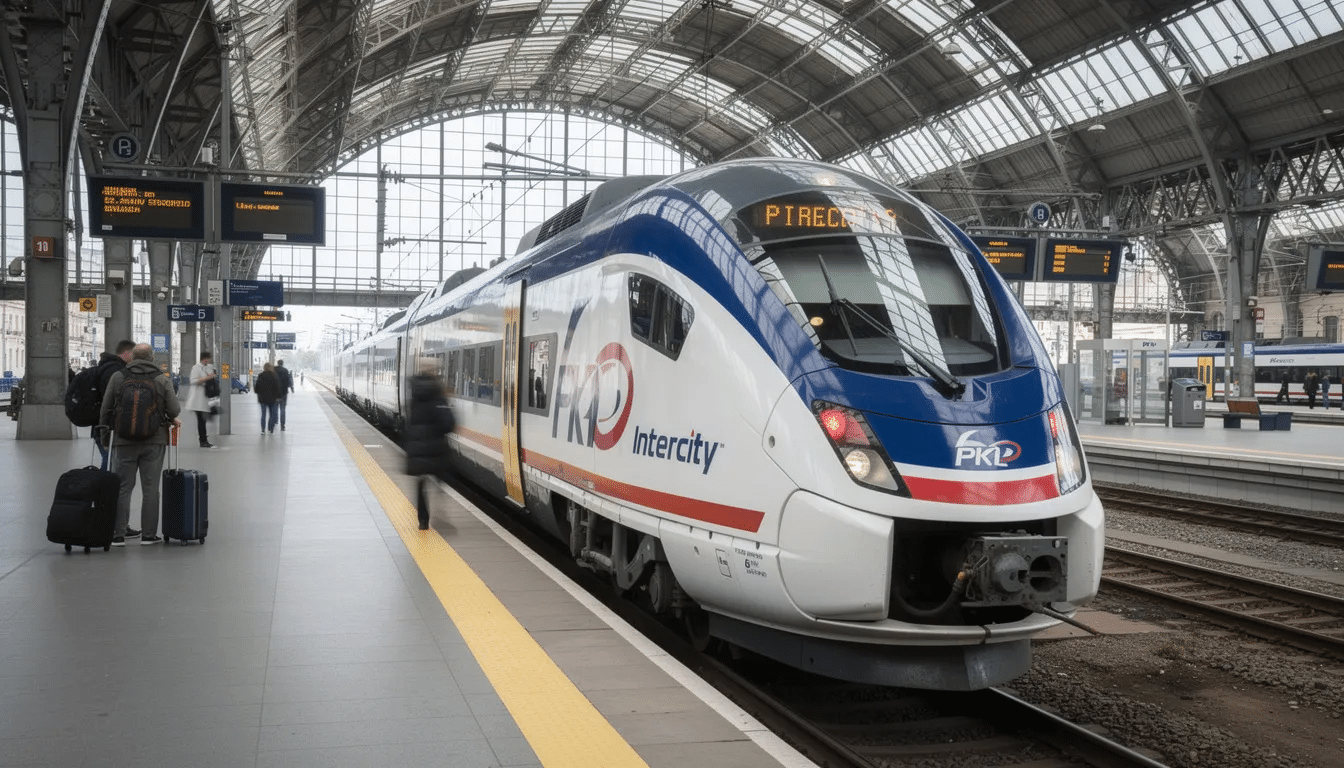
The network itself is extensive and fully Interrail-compatible. PKP Intercity recognizes passes without issue, and you can often make electronic reservations online. However, Poland is not heavily reliant on expensive high speed trains—most long distance trains are IC or TLK services with mandatory reservations costing just €1–4. The famous Pendolino (EIP) runs on select routes like Warsaw–Krakow and Warsaw–Gdansk, but it’s not the backbone of the system.
Key takeaways:
-
Base fares on Polish domestic trains are among the cheapest in Europe
-
Seat reservations are required on most long distance trains but cost only €1–5
-
Global Pass users transiting through Poland get decent value as part of a multi-country trip
-
One Country Pass users need 4+ long journeys within their validity period to break even
-
Ease of use is good—PKP Intercity works smoothly with Interrail, and major stations have English-speaking staff
Faustformel: Interrail in Poland is usually only worth it if you’re doing multiple 4–6 hour journeys in a short timeframe. Otherwise, point-to-point tickets are cheaper and more flexible.
How Interrail works in Poland: basics you must know
Poland’s rail system splits between PKP Intercity (operating long distance trains including TLK, IC, EIC, and EIP Pendolino services) and regional operators like POLREGIO, Koleje Mazowieckie, Koleje Dolnośląskie, and PKP Szybka Kolej Miejska. The Interrail Global Pass and Interrail Poland Pass are valid on PKP Intercity and most regional trains operating across the country.
Train categories and reservation requirements:
|
Zugtyp |
Beschreibung |
Reservation |
Typische Kosten |
|---|---|---|---|
|
TLK (Twoje Linie Kolejowe) |
Budget long-distance, older stock |
Erforderlich |
€1–2 |
|
IC (InterCity) |
Standard long-distance |
Erforderlich |
€1–2 |
|
EIC (Express InterCity) |
Faster, more comfortable |
Erforderlich |
€3–4 |
|
EIP (Intercity Premium / Pendolino) |
Hochgeschwindigkeitszüge, Warsaw–Krakow/Gdansk |
Erforderlich |
€3–5 |
|
EC/EN (EuroCity/EuroNight) |
International trains and international night trains |
Erforderlich |
€4–7 (seat), €15–35+ (couchette/sleeper) |
|
Regional (POLREGIO, SKM, etc.) |
Local trains stopping at medium and major stations |
Nicht verfügbar |
Free with pass |
Where to get reservations:
-
Fahrkartenschalter am Bahnhof: Look for “Kasa biletowa PKP Intercity” at major stations including Warszawa Centralna, Kraków Główny, Gdańsk Główny, and Wrocław Główny
-
Online: Via PKP Intercity’s website or app, select “Interrail/Eurail” as your discount type when booking a specific train—the system will charge only the reservation fee
Important warning: Travelling without a required reservation on IC, EIC, EIP, or EC trains can result in on-board fines. Pass holders must factor reservation logistics into their planning. The ticket inspector won’t accept “I didn’t know” as an excuse.
Using a Global Pass in Poland
For Interrail Global Pass holders, Poland typically forms one segment of a larger European itinerary. Common routes include Berlin–Poznań–Warsaw–Krakow–Prague, or Baltic coast explorations connecting Warsaw with Vilnius via the weekend train service.
The key question isn’t “Global Pass vs Polish tickets” but rather “does Poland work smoothly inside my multi-country trip?” The answer is generally yes—with some planning.
Cross-border routes relevant to Global Pass users:
|
Route |
Fahrtzeit |
Zugtyp |
Reservation |
|---|---|---|---|
|
Berlin-Poznań |
2.5–3 hours |
EC/IC |
Recommended, €3–4 |
|
Berlin-Warschau |
5.5–6 hours |
EC |
Strongly recommended, €4–5 |
|
Prague–Krakow (night) |
Übernachtung |
EN |
Required, €15–35 (berth) |
|
Prague–Krakow (day via Ostrava) |
6–7 hours |
EC/IC |
Required, €4–6 |
|
Krakow–Poprad-Tatry/Košice (Slovakia) |
3-4 Stunden |
EC |
Required, low surcharge |
|
Warsaw–Vilnius (weekend train) |
8–9 hours |
Via Mockava |
Required, check current availability |
Flexibility considerations:
-
Most IC and TLK trains run every 1–2 hours on main axes (Warsaw–Krakow, Warsaw–Gdansk, Warsaw–Poznań via western Poland routes)
-
Friday and Sunday services can sell out, especially on the Warsaw–Krakow corridor
-
Nacht trains to Prague and summer seasonal services to the Baltic coast book out days in advance for sleepers and couchettes—same-day spontaneity is limited for these
-
The network is not dominated by high speed trains; Pendolino (EIP) covers only select routes

The Pendolino situation:
The Express Intercity Premium (EIP Pendolino) is Poland’s only true high-speed service, running Warsaw–Gdańsk in about 2 hours 45 minutes and Warsaw–Krakow in 2 hours 20 minutes. These trains have mandatory reservations at €3–5 per journey. However, cheaper IC and TLK services cover the same routes with slightly longer journey times (typically 30–60 minutes more) and lower reservation fees.
Cost comparison for a typical Global Pass itinerary:
Berlin–Poznań–Warsaw–Krakow–Prague over 4–6 days:
-
With Global Pass: No base fares. Pay approximately €10–40 total in reservations depending on train choices and accommodation type on night trains
-
Without Global Pass: Point-to-point tickets would run €120–200+ depending on advance purchase, class, and whether you book promo fares
In this context, the pass delivers clear value—especially if you’re continuing to Germany, Czechia, or beyond.
Avoiding reservation-heavy trains:
Global Pass users can dodge some reservation requirements by choosing regional routes. For example, Poznań–Wrocław–Dresden using a mix of regional and IC connections avoids the most crowded direct trains. The trade-off is significantly longer journey times. For the beautiful landscapes of southwestern Poland, this slower approach might actually be a feature rather than a bug.
Using an Interrail Poland One Country Pass
The Poland One Country Pass targets non-Polish European residents planning an intensive 5–10 day trip focused entirely within Poland’s borders. If you’re doing several long intercity hops, the pass might make sense. If you’re not, it almost certainly doesn’t.
Itineraries where a Poland Pass might work:
-
“Grand circuit” (7–10 days): Poznań–Warsaw–Gdańsk–Wrocław–Krakow–Zakopane and back
-
“North-south explorer” (5–7 days): Gdańsk–Toruń–Poznań–Wrocław–Katowice–Krakow
-
Key requirement: Rail segments of 3–6 hours each, maximizing value per travel day
Price comparison framework:
|
Route |
Typical IC Fare |
Anmerkungen |
|---|---|---|
|
Warsaw–Krakow |
€15–20 |
Poland’s capital to its cultural heart |
|
Warschau-Gdańsk |
€20–25 |
Links major cities via the north |
|
Krakow–Gdańsk |
€20–25 |
Cross-country connection |
|
Krakow–Zakopane |
€8–12 |
Gateway to Tatras Mountains |
|
Poznań–Wrocław |
€12–18 |
Western Poland route |
A 4-day Poland Pass at approximately €100 works out to €25 per travel day—before adding reservations. If you’re only doing three long trips, the pass is marginal or worse value.
Reservation and supplement costs that erode savings:
-
IC/TLK reservation: €1–2 per journey
-
EIC/EIP supplement: €3–5 per journey (using lots of Pendolino trains significantly erodes your savings)
-
Domestic night trains: seats €3–5, couchettes €10–25+
Example calculation:
5 travel days with Poland Pass—Warsaw–Gdańsk, Gdańsk–Wrocław, Wrocław–Krakow, Krakow–Zakopane, Zakopane–Warsaw:
-
Point-to-point IC fares: approximately €90–120 total
-
4-day pass plus reservations: approximately €115–140 total (depending on train choices)
Unless you’re buying last-minute during peak periods, the pass rarely saves substantial money. The main benefit is flexibility to change plans day by day without rebooking penalties.
Choose the Poland Pass if:
-
You want maximum flexibility and might change routes spontaneously
-
You’re travelling during peak season when advance promo fares are sold out
-
You’re doing 5+ long-distance journeys within your pass validity
-
You qualify for youth pass discounts that improve the value calculation
Skip the Poland Pass if:
-
You’re visiting just 2–3 cities (e.g., Warsaw, Krakow, Gdańsk) with predictable dates
-
Your travel is mostly regional or suburban (walking distance trips, day trips from one base)
-
You can book 2–4 weeks ahead and secure “Superpromo” or “Promo” fares
-
You have a fixed itinerary and don’t need flexibility
Note that only European residents can purchase Interrail passes—if you’re visiting from outside Europe, you’d use a Eurail-Pass instead with similar considerations.
Reservation rules and typical costs in Poland
In Poland, the pass alone is rarely enough. For most long distance trains, you must add a low-cost reservation—and failing to do so results in on-board fees that exceed what you’d have saved by skipping the reservation.
Reservation requirements by train category:
|
Kategorie |
Reservation |
Kosten |
Anmerkungen |
|---|---|---|---|
|
TLK (Twoje Linie Kolejowe) |
Erforderlich |
€1–2 |
Budget long-distance, slower |
|
IC (InterCity) |
Erforderlich |
€1–2 |
Standard passenger trains |
|
EIC (Express InterCity) |
Erforderlich |
€3–4 |
Faster, modern stock |
|
EIP Pendolino |
Erforderlich |
€3–5 |
High speed trains; reservation required even with pass |
|
EC (EuroCity) international |
Erforderlich |
€4–7 |
Cross-border to Germany, Czechia |
|
EN (EuroNight) |
Erforderlich |
€15–35+ |
International night trains, couchette/sleeper |
|
Regional (POLREGIO, SKM Trójmieście sp, KD, etc.) |
Keine |
Kostenlos |
Regional trains, free travel with valid pass |
Where and how to buy reservations:
-
Station windows: Look for “Kasa biletowa PKP Intercity” at Warsaw Centralna, Kraków Główny, Gdańsk Główny (Poland’s Tricity area hub), Wrocław Główny, and other major stations
-
Online via PKP Intercity: Select your specific train, choose “Interrail/Eurail” discount, pay only the reservation fee (Polish currency accepted, cards work)
-
Interrail/Eurail reservation service: Some countries offer online booking for Polish trains, but booking fees may apply—compare with buying in person

Capacity warnings:
-
Peak periods—long weekends in May, summer holidays (July–August), Christmas/New Year—see IC and EIP trains fill up quickly
-
Warsaw–Krakow and Warsaw–Gdańsk–Gdynia are the most contested routes
-
Book these legs a few days in advance if your schedule is important
-
Alternative: slower TLK services or early/late departures usually have more availability
Cost reality check: For a week with 4 IC/EIP journeys, expect €5–15 total in reservations. Not huge, but worth reserving in your budget when comparing passes versus tickets.
Regional trains—including those serving the old town areas of major cities, the beautiful landscapes around Krakow, and the Baltic coast near Gdańsk—require no reservations. Just board with your pass activated for that travel day.
For reference, Poland’s dialling code is +48 if you need to call PKP Intercity, and you can find colourful buildings in most historic city centres as you travel the following routes across the country.
Is Interrail in Poland worth it? Final verdict
The direct answer: Maybe—but probably not if Poland is your only destination.
Poland’s cheap base fares mean Interrail passes face an uphill battle to prove their value. The pass shines mainly in these scenarios:
Interrail is a strong choice when:
-
You’re using an Interrail Global Pass linking Germany (Berlin border crossing), Czechia (Prague connection), Slovakia, the Baltics, and Poland in one trip
-
You plan at least 4–6 long intercity journeys within a month and want flexibility to reroute spontaneously
-
You’re traveling last-minute during peak season when cheap advance fares have sold out
-
Cross-border connections are central to your itinerary (the direct train from Berlin, EC services to Prague, etc.)
Interrail is poor value when:
-
You only intend to visit 2–3 Polish cities with predictable dates—point-to-point IC tickets will be cheaper
-
Your travel is mostly regional or suburban
-
You’re happy to buy advance tickets and lock in times for promo fares
-
You’re focused on important domestic routes where TLK trains offer cheap, flexible options anyway
Do the math yourself:
-
List your planned routes and check current PKP Intercity fares
-
Add up point-to-point prices for your main journeys
-
Compare that sum to an Interrail pass cost plus estimated reservation fees
-
Choose the cheaper or more flexible option based on your priorities
The bottom line: Interrail in Poland is less about saving money and more about simplifying a complex, multi-leg itinerary. For Global Pass holders crossing borders north to the Baltic, south to the Tatras Mountains, or west toward Europe’s rail heartland, Poland fits smoothly into the network. But for many visitors exploring Poland alone, ordinary tickets bought directly from Polish State Railways will be the smarter financial choice.
Don’t let marketing convince you otherwise. Run the numbers, factor in your flexibility needs, and make the decision that actually suits your trip.
Häufig gestellte Fragen
Are Polish trains expensive?
No. Trains in Poland are already cheap by European standards. Warsaw to Krakow costs roughly €15–20 in standard 2nd class, and Krakow to Gdansk about €20–25.
How much does an Interrail Poland Pass cost?
An Interrail Poland Pass starts at around €60+ for 3 travel days.
Are seat reservations required on Polish trains with an Interrail pass?
Express IC trains have mandatory reservations costing €3–5 per journey. Cheaper IC and TLK services cover the same routes with slightly longer journey times (typically 30–60 minutes more) and lower reservation fees.
When does a Global Pass deliver clear value for travel through Poland?
On a multi-country itinerary such as Berlin–Poznań–Warsaw–Krakow–Prague, a Global Pass means paying only around €10–40 in reservations versus €120–200+ for point-to-point tickets, making it clearly worthwhile.
How can Global Pass users avoid some reservation requirements in Poland?
By choosing regional routes — for example, Poznań–Wrocław–Dresden using a mix of regional and IC connections — pass holders can avoid the most crowded direct trains, though journey times will be significantly longer.