

Train service

Westbahn
WESTbahn is a private Austrian train company offering fast, low-cost travel on modern double-decker trains between Vienna, Salzburg, and Munich.

CFF
CFF is Switzerland’s national rail operator, known for punctual, fully electrified train services across the country and beyond.
Deutsche Bahn
Deutsche Bahn (DB) is Germany’s national railway company, operating long-distance, regional, and international train services across Europe.
Train tickets

Omio
Omio connects you with over 1,000 transport providers - trains, buses, flights, and more - to simplify your travel planning.

Trainline
Trainline sells rail and coach tickets worldwide on behalf of major UK and European transport companies.

Raileurope
Rail Europe is a leading travel tech company specializing in European train bookings for over 15,000 travel professionals worldwide.
Vienna is Austria’s capital city and a major European hub for culture and travel, making it a central hub for European train travel with seamless connections to major cities across Austria and Europe. Here’s what you need to know:
- Key Train Stations
- Wien Hauptbahnhof: Main train station with 650 trains daily, first-class lounge, dining, and shopping. It is located a little south of the city centre, but is well connected to public transport for easy access. Almost all mainline trains arrive and depart at Vienna’s Hauptbahnhof, which is also the main departure and arrival point for most routes. The ÖBB Nightjet network makes Vienna the largest night train hub in the EU.
- Wien Meidling: Secondary station with ÖBB lounge and easy access via U6 subway.
- Wien Westbahnhof: Focuses on Western routes, includes a shopping mall, and connects to the airport via bus.
- Train Operators
- ÖBB: High-speed Railjet, Nightjet for overnight travel, and domestic routes. ÖBB, Westbahn, and international train operators run high speed trains, Intercity-Express, and intercity trains, providing comfortable trains with modern amenities such as WiFi, catering, and luxurious seating.
- Westbahn: Affordable domestic service with flexible ticketing and onboard amenities.
- International Operators: Deutsche Bahn (Germany), RegioJet (affordable options from nearby countries), and more.
- Popular Routes:
- Munich (4h, $30.50), Prague (4h 30m, $16.20), Budapest (2h 40m, $19.90), and Zurich (7h 50m).
- Nightjet connects Vienna to cities like Amsterdam, Venice, and Rome.
- Travelers often change trains in major hubs, and Vienna is a key stop for those changing trains or making multiple connections. Most routes offer daily departures and multiple connections, providing flexibility for travel planning.
- Ticket Options: Economy, First, and Business classes, with seat reservations recommended during busy times. Standard tickets, ÖBB Sparschiene-Tickets, and rail passes are available, and booking fees may apply depending on the booking channel. Tickets can be purchased online, via the ÖBB app, or at stations. Tickets can be booked months ahead, often up to 11 months in advance, to secure better prices and availability.
- Public Transit: Vienna’s train stations are integrated into the city’s subway, tram, and bus networks, making it easy to explore the city centre, which is home to major attractions like Stephen’s Cathedral and the Kunsthistorisches Museum, which houses works by old masters, as well as Schönbrunn Palace and the Vienna State Opera.
Vienna’s rail system is efficient, accessible, and ideal for exploring Austria and Europe. Traveling to Vienna by train offers a variety of comfortable, high speed, and intercity options operated by leading train operators. Whether traveling for business or leisure, Vienna’s trains offer a reliable way to get around.
Train Stations in Vienna
Wien Hauptbahnhof
Wien Hauptbahnhof is Vienna’s main train station, located at Favoritenstraße 51 in Vienna’s 10th district, and is the busiest long-distance rail station in Austria. Opened in December 2015, it connects railway lines from all directions. The station is situated a little south of the city centre, but is well connected to public transport for easy access to the city. Almost all mainline trains arrive and depart at this station, making it a key hub for departures and for changing trains on various routes across Europe. The station is fully accessible and offers a range of amenities, such as a ticket office, an ÖBB first-class lounge, luggage storage, and various shopping and dining options, including an Interspar Pronto supermarket and several restaurants. You can reach it via the U1 subway, Tram D, or by taxi.
Wien Meidling
Found at Eichenstraße 25 in the 12th district, Wien Meidling serves as a secondary long-distance station. The station features a compact underground concourse with a ticket office and an ÖBB lounge. It is fully accessible, with specially designed restrooms and guidance systems for visually impaired travelers. The U6 subway line provides direct access to the station.
Wien Westbahnhof
Wien Westbahnhof, located at Europaplatz 2 in the 15th district, handles trains primarily from Western Europe and Western Austria. The station has been transformed into BahnhofCity, which includes a modern shopping mall and a variety of dining options. It also offers accessible platforms for the U3 and U6 subway lines and connects to Vienna Airport through the Vienna AirportLines bus service departing from Europaplatz.
“The new Main Station has turned Vienna into an international railway hub.” – vienna.info
| Station | Key Features | Transit Connections |
|---|---|---|
| Wien Hauptbahnhof | First-class lounge, supermarket, dining options | U1, Tram D |
| Wien Meidling | Compact concourse, ÖBB lounge | U6 |
| Wien Westbahnhof | Shopping mall, dining complex | U3, U6, Airport bus |
| Next, explore the train companies and routes connecting these stations. |
Train Companies and Routes
ÖBB Services
ÖBB (Austrian Federal Railways) runs Austria’s largest rail network, with Vienna as a key hub. Most services operate through Wien Hauptbahnhof and Wien Meidling stations, solidifying Vienna’s role as a major European rail center. Impressively, ÖBB boasts a 96% punctuality rate.
The Railjet trains feature restaurant cars with at-seat service for first and business class travelers. ÖBB’s Nightjet service links Vienna to cities like Paris, Amsterdam, Rome, Venice, and Zurich. Passengers can choose from standard seating, sleeper cars, and other comfort options. Meanwhile, Westbahn focuses on domestic routes within Austria.
Westbahn Routes
Westbahn connects Vienna to Bregenz, with trains departing from Wien Westbahnhof and Wien Hütteldorf stations. Key features include:
| Service Feature | |
|---|---|
| Ticketing | Flexible tickets available onboard |
| Child Fares | Free for children under 6; $1.08 for children under 15 with an adult |
| Onboard Amenities | Free WiFi, power outlets, and vending machines |
| Station Coverage | Stops at key stations between Vienna and western Austria |
Other Train Companies
In addition to ÖBB and Westbahn, several international train operators provide direct routes to Vienna, each with its own booking system:
- Deutsche Bahn (DB), the German train operator, offers multiple daily connections from cities across Germany.
- Schweizerische Bundesbahnen (SBB), the Swiss train operator, runs direct trains from Zurich.
- RegioJet, a private train operator, provides affordable options from nearby countries, with fares starting at $6.37 from Bratislava and $9.72 from Budapest. They operate four daily services.
Travelers can compare prices and book tickets across multiple websites, such as Rail Ninja, The Trainline, and Austrian Railways, to find the best deals. Many train companies in Europe run sales on tickets throughout the year, so it’s worth checking multiple websites before booking.
These operators use modern trains equipped with essential amenities. While ÖBB accepts Eurail/Interrail passes, each company has its own ticketing system and pricing.
Train Types and Classes
When you’re heading to Vienna by train, you’ve got options that’ll match whatever you’re after – whether you want to zip there fast, settle in for comfort, or soak up Austria’s stunning countryside along the way. Here’s the thing: picking your ticket means thinking through which train type and class actually fits how you travel and what you want to spend. Let’s break it down – Vienna’s connected by everything from high-speed rockets to relaxed regional routes and overnight sleepers, and each one brings its own vibe and perks to keep you comfortable on the journey.
High-Speed vs. Regional Trains
If you’re looking to reach Vienna fast from neighboring countries, here’s your move: hop on those high-speed trains. ÖBB’s Railjet trains will get you there from major German, Swiss, and Hungarian cities at a solid 200 km/h – and they’re built for people who can’t afford delays. You’ll find punctual departures, comfortable seats, and all the modern touches that keep business travelers and tight-schedule types happy. Don’t overlook the Intercity and EuroCity trains either – they’ll zip you between Vienna, Salzburg, and Innsbruck with that same reliable Austrian efficiency that makes border-hopping feel effortless.
Now, if you’d rather soak up the scenery than race past it, let’s talk regional trains. These gems stop at those smaller stations you’d never find otherwise – perfect for discovering charming Austrian towns and countryside views that’ll make your phone camera work overtime. Whether you’re here for meetings or wandering, Vienna’s got this extensive network of intercity and regional options that’ll bend to fit whatever itinerary you’re working with. The beauty is having choices that actually make sense for how you want to travel.
First and Second Class Options
You’ll find most Vienna trains run with both first and second class – so you can pick what works for your wallet and comfort level. First class gives you extra breathing room, seats that actually feel good, and the kind of amenities that make travel smooth: proper air conditioning, power sockets where you need them, and easy access to restaurant cars. On Railjet trains, there’s even Business Class if you want to go all out – think premium seats, service that comes to you, and refreshments that don’t cost extra.
Second class? It’s where smart travelers land when they want comfort without the premium price tag. These seats know what they’re doing – ergonomically designed with legroom that actually works, whether you’re hopping one stop or settling in for the long haul. Here’s the thing: whether you go first class, business, or second, Vienna’s trains have figured out how to keep you comfortable. Pick what fits your trip and your budget – you won’t regret either choice.
Onboard Amenities
When you’re rolling toward Vienna, you’ll find the onboard setup built around keeping you comfortable. Those sleek Railjet trains come loaded with free Wi-Fi – perfect for catching up on emails or streaming something good. Every seat gets its own power socket, so you won’t be hunting for outlets. Feeling hungry? Head to the restaurant car where you can grab anything from a quick bite to a proper meal. If you’re after something more laid-back, check out the bar car – it’s where you can settle in with a light snack and watch the countryside roll by. Air conditioning runs standard on most modern trains, which means you’ll stay cool whether it’s blazing summer or you just need to escape stuffy station air.
Planning to connect with Vienna International Airport? The City Airport Train gives you a straight shot between the city center and the main terminal – no transfers, no hassle. You’ll get air conditioning and spacious seats that actually let you stretch out. Traveling with your guide dog or a small pet? Most train services welcome them aboard, making rail travel work for everyone in your group. Here’s a pro move: book early to lock in the best seats and double-check what amenities your specific train offers. Whether you’re heading to a business meeting or starting your vacation, Vienna’s trains deliver a smooth ride with all the modern conveniences that’ll keep your journey running exactly as it should.
Train Routes to Vienna
International Connections
Vienna’s location at the heart of Europe makes it a key rail hub, with direct high-speed trains linking the city to many European destinations.
Travelers from Germany can take advantage of frequent Railjet and Intercity-Express (ICE) services between Munich and Vienna, with a travel time of about 4 hours. ICE trains also operate between Berlin and Vienna, offering modern amenities such as restaurant cars, Wi-Fi, power outlets, and comfortable seating. Be sure to check train times for the most up-to-date schedules and departure options.
Direct train options to Vienna also exist from Budapest (approximately 2.5 hours), Salzburg (approximately 2.5 hours), Prague (approximately 4 hours), and Munich (approximately 4 hours).
For overnight journeys, ÖBB’s Nightjet provides a comfortable option. Here’s a quick overview of travel times on popular Nightjet routes:
| Destination | Travel Time |
|---|---|
| Amsterdam | 14h 00m |
| Brussels | 13h 45m |
| Milan | 12h 25m |
| Venice | 10h 40m |
| Vienna is also well-connected to Budapest and Prague. EuroCity and Railjet trains make the trip to Budapest in around 2h 40m, while Prague is about 4h 30m away. For those heading to Zurich, a direct Railjet takes roughly 7h 50m. |
In addition to these international routes, Vienna is seamlessly linked to other Austrian cities through a reliable domestic train network.
Austrian Routes
Within Austria, Vienna is connected to major cities through frequent and efficient train services. The Railjet network forms the core of these domestic routes, supplemented by Railjet Xpress and Nightjet options.
Trains from Vienna to Graz and Salzburg are operated by ÖBB and take about two and a half hours each. These trains run regularly throughout the day, making it easy to plan your travel day. On the Vienna–Salzburg route, passengers can choose from several service types:
| Service Type | Journey Time | Daily Frequency | Key Features |
|---|---|---|---|
| Railjet | 2h 22m | 18 departures | High-speed service |
| Railjet Xpress | 2h 22m | 16 departures | Fewer stops for faster travel |
| Nightjet | 2h 45m | 2 departures | Overnight option |
| For longer trips, the Vienna–Innsbruck route covers 500 km with approximately 15 Railjet departures daily. The journey takes about 4 hours and 12 minutes, connecting eastern and western Austria efficiently. |
If you are traveling from Zurich to Vienna, the scenic Arlberg Pass can be experienced on the Railjet train, offering beautiful landscapes along the way. Traveling by train to Vienna is often faster than flying when considering transfer and waiting times.
Thanks to the Schengen Agreement, border crossings are generally smooth for train travel between Schengen countries. While formal checks are rare, passengers should carry valid travel documents, as random ID checks may occur on international routes, typically conducted onboard the train.
How to Buy Tickets
Where to Book
You can buy Vienna train tickets through the official ÖBB website or their app. The ÖBB app simplifies the process, making it easy to book and manage your tickets. Creating an account with ÖBB also gives you access to exclusive deals.
For getting around Vienna, the WienMobil app is a great tool. It combines public transit options with bike paths and taxis, all in one place.
Here are the main ways to book your tickets:
| Booking Channel | Features | Additional Cost |
|---|---|---|
| Station Ticket Counters | Personal assistance, seat reservations | No extra fee |
| Ticket Machines | Available 24/7, supports multiple languages | No extra fee |
| Onboard Purchase (Long-distance) | Buy directly from train attendants | €3 surcharge |
| Travel Centers | Full consultation and route planning | No extra fee |
Ticket Options
When traveling by train in Vienna, you can choose from three ticket classes:
| Class | Key Features | |
|---|---|---|
| Economy (Standard Ticket) | Basic seats, power outlets, small tables, includes a set amount of hand luggage, seating options, and access to onboard amenities | Budget-friendly travelers seeking essential services |
| First | Reclining seats, more legroom, quiet zones | Those looking for extra comfort |
| Business | Premium seats, welcome drink, cabin service, Wi-Fi | Travelers wanting top-tier perks |
ÖBB also offers Sparschiene-Tickets, which are discounted fare options available when booking in advance for both domestic and international trains, including Euro City, Railjet, and InterCity services.
“Our travel consultants will be glad to assist you. They can sell tickets, make seat reservations for you and provide you with any information you may need for your journey. Make the most of this personal service – throughout Austria at more than 50 travel centres located at ÖBB train stations.” – ÖBB
Seat Reservations
If you’re traveling in Business Class on Railjet trains, seat reservations are mandatory. For Economy and First Class, reservations aren’t required but are a smart choice during busy times like holidays.
For local trains, make sure to buy your ticket before boarding. Onboard purchases are only allowed in specific situations.
The ÖBB app also lets you book for groups, arrange bicycle transport, or get tickets for dogs. It’s a handy option for families or travelers with special needs.
Next, we’ll look at how to navigate station transport for a smooth journey.
Station Transport Options
Public Transit Links
Vienna’s major train stations are well-connected to the city’s public transportation system, which includes the U-Bahn (subway), S-Bahn (local trains), trams, and buses. The network features five subway lines, 29 tram routes, and 127 bus lines, ensuring coverage across the city. A single ticket costs $2.60 (€2.40) if bought in advance or $2.82 (€2.60) when purchased onboard a tram. The system operates on an honesty policy, meaning there are no ticket barriers.
Vienna’s public transport is also integrated into the Verkehrsverbund Ost-Region (VOR), which extends service to parts of Lower Austria and Burgenland. For added convenience, options like taxis and bike-sharing further improve access to and from train stations.
Taxi Services
For those who prefer more flexibility, taxis are readily available at all major train stations. Fares are regulated, and as of March 2025, the pricing structure is as follows:
| Time of Day | Base Fare | First 5 km (per km) | Additional km |
|---|---|---|---|
| Day | $4.13 (€3.80) | $1.03 (€0.95) | $0.63 (€0.58) |
| Night | $4.67 (€4.30) | $1.18 (€1.09) | $0.73 (€0.67) |
| You can also arrange fixed-price rides through phone bookings or mobile apps. Waiting time costs are $37.77 (€34.80) per hour during the day and $43.62 (€40.20) per hour at night. |
Walking and Biking
Train stations in Vienna are designed with pedestrians in mind, offering easy access to nearby attractions and hotels. Cyclists can take advantage of the WienMobil Rad bike-sharing program, with stations at key hubs like Hauptbahnhof Süd, Floridsdorf S U, and Westbahnhof S U. For longer rentals or guided tours, services such as Pedal Power are available.
These biking and walking options work seamlessly with Vienna’s transit network, including its 227.1-kilometer tram system, making it easy to combine different modes of transport for efficient travel. Whether you’re heading to a meeting or exploring the city, these options ensure smooth door-to-door journeys.
Wien Hauptbahnhof – Vienna Main Station
Sites Near Train Stations
Vienna’s main train stations make it easy to explore the city’s top landmarks, thanks to a well-connected public transportation system. These stations act as starting points for visiting Vienna’s historic and cultural sites. Vienna’s city centre is home to major attractions such as Stephen’s Cathedral and the Kunsthistorisches Museum, making it a vibrant area for sightseeing, with easy access to hotels, museums, and cultural landmarks.
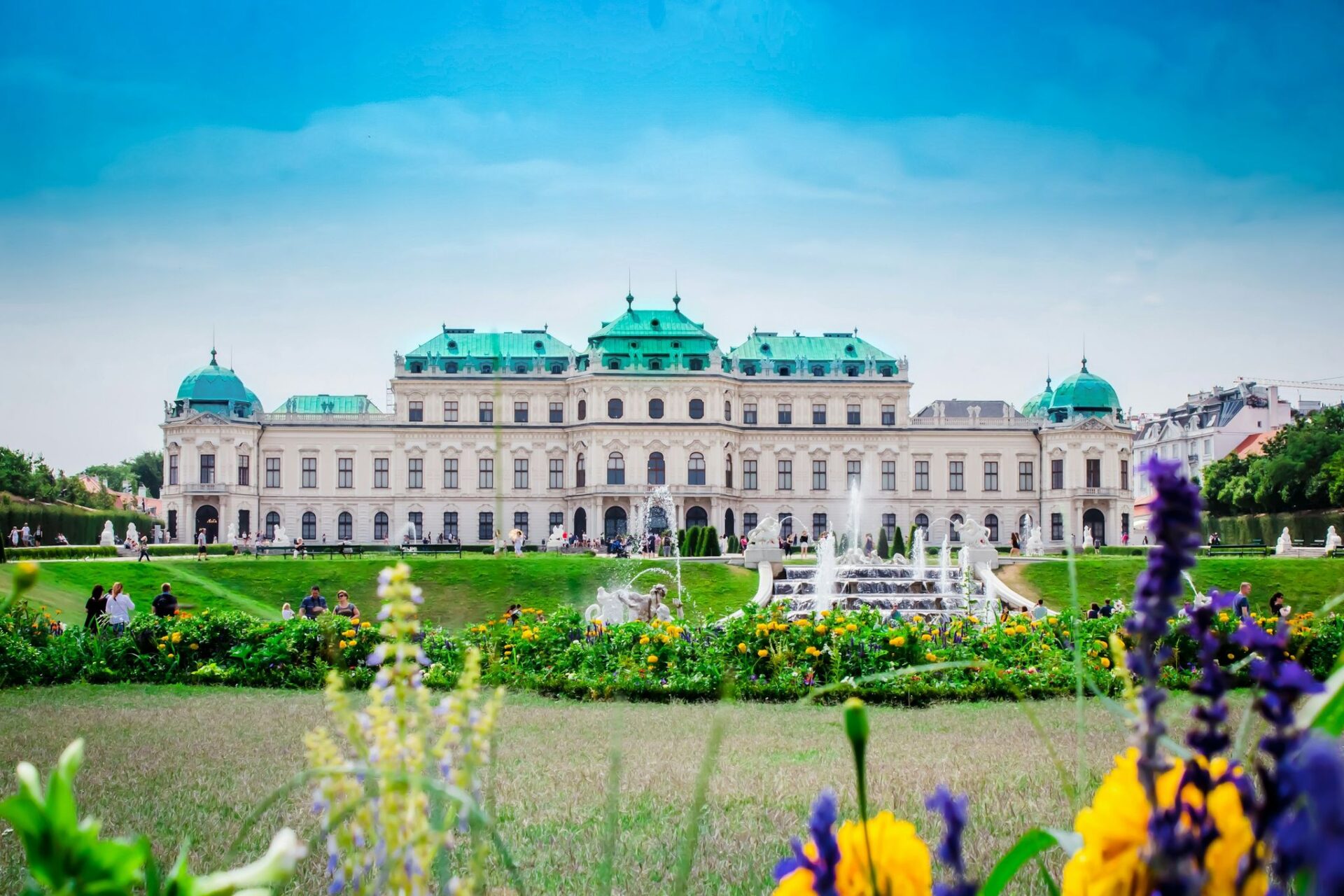
From Wien Hauptbahnhof, it’s simple to reach St. Stephen’s Cathedral (U1 to Stephansplatz, about 15 minutes) and the Vienna State Opera (U1 to Karlsplatz, around 12 minutes). You can also visit Belvedere Palace and Schönbrunn Palace. To get to Schönbrunn Palace, take the U1 to Karlsplatz and transfer to the U4 line; the trip takes about 25 minutes. The Kunsthistorisches Museum, renowned for its impressive collection of old master paintings and modern art, is also easily accessible from the city centre.
At Wien Westbahnhof, Schönbrunn Palace is easily accessible via tram line 60 heading west. The journey takes roughly 15 minutes.
From Wien Meidling, you can also reach Schönbrunn Palace by taking the U6 northbound to Längenfeldgasse, then switching to the U4 line. This route takes around 30 minutes.
For those seeking outdoor activities and relaxation, the Wienerwald is a popular green space near Vienna, ideal for enjoying nature just outside the city.
Travel times are estimates based on normal conditions. Vienna’s public transportation system makes it even easier to explore, offering single tickets or passes that cover subway, tram, and bus services.
Travel by Season
Seasonal changes can impact your travel experience, so it’s important to stay informed and plan accordingly. Train travel to Vienna is influenced by schedule updates, weather conditions, and local events.
Winter Travel (December–February)
Vienna winters are chilly, with temperatures ranging from 31–34°F and 6–8 inches of snowfall each month. Days are short, with sunrise after 7:30 AM and sunset by 4:00 PM. December is especially busy due to the popular Christmas markets, so booking tickets early is a smart move.
Summer Travel (June–August)
Summers in Vienna see temperatures between 66–71°F, with July being the warmest month. This season often coincides with rail line construction and higher travel demand, especially during events like the Donauinselfest.
Schedule Changes
European railways revise their schedules twice a year. Major updates occur in mid-December, while minor adjustments are typically made in early June. These changes usually take effect at midnight on the second Saturday in December.
Planning Tips
For up-to-date information, use the SCOTTY mobile app or check the ÖBB website. Local weather forecasts can also help you prepare for your trip.
If you’re traveling during major events like the Donauinselfest or winter markets, make sure to book your train tickets well in advance. Keep in mind that engineering work might temporarily remove certain trains from booking systems or mark them as unavailable.
Summary
Vienna’s train travel system stands out for its efficiency and connectivity. At the heart of it all is Wien Hauptbahnhof, handling around 145,000 passengers daily. This central hub links Vienna to the rest of Europe through multiple stations and operators, making it easy to travel to Vienna by train from a variety of origins. Whether you’re planning a one-way journey or a return trip, there are flexible options to suit your travel needs, including comprehensive packages that combine train tickets, hotels, and transfers.
Here’s a quick look at some key train routes and travel details:
| From | Travel Time | Starting Fare | Operator |
|---|---|---|---|
| Munich | 4h | $30.50 | Railjet/Westbahn |
| Prague | 4h 30m | $16.20 | Railjet |
| Budapest | 2h 40m | $19.90 | Railjet/EuroCity |
| Berlin | 8h | $41.50 | ICE |
| ÖBB and Westbahn provide a range of domestic and international routes, with ÖBB’s Nightjet service offering overnight connections to major European cities. Budget-conscious travelers can take advantage of Sparschiene tickets, starting as low as $10.80. |
Taking a night train can save on accommodation costs, and the ÖBB Nightjet network makes Vienna the largest night train hub in the EU.
Public transportation is key to Vienna’s mobility, accounting for 32% of local trips. All train stations are easily accessible via the city’s transit network. For airport transfers, the ÖBB train costs just $4.25 compared to $43.60 for a taxi. This integration makes navigating the city and connecting to train stations straightforward.
Thanks to its central location and well-developed rail system, Vienna offers direct connections to destinations like Germany, Switzerland, Italy, Hungary, and the Czech Republic. This makes it a perfect starting point for exploring Europe by train.
Frequently asked questions
What are Vienna's main train stations?
Wien Hauptbahnhof is Vienna's main station, with 650 trains daily. It opened in December 2015 and offers an ÖBB first-class lounge, luggage storage, shopping, and dining. It is reachable via the U1 subway and Tram D. Wien Meidling is a secondary long-distance station with an ÖBB lounge and U6 subway access. Wien Westbahnhof focuses on western routes, includes a shopping mall, and has airport bus connections.
Which operator runs high-speed and overnight trains to Vienna?
ÖBB is the main operator, running high-speed Railjet services and the Nightjet overnight train network. Vienna's Wien Hauptbahnhof is the largest night train hub in the EU.
Can I use an Interrail or Eurail pass to travel to Vienna?
Yes. ÖBB accepts Eurail and Interrail passes. However, each train company operating services to Vienna has its own ticketing system and pricing, so it is worth checking reservation requirements before travelling.
What onboard amenities are available on ÖBB Railjet trains to Vienna?
Railjet trains offer free Wi-Fi, a power socket at every seat, a restaurant car, a bar car, and air conditioning as standard.
Is there a direct train between Vienna city centre and Vienna International Airport?
Yes. The City Airport Train (CAT) runs directly between the city centre and the main terminal with no transfers required, and features air conditioning and spacious seating.