

Planning a train journey from Budapest to Zagreb? Here’s what you need to know: direct intercity trains cover the 299 km distance in about 5.5 to 6.5 hours, with one-way tickets starting around 6,000 HUF when booked in advance. This route is the only direct train connection between Hungary and Croatia, making it the most straightforward rail option for travelers heading south toward the Adriatic coast.
Wichtigste Erkenntnisse
- There are usually up to 2 direct daily departures from Budapest to Zagreb that do not require any train changes, with journey times of approximately 5.5 hours on direct services.
- Typical one-way second-class train tickets bought in advance start around 6,000–8,000 HUF (roughly 15–20 EUR), rising to 10,000–18,000 HUF closer to departure.
- Trains normally depart from Budapest Keleti (or sometimes Budapest-Déli) and arrive at Zagreb Glavni Kolodvor, both centrally located with good public transport links.
- Interrail und Eurail passes are accepted, but seat reservations cost around 1,500–3,000 HUF extra and are strongly recommended in summer.
- When direct trains are sold out, your best alternatives are connections via Győr or Ljubljana, or a direct international bus taking 5–6 hours.
About the Budapest to Zagreb Train Journey
The Budapest to Zagreb route covers approximately 185 miles (299 km), with direct train services typically completing the trip in 5 hours 30 minutes to 6 hours 50 minutes. On most schedules, you’ll find 1–2 direct InterCity departures per day, though the total number of available connections—including those requiring changes—can reach 9 trains per day depending on the season.
This is the main rail link between Hungary and Croatia. ÖBB and Hungarian Railways (MÁV) are the primary train operators providing services on this route, working jointly with Croatian Railways (HŽPP). You’ll sometimes see these trains marketed on ÖBB international booking platforms, though purchasing directly through MÁV-START often yields better prices in HUF.
Timetables shift between summer and winter schedules. Track works in either country can occasionally reduce direct services or introduce bus replacements on border segments like Gyékényes–Koprivnica. Always confirm current train times before travel—December brings annual timetable adjustments.
Slower options exist with 1–3 changes (via Győr, Ljubljana, or regional hubs), stretching total journey time to 8–12 hours. Direct intercity trains run with standard European InterCity comfort: reserved seats, air-conditioned coaches, basic luggage space, and power sockets in many carriages.
Budapest to Zagreb Train Times and Frequency
Exact departure times change slightly each year, but direct daytime services cluster in the morning and mid-afternoon. Here’s what a typical working day looks like:
Sample Daily Schedule:
- First train: Departs as early as 1:25 AM (often with connections)
- Morning direct IC: Leaves Budapest around 06:35–09:00, arriving in Zagreb early afternoon
- Afternoon direct IC: Departs around 15:35 from Budapest-Déli or 15:42 from Kelenföld, arriving 22:00–22:03
- Last train: Departs at 11:32 PM (typically requiring changes)
The average train journey from Budapest to Zagreb takes approximately 10 hours and 30 minutes when accounting for all service types, though the fastest train completes the trip in as little as 4 hours 44 minutes on optimized connections. Direct services consistently clock 5h30m–6h30m.
There are typically 9 trains per day running from Budapest to Zagreb, though this varies seasonally—summer sees reinforced services while winter may cut directs to one per day. Weekend and holiday timetables differ slightly. Check both MÁV-START and HŽPP planners for specific dates, especially July–August or around Christmas.
Ticket Types, Prices and How to Book
Prices depend on booking timing, ticket flexibility, and travel class. Trains on the Budapest to Zagreb route typically offer multiple travel classes, including Economy and First Class, catering to different passenger preferences.
Common Ticket Types:
- Standard point-to-point (2nd class): Flexible within your chosen train, one way tickets typically 6,000–15,000 HUF
- Erste Klasse: Adds 30–60% premium for 2+1 seating and quieter coaches
- Advance promotional fares: Non-refundable but significantly cheaper when booked several weeks ahead
Price Examples (One Way, 2nd Class):
- Advance offers: 6,000–8,000 HUF (roughly €15–20)
- Close to departure: 10,000–18,000 HUF
- Average price: around €48, with the cheapest options starting at €15 for direct trains
- Train tickets from Budapest to Zagreb start from €44.50 when booked in advance
Ticket prices for economy class generally start around €14–€20, though prices can vary depending on booking timing and class of service.
Age Discounts:
- Children under 6 travel free when sharing a seat (zero-fare ticket still needed)
- Youth under 26 and seniors over 65 may receive 20–50% off at international ticket offices—rules differ between MÁV and HŽPP
Booking Channels:
- MÁV-START website or app: Best prices in HUF, no booking fees
- HŽPP site: Croatian perspective, useful for Zagreb trains and onward journeys
- Aggregators (Trainline, Omio): Add 2–5 EUR surcharge but offer English interfaces
- Station counters: Budapest Keleti and Zagreb Glavni Kolodvor handle last-minute or complex itineraries
Booking tickets is recommended at least three to six months in advance to secure the best prices. Cheap train tickets on promotional quotas sell out 4–8 weeks ahead for summer travel. Flexible fares allow changes for 1,000–2,000 HUF fees; advance promos are typically non-refundable.
Onboard Experience: InterCity Trains on the Route
Most direct trains are daytime ÖBB intercity services with reserved seating and comfortable—if basic—facilities.
Konfiguration der Sitze:
- 2nd class: Open coaches with 2+2 seating, overhead racks, and end-of-carriage space for medium suitcases
- 1st class: 2+1 seating with more legroom, generally quieter atmosphere
Luggage Policies:
- Standard hand luggage and medium suitcases: no extra charge (self-handled)
- Bicycles: limited spaces (4–6 per train), extra 1,500–3,000 HUF ticket plus reservation required—summer sell-outs common
Annehmlichkeiten:
- Air conditioning throughout most InterCity coaches
- Power sockets at 60–80% of seats (more reliable in first class)
- Accessible toilets in most carriages
Food Options: Many Budapest–Zagreb trains do not carry a full restaurant car. Trolley service is sporadic, offering snacks at 500–1,000 HUF. Pack provisions from station food outlets before boarding—don’t assume there’ll be a minibar.
Pets & Accessibility: Small pets in carriers travel free. Larger dogs need muzzles and half-fare tickets per MÁV/HŽPP rules. Wheelchair spaces exist with advance notice via MÁV assistance (+36 1 349 4949).
Stations and Practical Logistics
Both end train stations are central, well-connected, and manageable for international travelers.
Budapest Keleti Pályaudvar:
- Located in Pest, connected via metro lines M2 and M4 (5–10 minutes to center)
- Amenities: ticket machines with English, left-luggage (1,200 HUF/day), ATMs, food outlets, 24/7 operation
- Arrive 20–30 minutes early to locate your platform
Note: Direct trains from Budapest to Zagreb usually depart from Budapest-Déli or Budapest-Kelenföld stations as well—confirm your departure point when booking.
Zagreb Glavni Kolodvor:
- The main arrival station in Zagreb, 10–15 minutes walk from Ban Jelačić Square
- Connected by trams 2/6/11; taxis wait outside
- Facilities include info desks, small shops, and nearby accommodation
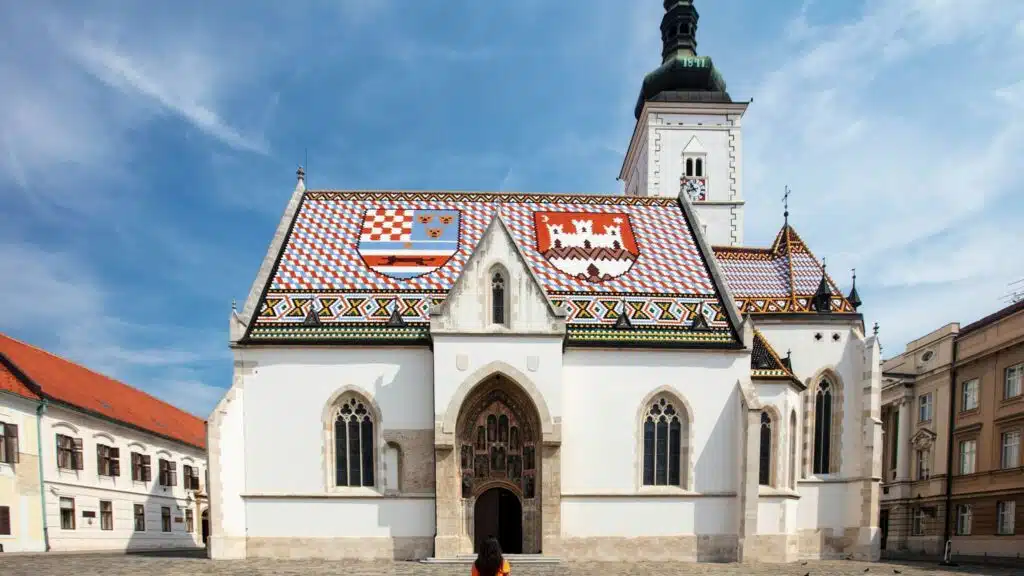
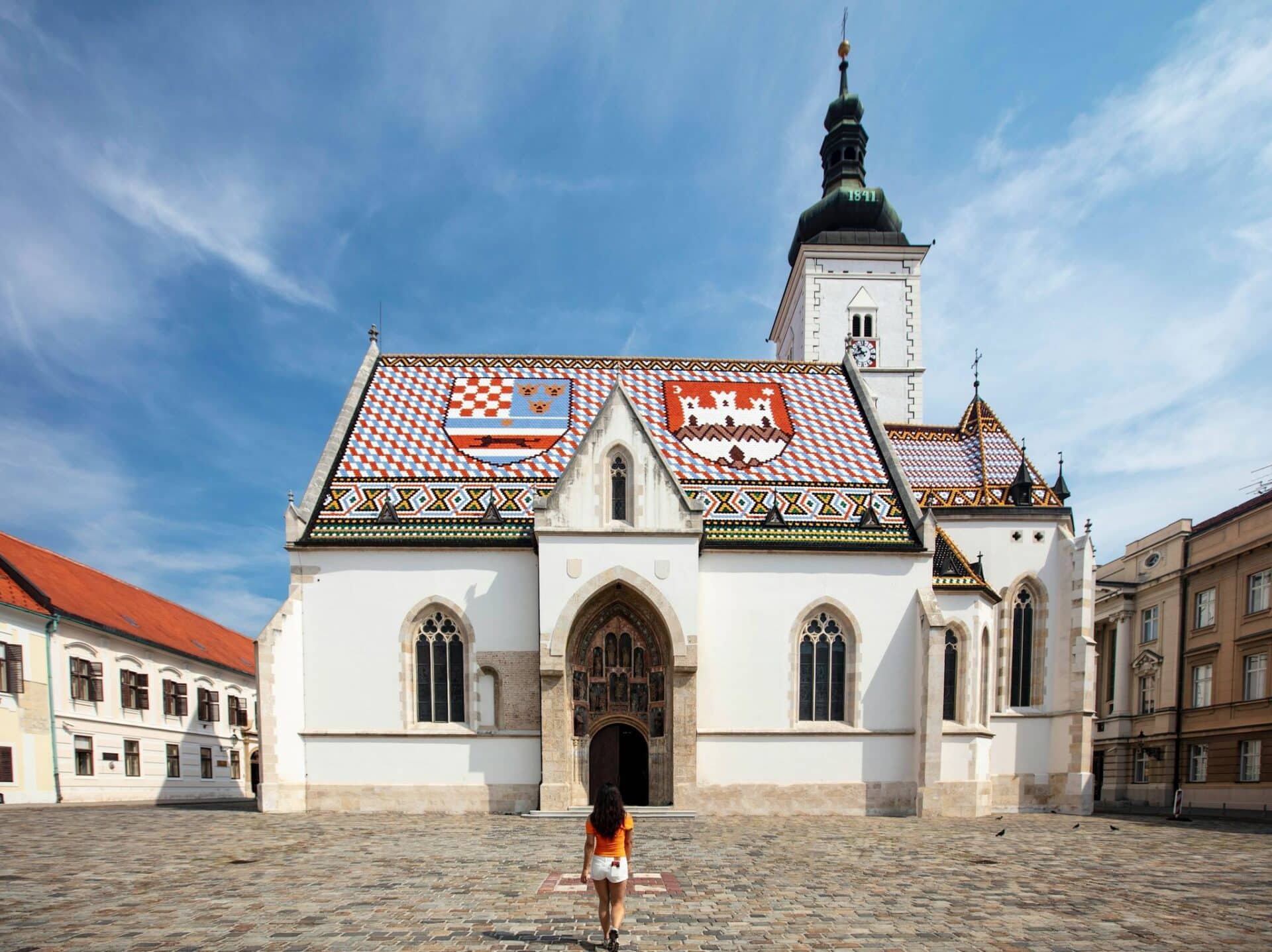
From here, Mark’s Church and the Upper Town are an easy visit by foot or funicular.
Border and Passport Checks: Trains between Hungary and Croatia are subject to border checks, and passengers may need to leave the train at the border at times. Checks occur at Gyékényes (Hungary) or Koprivnica (Croatia), with 5–15 minute pauses onboard. Non-EU travelers should carry valid passports and any required visas. Croatia joined full Schengen in 2023, but checks persist on most routes.
Security Tips:
- Keep tickets (digital or printed) and ID ready for conductors
- Coach numbers and seat reservations are posted on carriage sides—check before settling in
- Tuck valuables close during early-morning departures
Reservations, Connections and Alternative Routes
Seat reservations are often mandatory on international train routes like Budapest–Zagreb, especially in high season when occupancy hits 80–100%.
How Reservations Work:
- International tickets usually include a specific seat and coach number
- Rail pass holders need separate reservation slips, costing 1,500–3,000 HUF (3–8 EUR) per seat
- Book early in summer—quotas exhaust quickly
Connection-Based Options: When direct connections don’t fit your schedule:
- Via Győr: Regional train to IC link, total 7–8 hours
- Via Ljubljana: Budapest–Ljubljana IC then 2h connection to Zagreb, 8–10 hours total
Alternative Modes:
- Direct bus: 5–6 hours, multiple daily departures, 5,000–10,000 HUF
- Flight: 3h airtime but 6–8h door-to-door with transfers—less time-efficient for this distance
Missed Connections: Allow 20–30 minutes between planned changes. If delays threaten your connection, speak promptly to station staff or the conductor, especially on through international fares.
Rail Passes on the Budapest–Zagreb Route (Interrail & Eurail)
The Budapest to Zagreb train route is the only direct train connection between Hungary and Croatia, and it’s fully covered by European rail passes.
Validity: Both MÁV-START and HŽPP participate in Interrail (EU residents) and Eurail (non-Europeans). Pass holders can travel on direct InterCity trains by activating a valid travel day in their pass app or paper pass.
Reservation Policy: Your rail pass covers the fare but not the seat. Reservations cost approximately 1,500–3,000 HUF per seat and should be booked early during busy summer months.
Value Assessment:
| Option | Ungefähre Kosten | Am besten für |
|---|---|---|
| Single ticket (advance) | 6,000–8,000 HUF | One-way trip only |
| 4-day rail pass | ~20,000 HUF | Multi-leg itineraries |
| Pass + reservations | Pass + 3,000 HUF | Extended Balkans trip |
For a single Budapest–Zagreb trip, a point-to-point ticket in HUF beats the pass. Passes excel when you’re planning several medium or long-distance journeys across Hungary, Croatia, Slovenia, and neighboring cities within a short period.
Practical Tips:
- Carry official photo ID matching your pass name for border inspections
- Some local or tourist railways aren’t covered—separate tickets may be needed
Budapest to Zagreb: How Far in Advance to Book?
Booking earlier means better availability and lower fares on promotional tickets, though flexible tickets remain available up to departure.
Booking Windows:
- International fares open roughly 60–90 days before departure
- Booking train tickets from Budapest to Zagreb is recommended at least 84 days in advance to secure the best prices
- Cheapest quotas sell out first on Friday, Sunday, and holiday trains
Planning Guidelines:
| Travel Period | Recommended Lead Time |
|---|---|
| July–August | 4–8 weeks ahead |
| Major holidays | 4–6 weeks ahead |
| Quieter months | 1–3 weeks ahead |
Last-minute station purchases work unless trains are very full, but expect maximum standard fares and limited seat choice. Rail pass holders only need advance reservations (not full tickets), but should still search and book a few days ahead in peak season.
Budapest–Zagreb Combined Trips (Split, Coast and Beyond)
Many travelers use Budapest–Zagreb as the journey start for longer routes toward the Croatian coast or the Balkans.
Onward to Split: Take the Budapest–Zagreb InterCity, then connect to seasonal long-distance train services toward Split. Total travel typically runs 11–13 hours including transfer, with coastal destinations more frequent in summer.
Network Limits: There’s no railway to Dubrovnik. The line from Zagreb runs to Split, after which you’ll need bus or ferry service to reach Dubrovnik and southern destinations.
Ticketing Strategy:
- Buy through tickets where offered, or separate Budapest–Zagreb and Zagreb–Split tickets for flexibility
- Seat reservations on overnight Croatian coastal trains are essential in high summer
Buffer Times: Plan 30–60 minutes between arrival from Budapest and departure for the coast. This handles minor delays and gives time to find your next platform.
Häufig gestellte Fragen
Is there a night train from Budapest to Zagreb?
As of current timetables, there's generally no dedicated overnight Schläfer running directly between Budapest and Zagreb. Most services are daytime InterCity trains. Some overnight connections exist with changes, extending to 12–17 hours, but don't rely on this without checking current schedules for your specific dates.
Do I need a visa to travel by train from Budapest to Zagreb?
Visa requirements depend on your nationality, not the train itself. Hungary is part of the Schengen Area, and Croatia applies EU and Schengen-related entry rules. Travelers from many countries can enter visa-free for short stays; others need visas in advance. Check official consular information for both Hungary and Croatia before your trip, ensuring your passport remains valid for the required period.
How early should I arrive at the station before departure?
If you already have a ticket and know the station layout, 20–30 minutes is sufficient at Budapest Keleti or Zagreb Glavni Kolodvor. Allow 30–45 minutes if you need to purchase tickets, find your platform, or are unfamiliar with the station—especially during busy summer weekends.
Can I bring a bicycle on the Budapest–Zagreb train?
Some InterCity trains accept bicycles in limited designated spaces. You'll need a separate bike ticket (1,500–3,000 HUF) and often a bike reservation. Spaces are scarce and sell out in summer—confirm bike carriage for your exact train and book well in advance.
Is the Budapest–Zagreb train safe for solo travellers?
Daytime InterCity trains between Budapest and Zagreb are generally safe for solo travelers, including at off-peak times. Standard advice applies: keep valuables in sight, use luggage racks above your seat, and avoid leaving electronics unattended during longer stops. Conductor patrols and station CCTV add an extra layer of security.